
GitHub Secret Scanning Adds Cloudflare Token Detection to Help Protect Developer Repositories
GitHub Secret Scanning now detects Cloudflare Access service tokens, helping developers identify exposed credentials in repositories and enabling security teams to respond to potential token leaks.
Xcademia Team
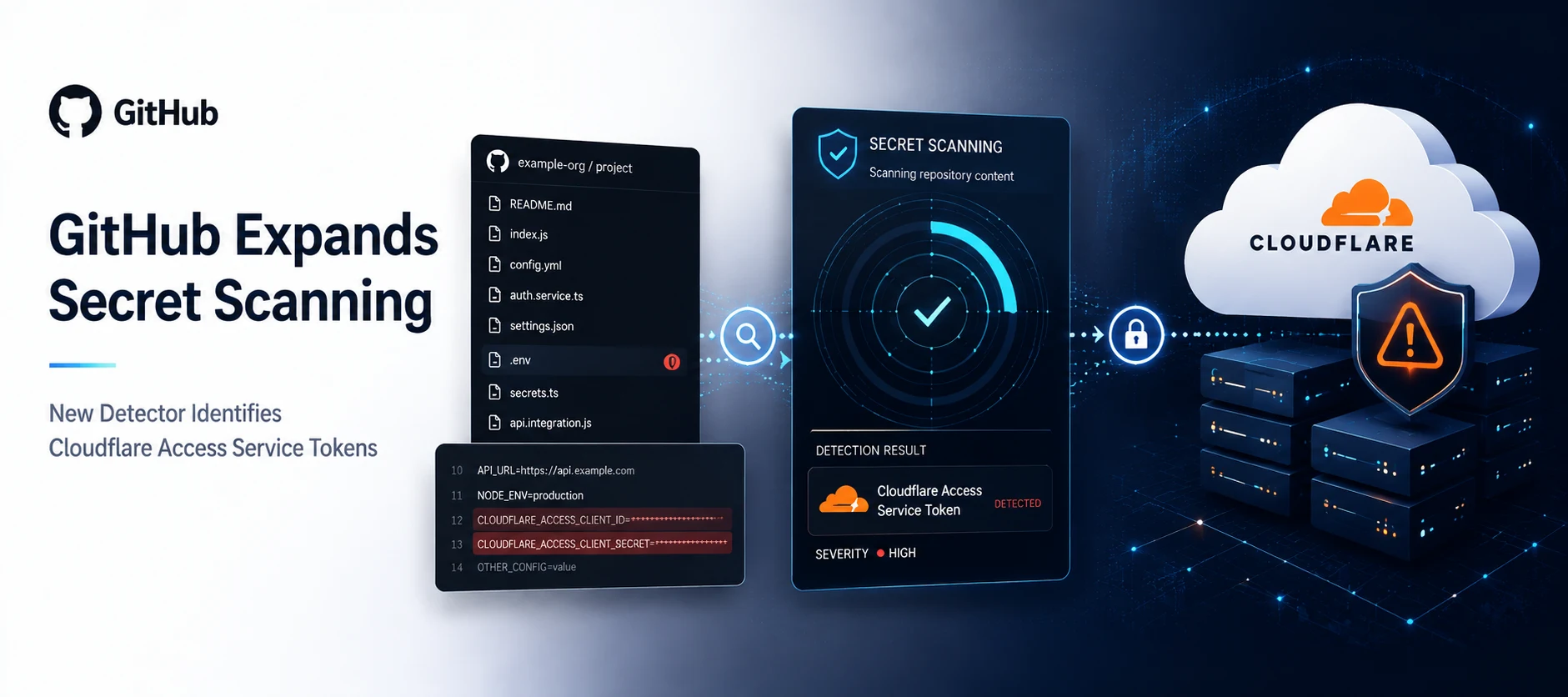
GitHub has expanded its Secret Scanning capabilities with a new detector for Cloudflare Access service tokens. Announced on November 12, 2026, the update allows GitHub to automatically identify this credential type in repositories.
The addition strengthens credential exposure detection for development teams using Cloudflare services and GitHub repositories.
According to the official GitHub Changelog, the newly supported secret type is:
cloudflare_access_service_token
What Has Changed?
The update introduces a dedicated detection pattern for Cloudflare service tokens within GitHub Secret Scanning.
Cloudflare Access service tokens are credentials used by automated systems and applications to authenticate against Cloudflare Access policies. They consist of a Client ID and a Client Secret.
These credentials can become security risks if accidentally committed to source code or exposed through repository content.
GitHub's new detector extends its coverage to this specific Cloudflare credential type.
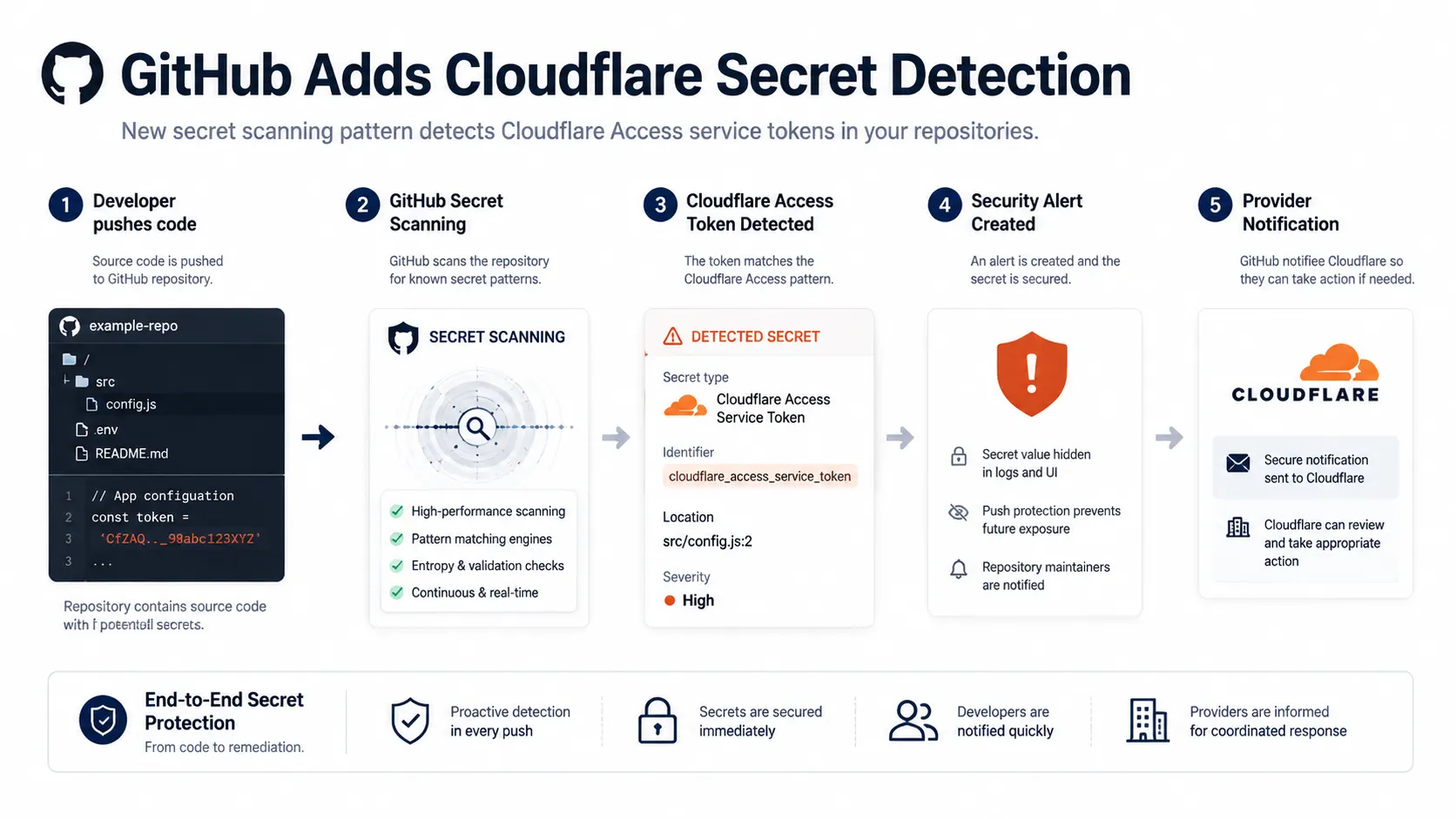
How Secret Detection and Reporting Work
GitHub distinguishes between two types of secret detection responses:
Partner secrets: When detected in public repositories, these secrets are automatically reported to the issuing provider through GitHub's secret scanning partnership programme.
User secrets: These generate Secret Scanning alerts when detected in public or private repositories.
This distinction is important because the reporting process depends on the classification of the detected credential.
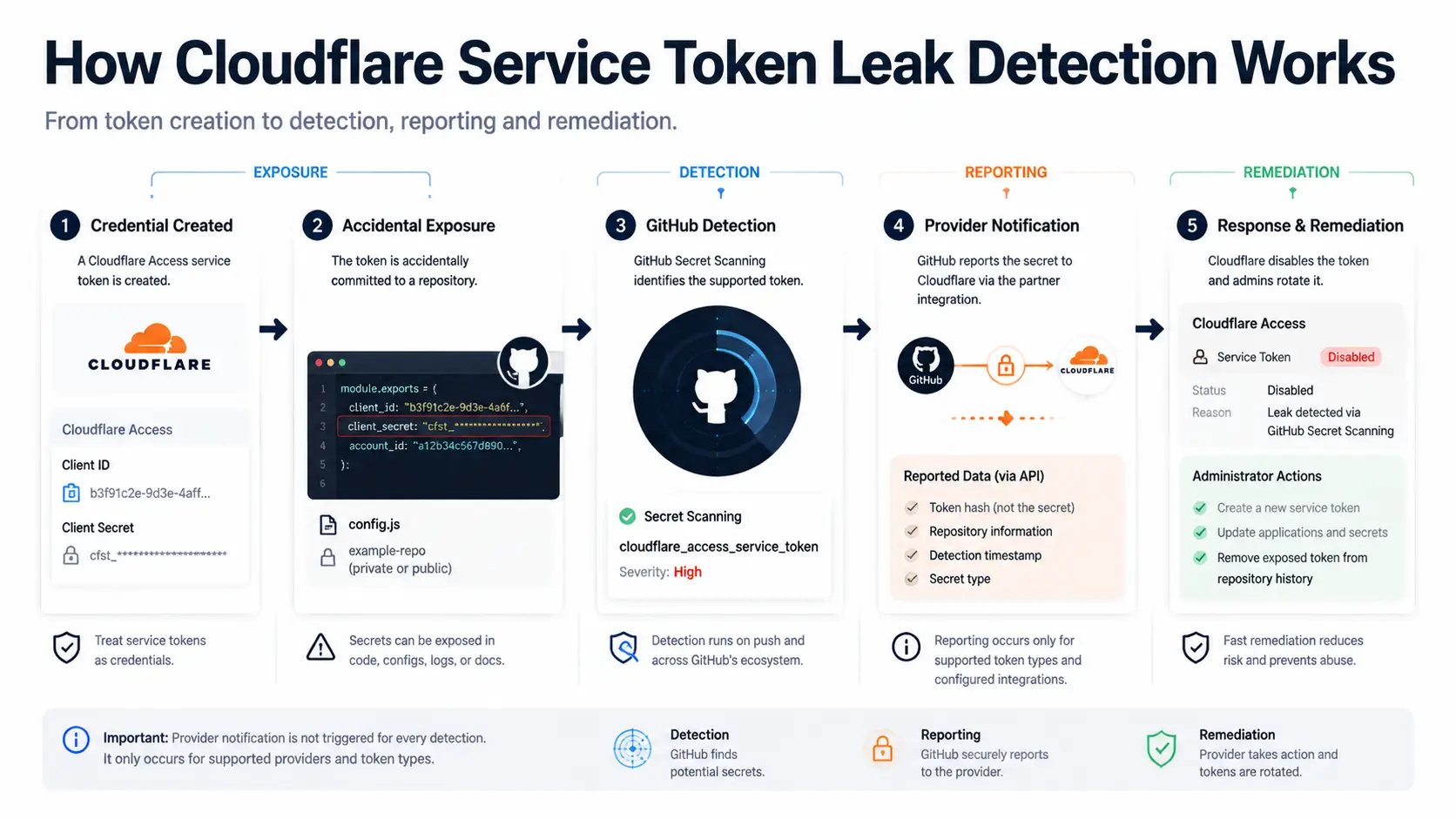
Why Cloudflare Service Token Protection Matters
Cloudflare Access service tokens support authentication for automated systems and applications accessing protected resources.
An exposed Client Secret could create an opportunity for unauthorised access, depending on the permissions and policies associated with the credential.
Cloudflare's documentation explains that when a service token is reported as leaked by a secret scanning partner such as GitHub, Cloudflare automatically disables the affected token and notifies account administrators.
The leaked secret must be rotated before the token can be re-enabled.
What Developers and Security Teams Should Do
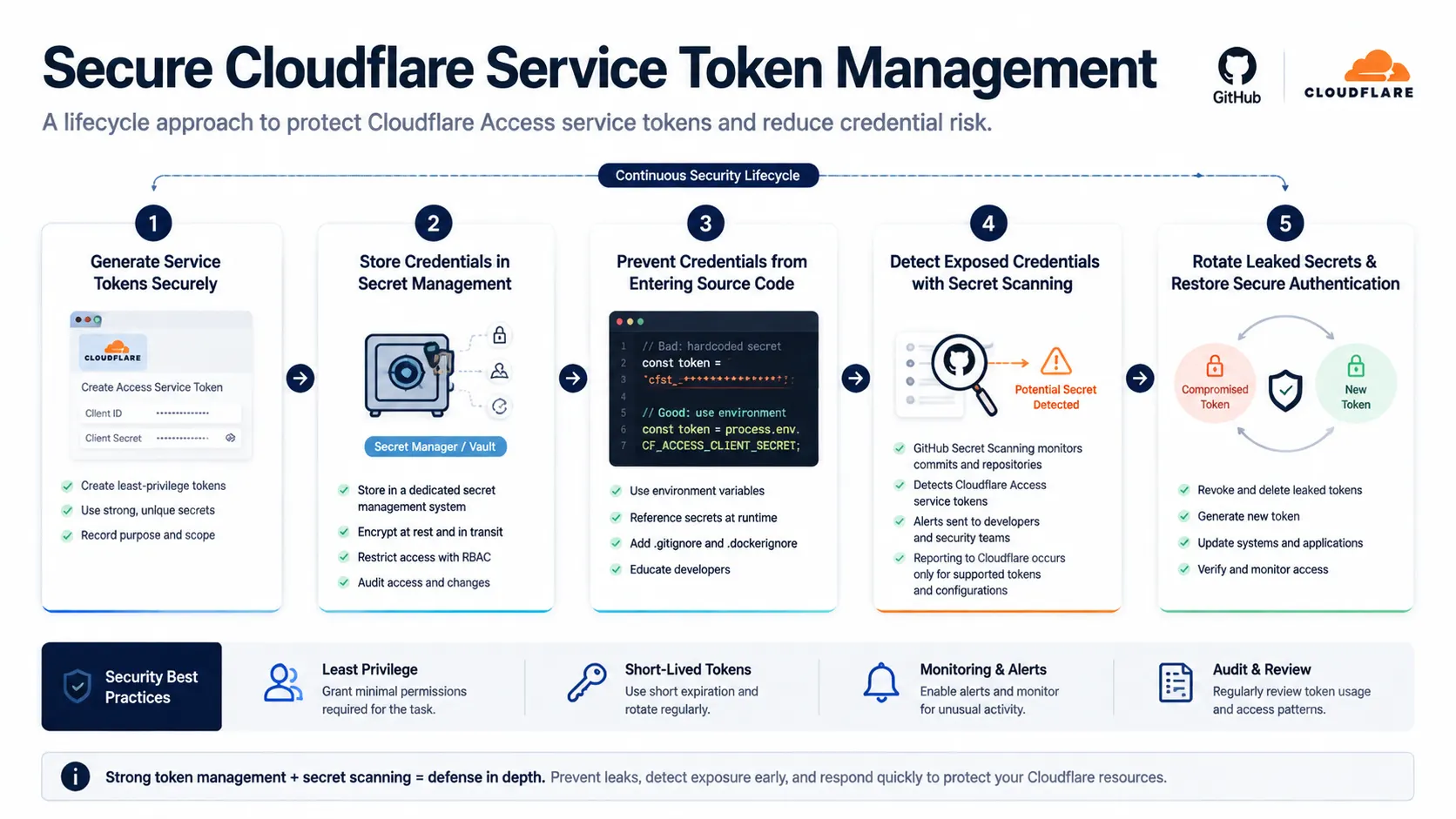
Development and security teams should continue following established credential-management practices:
Avoid committing service tokens, API keys or other credentials to source code.
Review GitHub Secret Scanning alerts when credentials are exposed.
Rotate affected Cloudflare service token secrets.
Store credentials in appropriate secret-management systems.
Review repository history and development workflows for accidental credential exposure.
GitHub's update adds another layer of provider-specific detection, but it does not replace secure credential handling and repository security practices.
What This Means for Application Security
The announcement highlights a broader industry shift towards integrating credential-leak detection with service providers.
For organisations using GitHub and Cloudflare, the new detector provides additional visibility into exposed Access service tokens. It also reinforces the importance of collaboration between code-hosting platforms and credential providers when responding to leaked secrets.
However, automated detection should remain part of a broader application security strategy that includes secure development practices, credential rotation and access management.
Source: GitHub Changelog
About the Author