
CERT-In Warns of Critical Remote Code Execution Vulnerability in Perforce Puppet
CERT-In has warned of a critical remote code execution vulnerability in Perforce Puppet. The flaw could allow attackers with a valid CA-signed agent certificate to execute arbitrary code and compromise affected Puppet Servers.
Xcademia Team
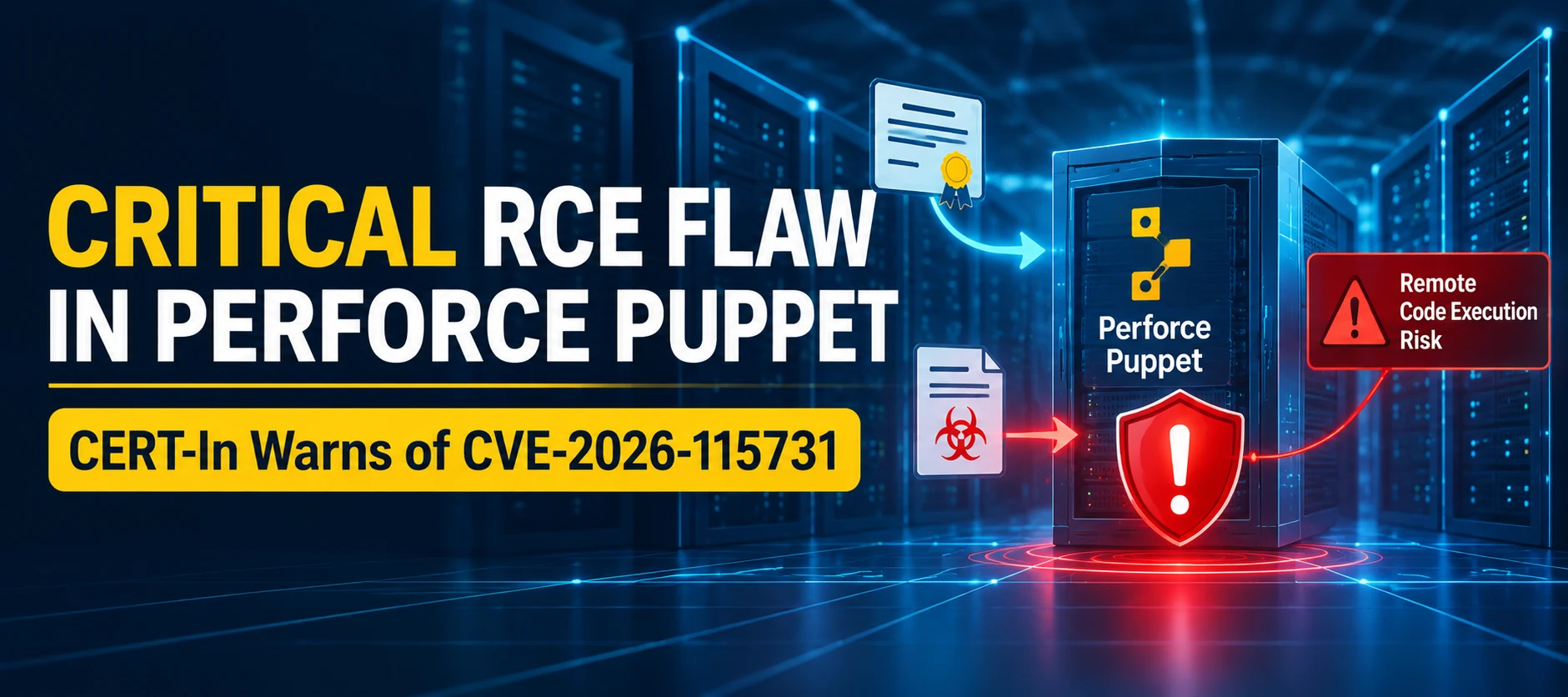
The Indian Computer Emergency Response Team (CERT-In) has issued a critical security warning about a remote code execution (RCE) vulnerability in Perforce Puppet, an infrastructure management platform used to automate server configuration, deployment and maintenance.
Tracked as CVE-2026-115731, the vulnerability could allow a remote attacker to execute arbitrary code on an affected Puppet Server by exploiting improper deserialization of untrusted data in its report-processing functionality.
CERT-In published the advisory under Vulnerability Note CIVN-2026-0563 on November 19, 2026, assigning the issue a CRITICAL severity rating.
Successful exploitation could allow attackers to modify files, gain unauthorized access and compromise the affected Puppet Server.
Affected Perforce Puppet Versions
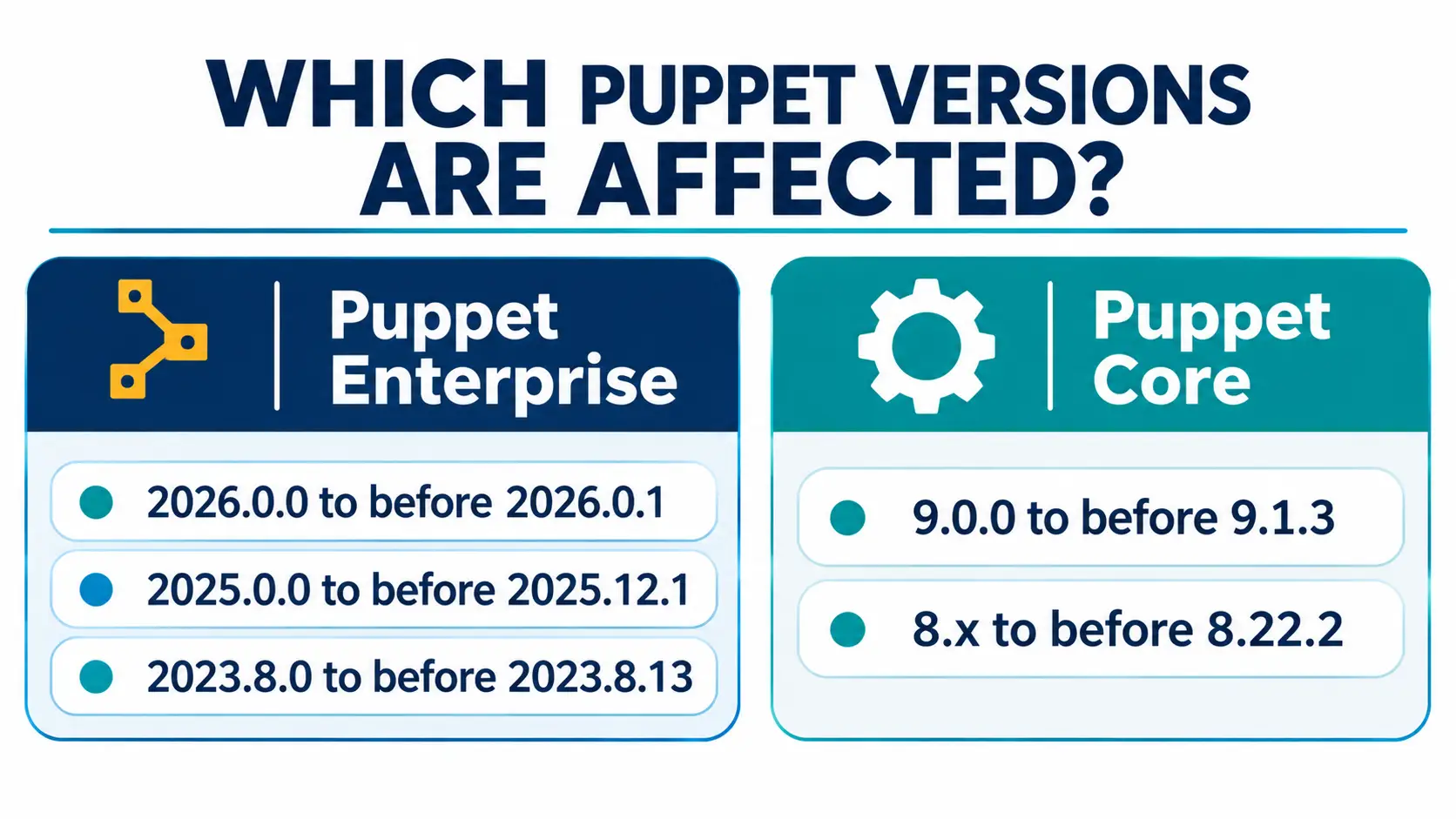
According to CERT-In, the vulnerability affects the following versions of Puppet Enterprise and Puppet Core:
Product | Affected Versions |
|---|---|
Puppet Enterprise | 2026.0.0 before 2026.0.1 |
Puppet Enterprise | 2025.0.0 before 2025.12.1 |
Puppet Enterprise | 2023.8.0 before 2023.8.13 |
Puppet Core | 9.0.0 before 9.1.3 |
Puppet Core | 8.x before 8.22.2 |
Organizations and individuals using these versions should review their deployments and apply the appropriate vendor updates.
Understanding the Perforce Puppet Vulnerability
Puppet is an infrastructure management platform designed to automate the configuration, deployment and maintenance of servers and other IT resources across distributed environments.
It helps organizations manage infrastructure configurations through centralized automation.
The vulnerability identified by CERT-In originates from improper deserialization of untrusted data within Puppet's report-processing functionality.
Deserialization is the process of converting structured data into an object that an application can use. When an application processes untrusted data without adequate validation, specially crafted input may cause unintended behavior.
In this case, the report-processing functionality does not properly handle certain untrusted data, creating an opportunity for an attacker to execute arbitrary code on the affected Puppet Server.
How Attackers Could Exploit the Vulnerability
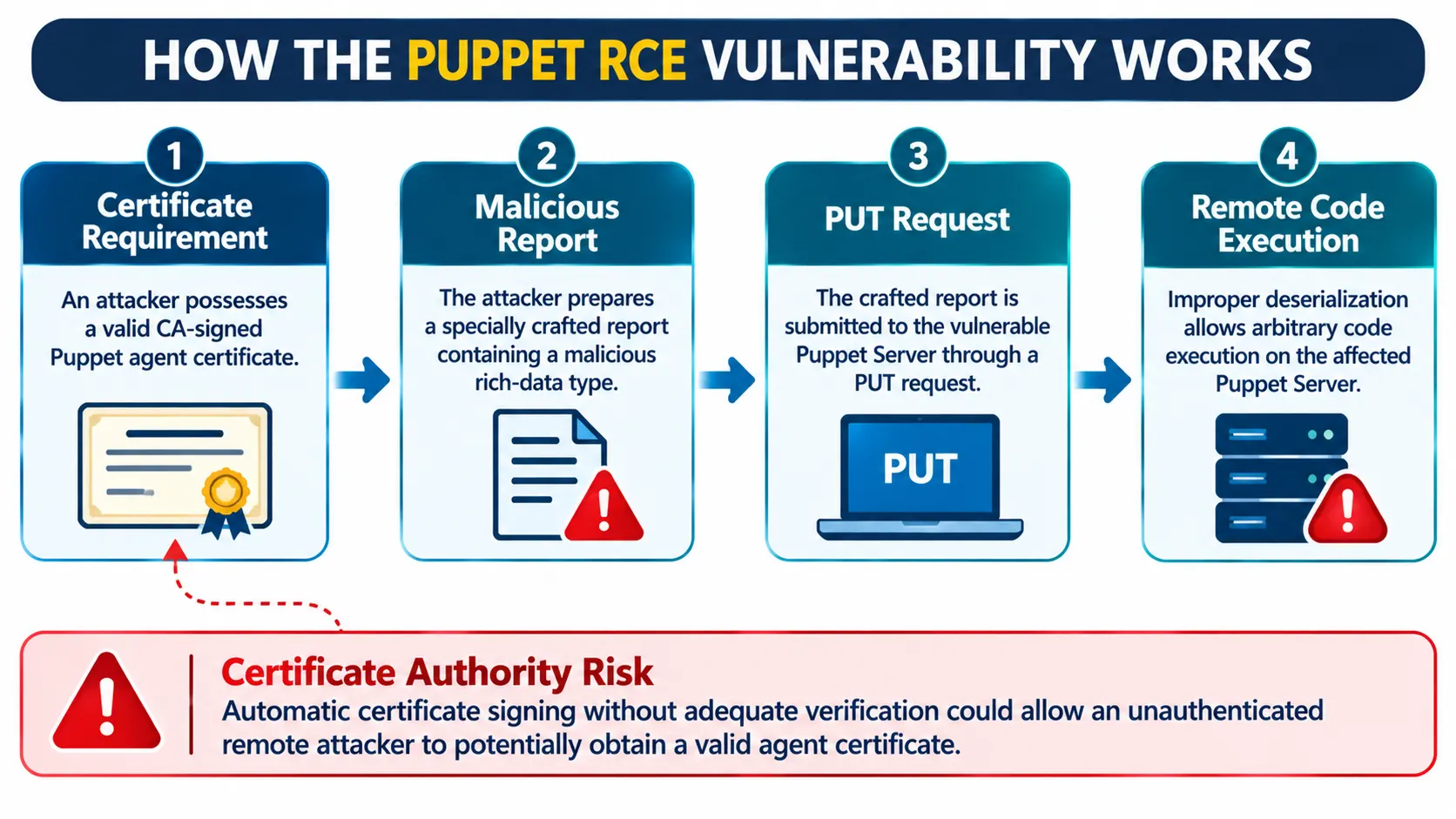
According to CERT-In, exploitation involves submitting a specially crafted report containing a malicious rich-data type through an HTTP PUT request.
The attack requires a valid CA-signed agent certificate.
An attacker who possesses such a certificate could submit the malicious report to the vulnerable Puppet Server and potentially trigger arbitrary code execution.
CERT-In also highlights an important certificate authority configuration risk.
Where the Certificate Authority (CA) automatically signs certificate requests without adequate verification, an unauthenticated remote attacker could potentially obtain a valid agent certificate and use it to exploit the vulnerability.
This creates an additional security concern for environments where certificate-signing processes do not adequately verify incoming requests.
Successful exploitation could allow an attacker to:
Execute arbitrary code on the affected Puppet Server.
Modify files on the compromised server.
Gain unauthorized access to affected systems.
Compromise the affected Puppet Server.
Potential Security Impact
CERT-In classifies the risk associated with this vulnerability as very high.
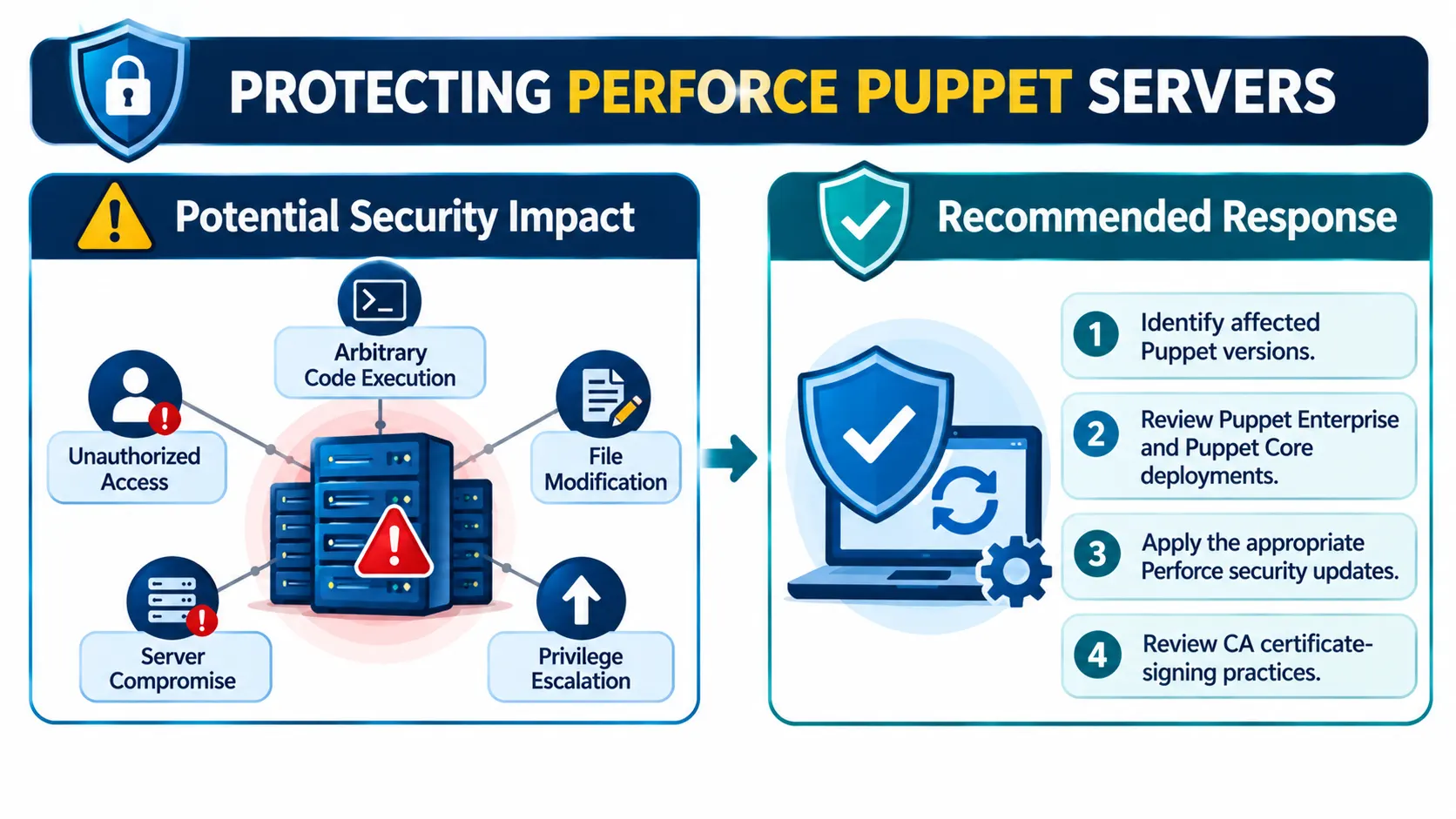
The potential consequences include remote code execution, privilege escalation and complete compromise of the affected server.
Because Puppet is used to manage infrastructure configurations and deployments, compromising an affected Puppet Server presents a significant security concern for organizations relying on the platform.
The advisory identifies unauthorized access and system compromise as additional potential impacts.
However, CERT-In does not disclose specific exploitation incidents, affected organizations or the number of systems exposed to this vulnerability.
CERT-In's Recommended Mitigation
CERT-In advises affected organizations and individuals to apply the appropriate security updates provided by the vendor, Perforce.
Administrators should review their Puppet deployments against the affected version list and upgrade to the corresponding fixed releases.
The relevant vendor security advisory is available here:
Perforce Security Advisory:
https://portal.perforce.com/s/cve/a91Qi000003IaHpIAK/report-deserialization-code-execution
Organizations should prioritize reviewing affected Puppet Enterprise and Puppet Core installations and ensure that the appropriate updates are applied.
Additional details were not disclosed in the CERT-In announcement regarding other mitigation measures.
What Organizations Should Review
The advisory highlights the importance of maintaining secure infrastructure management systems and reviewing how they process externally supplied data.
Organizations using affected Puppet versions should focus on identifying vulnerable installations and applying the vendor-provided updates.
They should also review their certificate authority configuration, particularly whether certificate requests are automatically signed without adequate verification, as highlighted in the advisory.
Addressing these areas can help reduce exposure to the attack conditions described by CERT-In.
Conclusion
The critical vulnerability in Perforce Puppet highlights the security risks associated with improper handling of untrusted data in infrastructure management platforms.
Tracked as CVE-2026-115731, the flaw could allow remote code execution through specially crafted reports when the required certificate conditions are met.
CERT-In has advised users of affected Puppet Enterprise and Puppet Core versions to apply the security updates provided by Perforce.
Organizations should review their deployments and prioritize remediation to protect affected Puppet Servers from potential compromise.
About the Author