
AWS Fixes ParallelCluster CLI Path Traversal Vulnerability Affecting Log Exports
AWS has addressed CVE-2026-124033, a path traversal vulnerability in ParallelCluster CLI versions before 3.16.0. An authenticated user with write access to the log export S3 bucket could write files outside the intended directory on the machine running the export command.
Xcademia Team
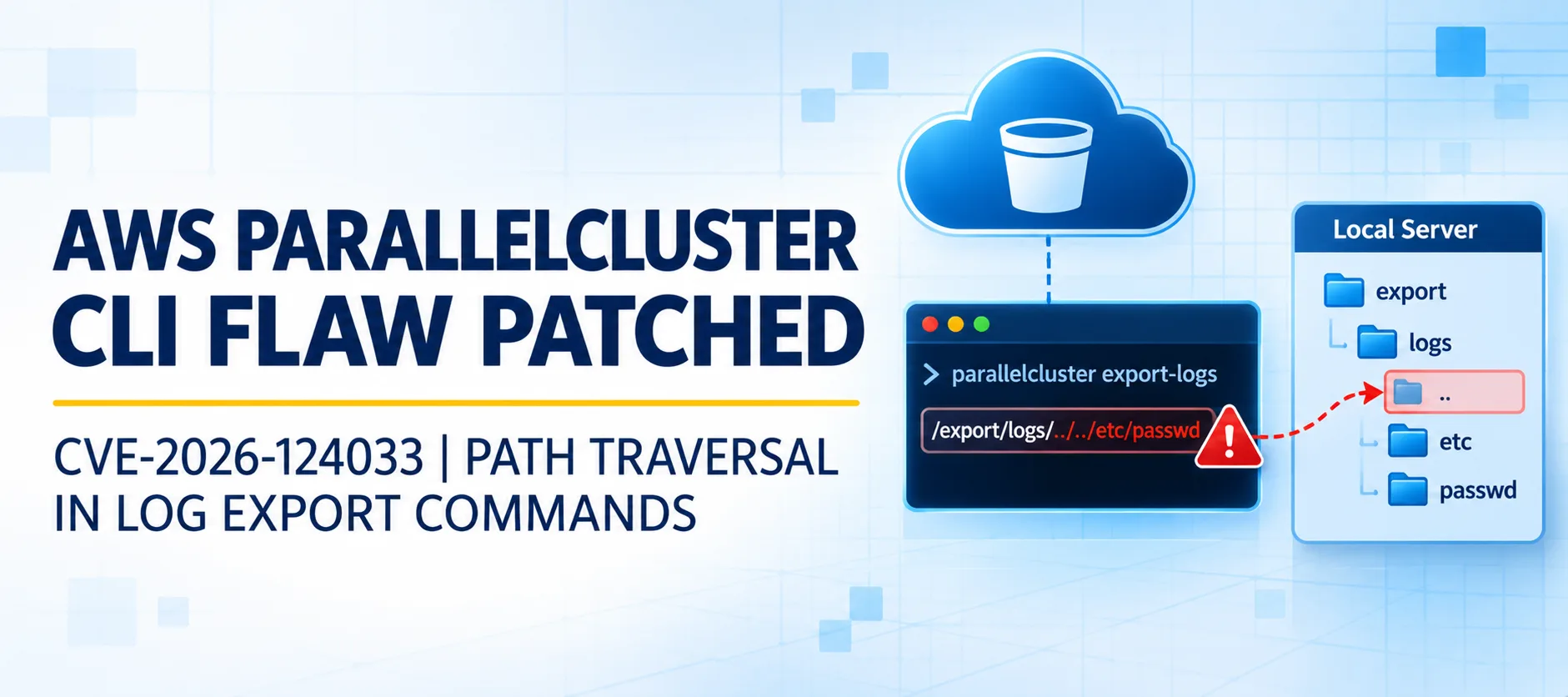
Amazon Web Services (AWS) has disclosed a relative path traversal vulnerability in the log export commands of its open-source AWS ParallelCluster Command Line Interface (CLI).
Tracked as CVE-2026-124033, the vulnerability affects AWS ParallelCluster CLI versions from 3.0.0 to versions earlier than 3.16.0.
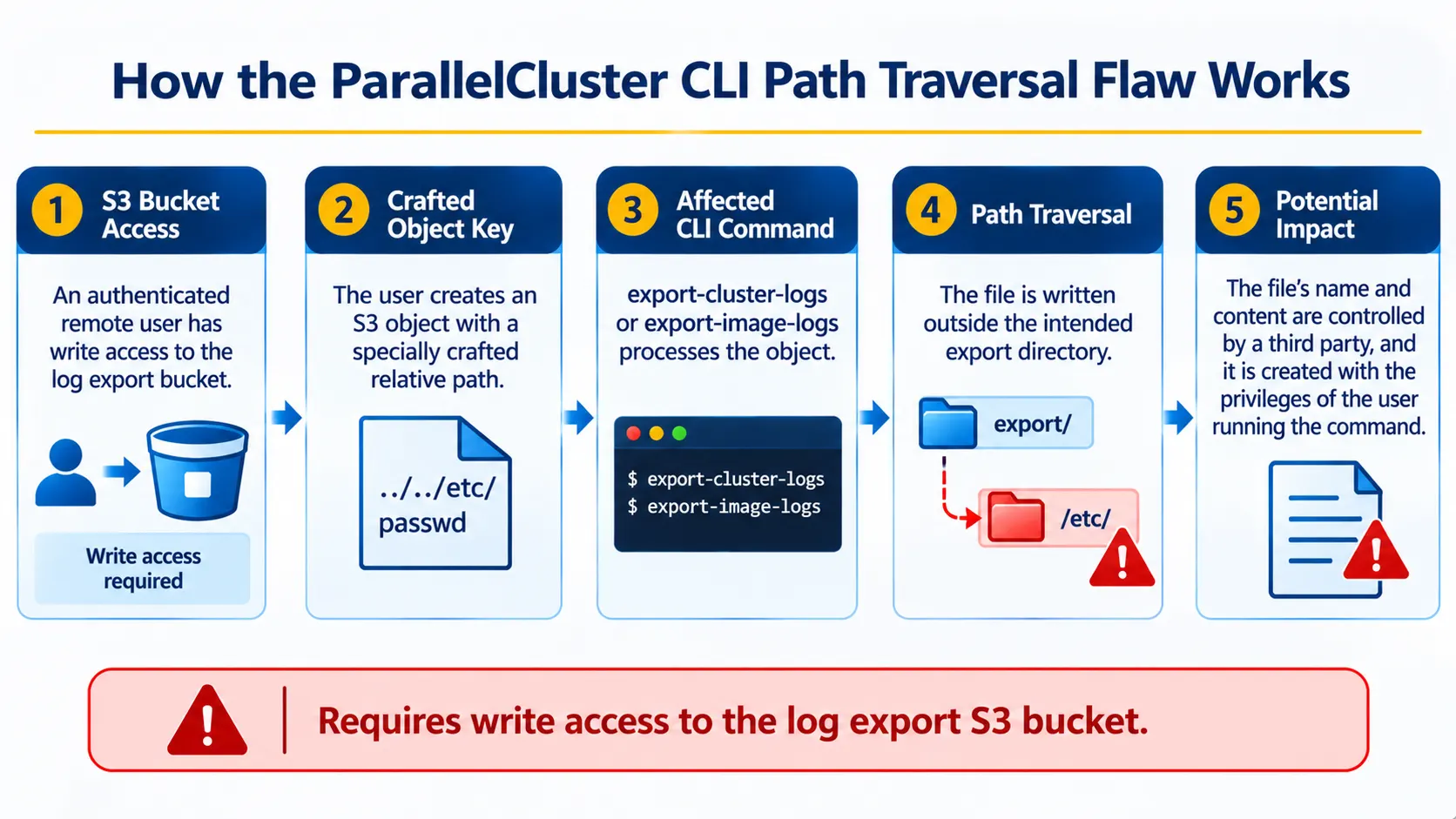
According to AWS, an authenticated remote user with write access to the Amazon S3 bucket used for log exports could exploit the issue by supplying a specially crafted S3 object key. This could cause the export commands to write files outside their intended export directory on the machine running the CLI command.
The resulting files would have names and content controlled by a third party and would be created with the privileges of the user executing the command.
AWS addressed the issue in aws-parallelcluster version 3.16.0 and recommends upgrading to the latest version. The company also advises users to restrict access to the S3 bucket used for log exports.
What Is Affected by CVE-2026-124033?
AWS ParallelCluster CLI is an open-source command-line tool distributed through PyPI as aws-parallelcluster. Customers use it to create and manage high-performance computing (HPC) clusters on AWS.
The vulnerability affects two commands:
export-cluster-logsexport-image-logs
These commands are used to export cluster and image logs. AWS identified a relative path traversal issue in versions of the CLI before 3.16.0.
The affected version range is:
Component | Affected versions |
|---|---|
AWS ParallelCluster CLI | 3.0.0 and later, but earlier than 3.16.0 |
Fixed version | 3.16.0 |
Administrators should check the installed CLI version and determine whether their log export workflows use an affected release.
How the Path Traversal Vulnerability Works
The issue involves how the log export commands handle S3 object keys when writing exported files to the local machine.
An authenticated remote user who has write access to the relevant log export S3 bucket could create an object with a crafted key. When an affected CLI command processes that object, the relative path traversal issue could allow the resulting file to be written outside the directory intended for log exports.
This means the issue is not described as an unauthenticated attack against any AWS ParallelCluster CLI installation. The scenario specified by AWS requires an attacker to have write access to the S3 bucket used for log exports.
The security impact also depends on the privileges of the local user running the command. AWS states that files created through the issue would use the privileges of that user.
What Could an Attacker Achieve?
AWS states that successful exploitation could allow files to be written outside the intended export directory on the machine running the affected command.
The files would have:
Names controlled by a third party.
Content controlled by a third party.
The privileges of the local user executing the export command.
The bulletin does not state that the vulnerability directly enables remote code execution, privilege escalation, or access to arbitrary systems. Those impacts should not be assumed from the disclosed path traversal behavior.
The local execution context is relevant because the files are created with the permissions of the user running the command. Organizations should therefore consider which accounts execute log exports and what access those accounts have on the host.
AWS did not provide additional details about specific exploitation scenarios or confirmed attacks in the bulletin.
How to Address the Vulnerability
AWS confirmed that the issue has been fixed in aws-parallelcluster version 3.16.0.
The company recommends upgrading to the latest version and ensuring that any forked or derivative code incorporates the new fixes.
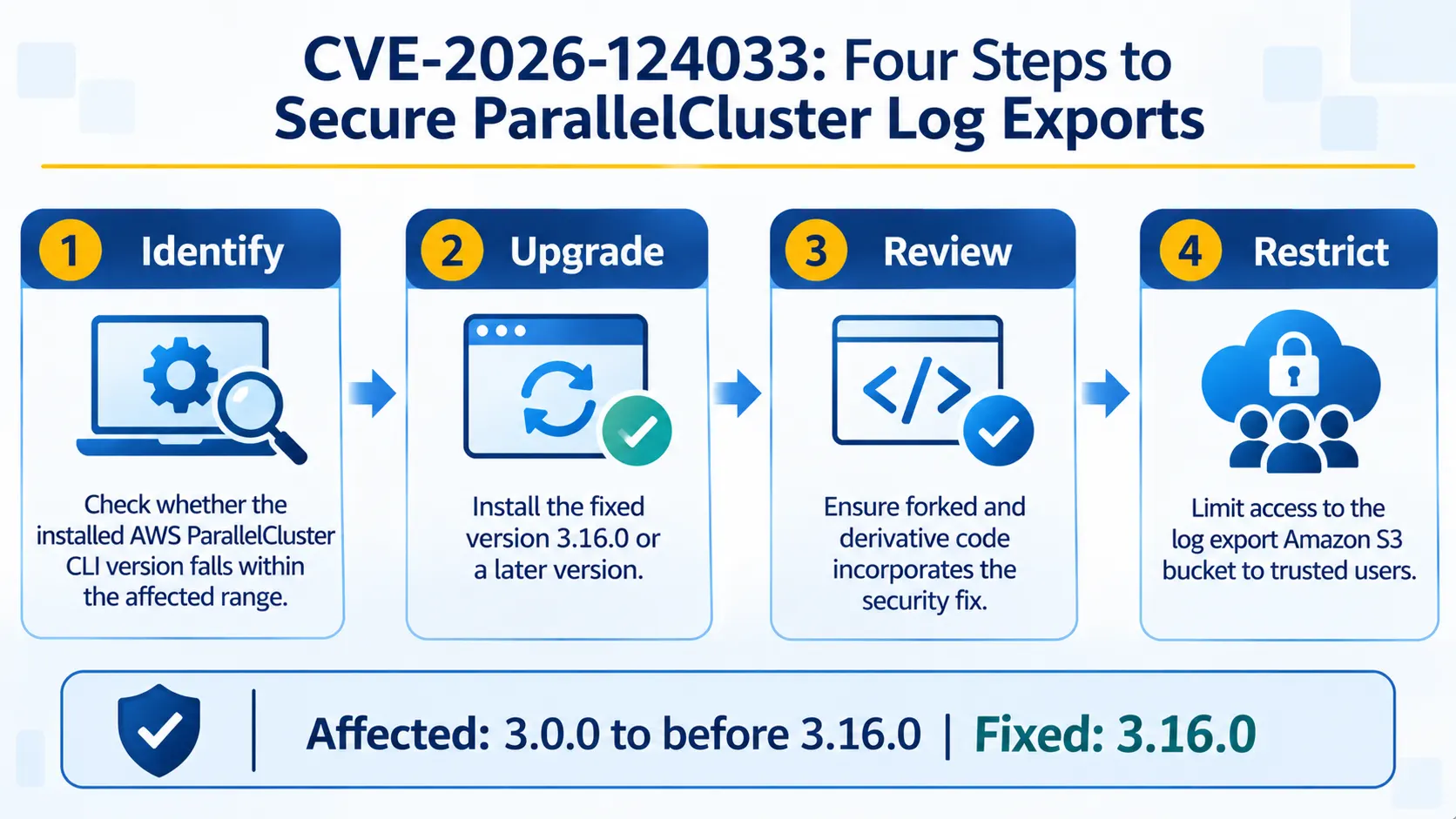
Organizations using the affected CLI should consider the following actions based on AWS's guidance:
Check the installed version: Identify deployments running versions from 3.0.0 up to, but not including, 3.16.0.
Upgrade the CLI: Move to the latest available version, incorporating the fix introduced in 3.16.0.
Review derivative code: Check whether internally maintained forks or derivative implementations include the relevant security changes.
Restrict S3 bucket access: Ensure that only trusted users can access the Amazon S3 bucket used for log exports.
AWS specifically identifies restricting access to the log export bucket as a workaround. The bulletin does not provide additional temporary configuration changes or detailed detection instructions.
Why S3 Bucket Permissions Matter in Log Export Workflows
The vulnerability highlights how permissions on cloud storage can affect the security of tools that consume exported data.
In this case, AWS identifies write access to the log export S3 bucket as a necessary condition in the described attack scenario. The issue occurs when the affected CLI processes an object containing a crafted key and writes the resulting file outside its intended directory.
For organizations using ParallelCluster, the advisory reinforces the importance of limiting write permissions on buckets used by operational tools. It also demonstrates why software that processes remotely stored files should handle file paths carefully.
These observations are broader security considerations based on the disclosed vulnerability. AWS's specific recommendations remain to upgrade the CLI, incorporate the fix into derivative code, and restrict bucket access to trusted users.
Conclusion
CVE-2026-124033 affects AWS ParallelCluster CLI versions from 3.0.0 to before 3.16.0. The relative path traversal flaw in export-cluster-logs and export-image-logs could allow an authenticated user with write access to the log export S3 bucket to create files outside the intended export directory.
AWS has addressed the issue in version 3.16.0. Organizations should check their installed versions, upgrade to the latest release, review derivative code, and ensure that the relevant S3 bucket is accessible only to trusted users.
Source: AWS Security Bulletins
About the Author