
Ahold Delhaize Cybersecurity Incident: Retailer Takes Systems Offline as Investigation Begins
Ahold Delhaize has taken some systems offline following a cybersecurity incident affecting its network. While physical stores remain open, disruptions to digital services highlight the operational risks facing large retail organisations.
Xcademia Team

Ahold Delhaize Takes Systems Offline Following Cybersecurity Incident
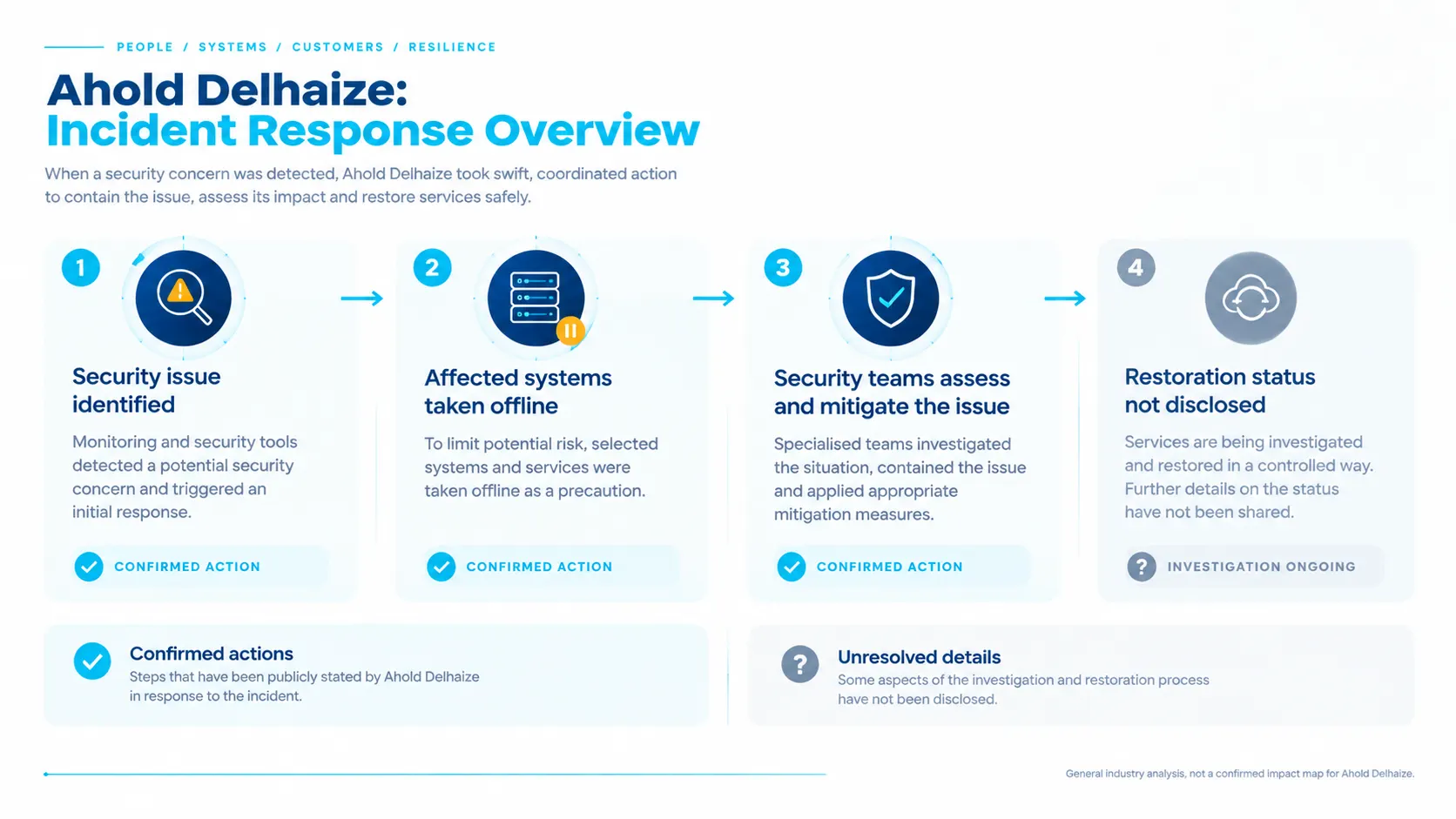
Ahold Delhaize has confirmed a cybersecurity incident within its network, prompting precautionary shutdowns as the company works to assess and mitigate the issue. In a statement published on 12 October 2026, the Netherlands-based retail group said it had taken some systems offline to help protect its infrastructure.
The company confirmed that its physical stores remained open and continued serving customers at the time of the announcement. However, the incident has also been associated with disruptions to online services and retail operations across several of its brands.
The company has not publicly disclosed the cause of the incident, identified a threat actor or confirmed whether customer or employee information was compromised.
What Happened in the Ahold Delhaize Cybersecurity Incident?
In its official announcement, Ahold Delhaize said its teams were taking steps to assess and mitigate a security issue within its network. The response included taking selected systems offline as a protective measure.
The company said protecting its infrastructure in the interests of customers, employees and business partners remained a priority. It also apologised for the inconvenience caused by the incident.
The announcement did not identify the initial point of entry, describe the technical nature of the incident or specify which internal systems had been isolated.
It is therefore important to distinguish the confirmed incident from possible attack scenarios. Although the company described the event as a cybersecurity incident, the available announcement does not establish whether it involved ransomware, unauthorised access, data theft or another form of malicious activity.
Digital Services and Retail Operations Face Disruption
The incident has affected more than the parent company's internal network. Reports published on 12 October described outages involving websites and digital services associated with several Ahold Delhaize retail brands.
Albert Heijn, Etos and Gall & Gall, which operate in the Netherlands, reported disruption to customer-facing services. Albert Heijn's online ordering and delivery operations were also affected, according to contemporaneous reporting.
Reports also identified website outages affecting Ahold Delhaize's US grocery businesses, including Food Lion, The Giant Company, Giant Food, Hannaford and Stop & Shop.
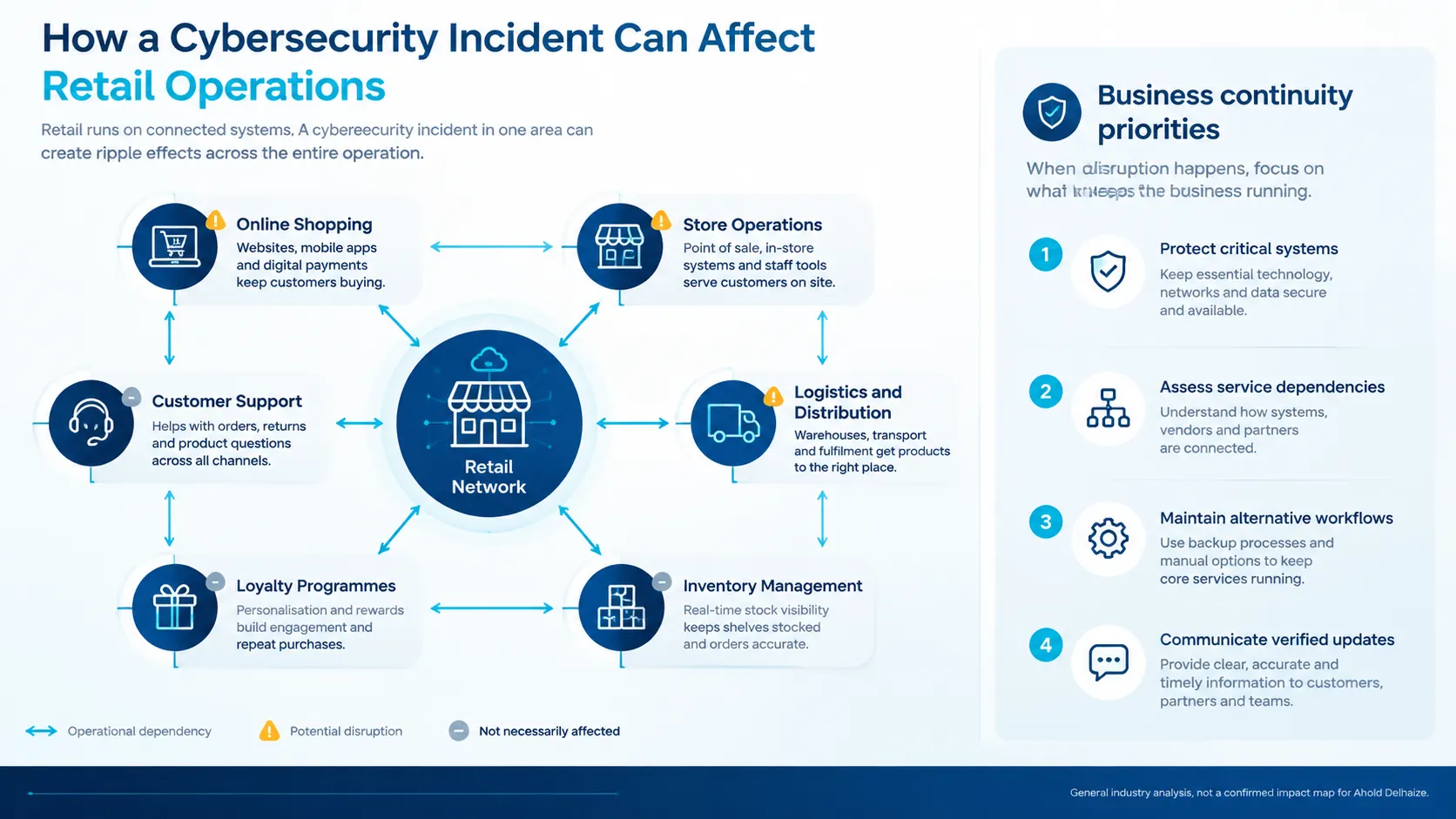
Although the parent company's initial statement said stores remained open, this did not mean every supporting service was operating normally. Retailers rely on interconnected systems for online shopping, order fulfilment, customer support, loyalty programmes and logistics.
The exact operational impact varies by service and brand. The company had not provided a complete technical breakdown of the affected systems or a confirmed timeline for restoring all disrupted services in the announcements reviewed for this article.
Why Taking Systems Offline Can Be a Security Measure
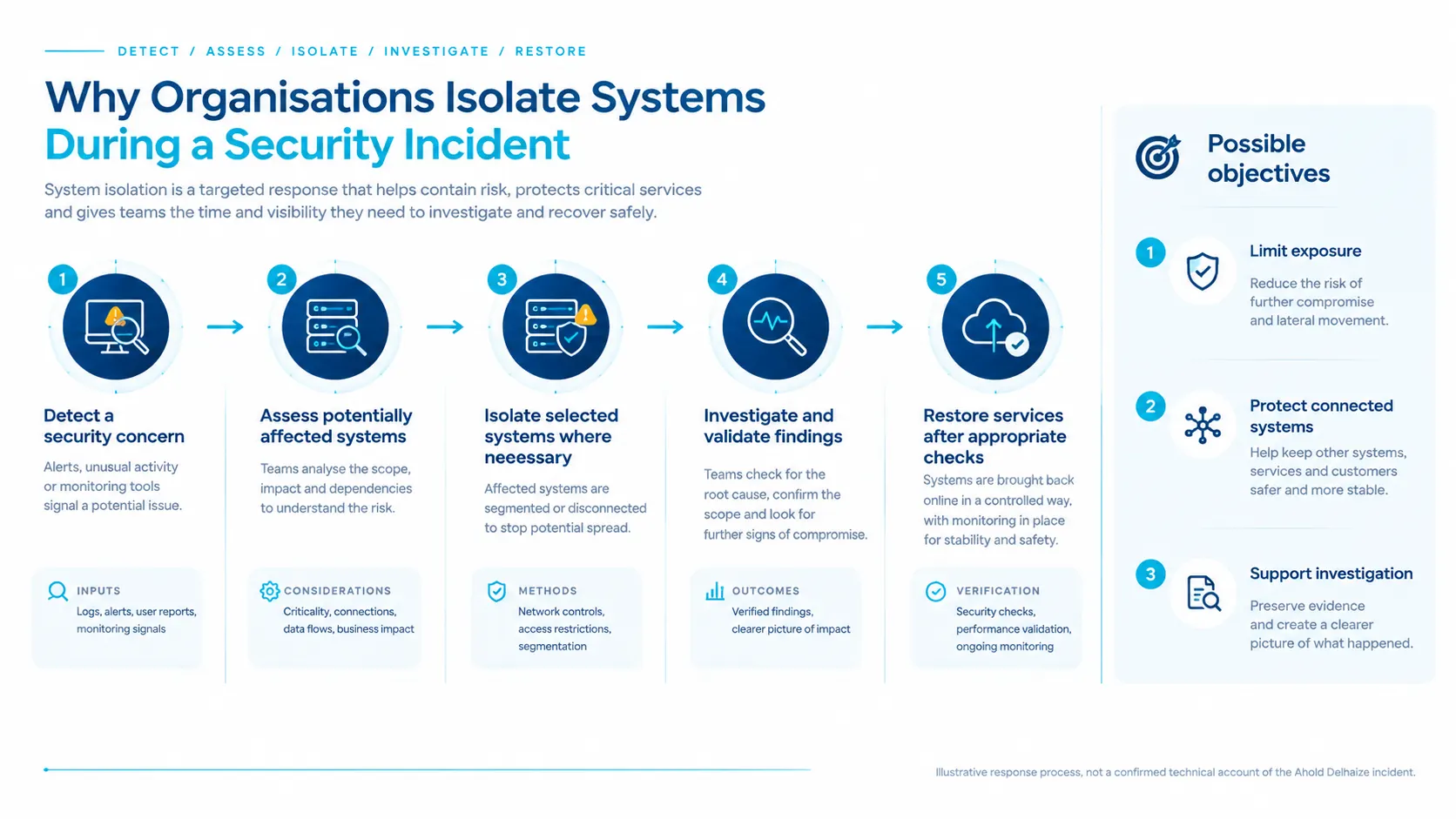
Taking systems offline can form part of an incident response strategy when an organisation needs to protect its infrastructure while investigating a potential threat.
Depending on the circumstances, security teams may isolate affected systems, restrict access or suspend selected services while they assess the scope of an incident. These actions can help limit further exposure while investigators work to establish what happened.
In Ahold Delhaize's case, the company explicitly confirmed that some systems were taken offline to help protect them. It did not disclose the specific technical controls used or explain whether the shutdowns were triggered by confirmed malicious activity on individual systems.
This distinction matters. A precautionary shutdown is evidence of a protective response, not proof that an attacker gained control of the systems or accessed sensitive information.
What Is Known About Data Exposure and the Cause?
As of the information available in the company's initial announcement, Ahold Delhaize had not publicly confirmed whether customer records, employee information, financial details or other sensitive data had been accessed or stolen.
The announcement also did not name a threat actor, identify an exploited vulnerability or confirm the use of ransomware. The company had not provided a detailed account of the incident's entry point or technical scope.
These gaps do not establish that data was unaffected. They mean the available public information is insufficient to determine whether the incident involved data exposure, service disruption alone or a combination of effects.
For customers, employees and business partners, further official updates will be important for understanding whether any additional protective measures are necessary.
The Wider Cybersecurity Implications for Retailers
The incident highlights a broader industry challenge: modern retail businesses depend on digital infrastructure to support both customer experiences and physical operations.
Websites and mobile applications are only part of this environment. Retail operations can also depend on systems supporting distribution, inventory management, customer loyalty, employee access and online fulfilment.
When selected systems become unavailable, the consequences may extend beyond the immediate technical problem. Customers can lose access to digital services, employees may encounter operational difficulties, and suppliers may face changes to ordering or delivery arrangements.
For enterprises, this could mean that incident response planning needs to account for both cybersecurity containment and business continuity. Plans should identify critical systems, establish alternative operating procedures where practical, and define how staff, suppliers and customers will receive verified updates during an incident.
These are general lessons for retail security teams, not additional measures that Ahold Delhaize has confirmed implementing during this incident.
What Happens Next?
The immediate priorities are to determine the scope of the security issue, protect the company's infrastructure and restore affected services safely.
The initial announcement did not provide a definitive recovery timeline. It also did not quantify the financial impact or disclose when a detailed investigation report might be available.
Customers and business partners should rely on official company communications for updates rather than assuming that an outage confirms data theft or that operational availability means every system is unaffected.
For cybersecurity and IT teams, the incident is a reminder that service availability, security containment and business continuity need to be managed together. The duration and broader consequences of this event will depend on findings and recovery developments that have not yet been fully disclosed.
The next meaningful update will be one that clarifies the scope of the disruption, the status of affected services and whether the investigation has established any impact on sensitive information.
Conclusion
Ahold Delhaize's response to the October 2026 cybersecurity incident centres on precautionary system shutdowns and an ongoing effort to assess and mitigate the security issue. Its initial statement confirmed that stores remained open, while subsequent reporting described disruptions to digital services across several retail brands.
The incident's cause, full technical scope and potential data impact remain unconfirmed in the public information reviewed. Further official disclosures will be needed to establish the extent of the incident and the progress of service restoration.
Source: Ahold Delhaize Newsroom
About the Author