
OpenAI GPT-6.1 Sol Powers CodeRabbit's Security Reviews Across Complex Codebases
OpenAI says GPT-6.1 Sol is helping CodeRabbit investigate software vulnerabilities across interconnected repositories, verify selected findings in isolated environments and prepare proposed fixes for human review.
Xcademia Team
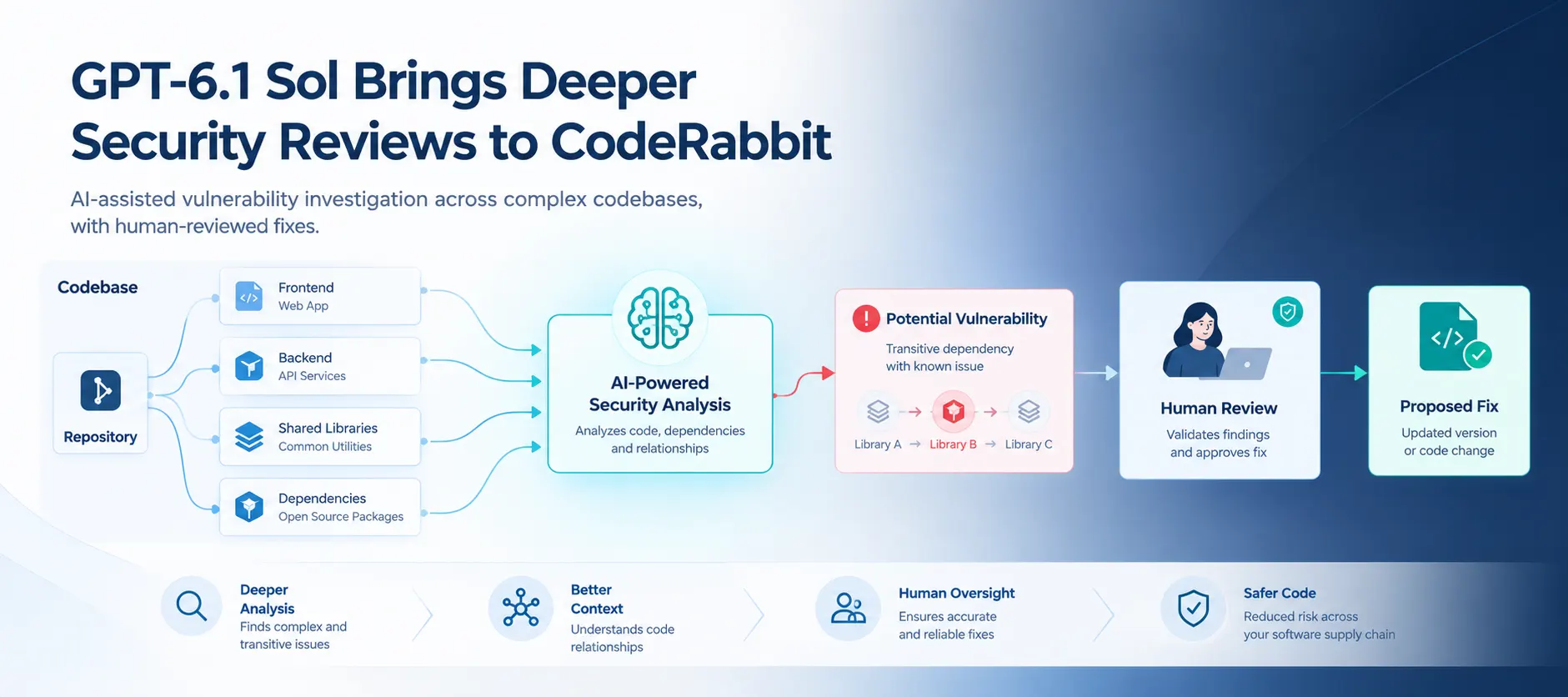
OpenAI has announced that CodeRabbit is using GPT-6.1 Sol as the primary model in its security agent to investigate potential vulnerabilities across complex software codebases. The integration extends security reviews beyond individual code changes, helping developers understand how a modification could affect shared libraries, dependencies and other application components.
The announcement reflects a growing challenge in modern software development: a change that appears safe in isolation can introduce security risks elsewhere in an application. As development teams adopt AI-assisted coding tools, security reviews need to consider not only the code being changed but also its connections to the wider software system.
According to OpenAI, CodeRabbit combines GPT-6.1 Sol with other advanced models and security tools. Its approach is designed to complement established security scanners while keeping human reviewers responsible for approving changes that reach production.
1. Why Security Reviews Need to Go Beyond Individual Code Changes
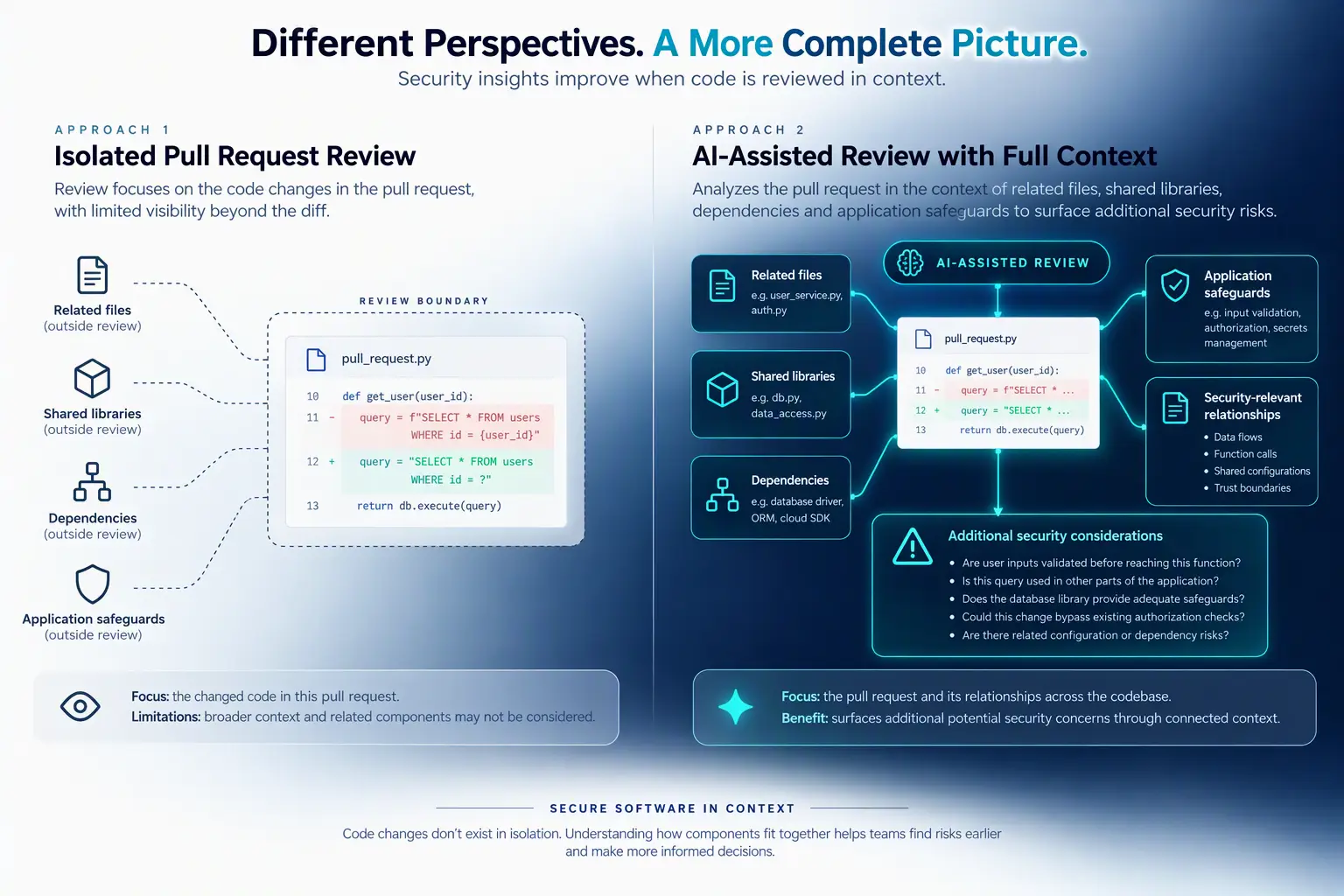
Software applications rarely operate as isolated collections of files. They depend on shared libraries, external packages, authentication components and other services that interact in complex ways.
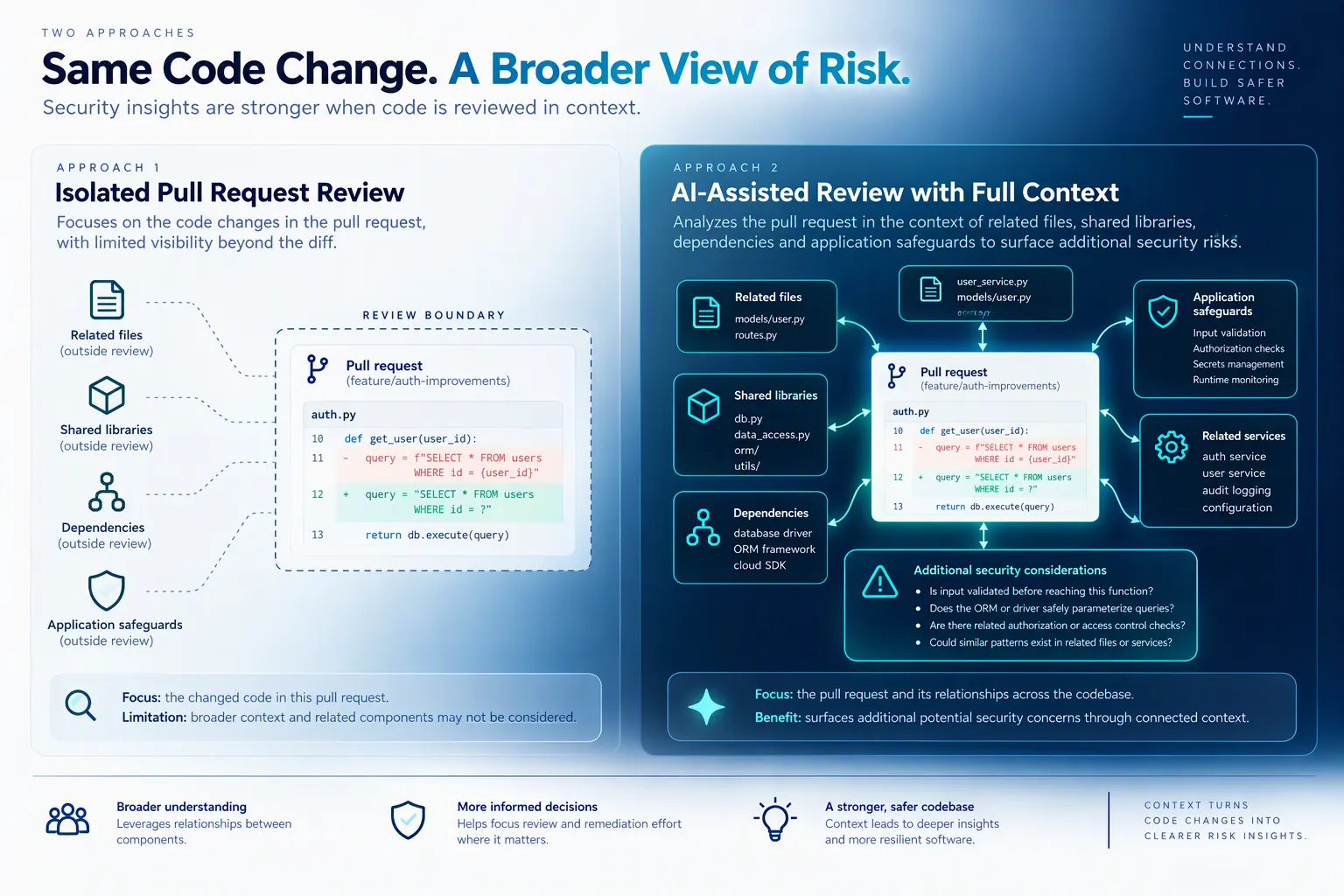
A pull request may change one function while affecting the behaviour of another component that relies on it. A modification to a shared authentication library, for example, could have implications for multiple applications that use the same code.
Traditional security scanners remain important, but individual findings may not always explain how a weakness interacts with the wider application. Understanding these relationships requires examining code paths, dependencies and the behaviour of connected components.
OpenAI says GPT-6.1 Sol helps CodeRabbit connect behaviour across files and components to identify potential security issues that might otherwise be difficult to understand from a narrow review.
The model supports this process by helping analyse relationships within the codebase. CodeRabbit's security review also operates independently of the AI agent that originally wrote the code, providing a separate review step.
This separation is relevant to teams adopting AI-generated code because the system responsible for producing a change is not the only system evaluating its potential security implications.
2. How GPT-6.1 Sol Supports CodeRabbit's Security Agent
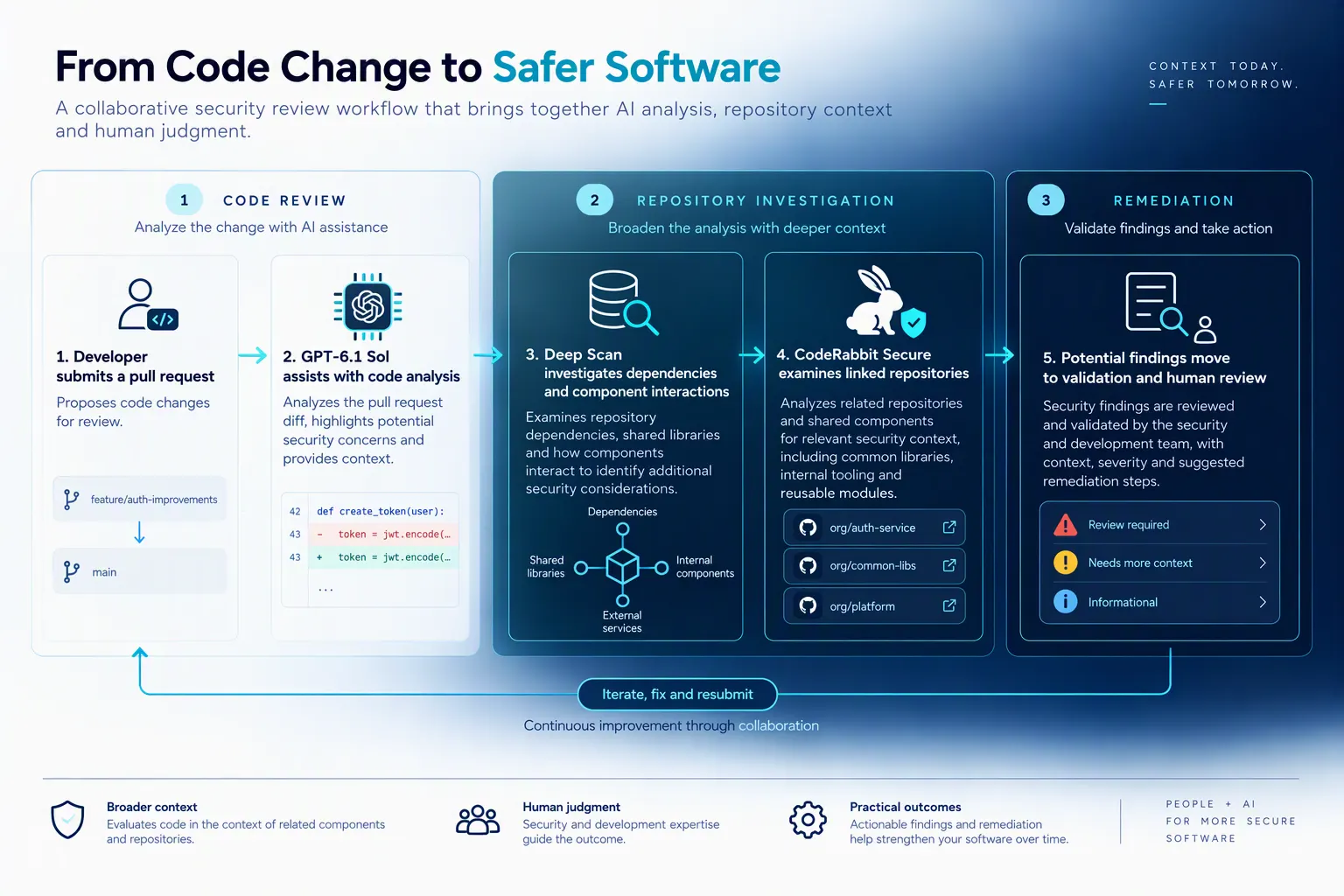
OpenAI describes several stages at which GPT-6.1 Sol supports CodeRabbit's security workflows. These include reviewing changes during development, investigating broader repository relationships and extending analysis to linked repositories.
Pull request security reviews
During pull-request reviews, GPT-6.1 Sol helps analyse code changes as developers work.
Pull requests are a common way for development teams to propose, discuss and approve code modifications. Reviewing them during development can help teams examine potential security concerns before merging changes into the main codebase.
CodeRabbit uses the model to help identify security-related issues within this workflow, allowing findings to appear alongside the existing development review process.
Deep Scan: Investigating wider code relationships
CodeRabbit's Deep Scan supports broader investigation across repositories, including dependencies and interactions between software components.
This broader scope matters because a security weakness may depend on how multiple parts of an application behave together. Reviewing the relevant relationships can help security teams investigate issues that extend beyond the lines directly modified in a pull request.
CodeRabbit Secure: Connecting linked repositories
CodeRabbit Secure extends this investigation to linked repositories.
OpenAI gives the example of a shared authentication library. If a weakness affects a component used by multiple applications, examining the linked repositories can help teams understand the potential wider impact.
The announcement does not disclose a complete technical specification of the integration, its supported repository limits or its detailed detection methodology. Additional details were not disclosed in the announcement.
3. Moving From Potential Findings to Verified Issues and Proposed Fixes
Finding a possible vulnerability is only one part of the security process. Teams must also determine whether the finding represents a meaningful risk and decide how to address it.
OpenAI says CodeRabbit Secure connects investigation with remediation through two important capabilities.
Exploit verification in an isolated sandbox
For findings selected by users, CodeRabbit Secure can attempt exploit verification in an isolated sandbox without testing production systems.
This distinction is important. A suspected vulnerability may require further validation before a team can determine its practical significance. An isolated environment provides a separate setting for attempting verification rather than carrying out those tests against a live production system.
The announcement does not specify the full range of supported vulnerability classes, sandbox configurations or verification success rates. The company did not provide specific information about this area.
Proposed fixes through pull requests
For supported issues, CodeRabbit Secure can draft a pull request containing a proposed fix.
A developer or security reviewer can then inspect the suggested changes and decide whether to approve them. This connects the investigation stage to an established software development workflow rather than treating a security finding as the final output.
The human approval step remains essential. A proposed fix must be assessed for correctness, compatibility and unintended consequences before it is accepted.
OpenAI explicitly states that human reviewers remain responsible for deciding which changes are shipped.
4. CodeRabbit Reports Security Findings Across Thousands of Repositories
OpenAI reports that CodeRabbit is using GPT-6.1 Sol to flag security-related issues across thousands of repositories and organisations.
The findings feed into the pull-request workflows developers already use to review and improve their code. This integration is intended to make security analysis part of everyday development rather than a separate activity that occurs only after implementation.
However, the reported scale should be interpreted carefully. The announcement does not provide a breakdown of the repositories by programming language, organisation size or application type. It also does not disclose the number of confirmed vulnerabilities, false positives, successful fixes or measurable reductions in security incidents.
The reported repository coverage therefore indicates use across a broad set of software projects, but it should not be interpreted as a measure of detection accuracy or security effectiveness.
For engineering leaders, these distinctions matter when evaluating AI-assisted security tools. Adoption figures can demonstrate operational use, while more detailed evaluation data is needed to assess the quality and practical impact of the findings.
5. What the Integration Means for Development and Security Teams
OpenAI's announcement highlights a broader industry shift towards integrating AI-assisted security analysis into software development workflows.
For enterprises, the potential value lies in helping teams investigate complex code relationships, validate selected findings and prepare remediation proposals within familiar review processes.
Several practical considerations follow from this approach.
Earlier security investigation: Analysing code during pull-request review may help teams examine potential risks before changes are merged.
Broader dependency awareness: Repository-level analysis can help teams investigate how shared libraries and dependencies affect application security.
More connected remediation: Drafting proposed fixes as pull requests can link security findings to established development and approval processes.
Continued human oversight: Reviewers must assess whether findings are valid and whether proposed fixes are safe and appropriate.
These are potential benefits of the described workflow, not guarantees of improved security outcomes. Actual results depend on the quality of the analysis, the surrounding development process and how teams investigate and resolve findings.
Organisations should continue to use established security controls, testing practices and review procedures alongside AI-assisted analysis.
6. What OpenAI Has Not Disclosed
Although the announcement describes the integration's principal workflows, several areas remain unspecified.
OpenAI has not provided detailed figures for detection precision, false-positive rates, average remediation time or the number of vulnerabilities successfully fixed through the integration.
The announcement also does not provide a comprehensive technical breakdown of supported languages, repository limits, deployment configurations or pricing for the specific security workflows discussed.
These omissions mean readers should distinguish between the capabilities described by OpenAI and independently measurable security outcomes.
Further technical details and evaluation data would help organisations compare the approach with their existing application-security processes.
Conclusion: AI-Assisted Security With Human Approval
OpenAI's integration of GPT-6.1 Sol into CodeRabbit's security agent demonstrates how advanced AI models can support security reviews that extend beyond individual code changes.
The described workflow combines pull-request analysis, broader repository investigation, linked-repository review, sandbox-based verification of selected findings and proposed fixes for human approval.
The central development is not simply using AI to flag potentially vulnerable code. It is connecting investigation and remediation within the development workflow while preserving human responsibility for shipping changes.
For organisations building software with AI assistance, the announcement offers a practical example of how AI-supported security review can fit into existing engineering processes. Its long-term value will depend on how accurately it identifies meaningful risks, how useful its proposed fixes prove to be and how effectively teams incorporate the findings into their security practices.
Source: OpenAI
About the Author