
Microsoft Says CISOs Must Rethink Security as AI Agents Spread Across Enterprises
Microsoft says security leaders must adapt to the rapid growth of AI agents by strengthening identity governance, protecting sensitive data, improving visibility, and modernizing cyber defense against AI-enabled threats.
Xcademia Team
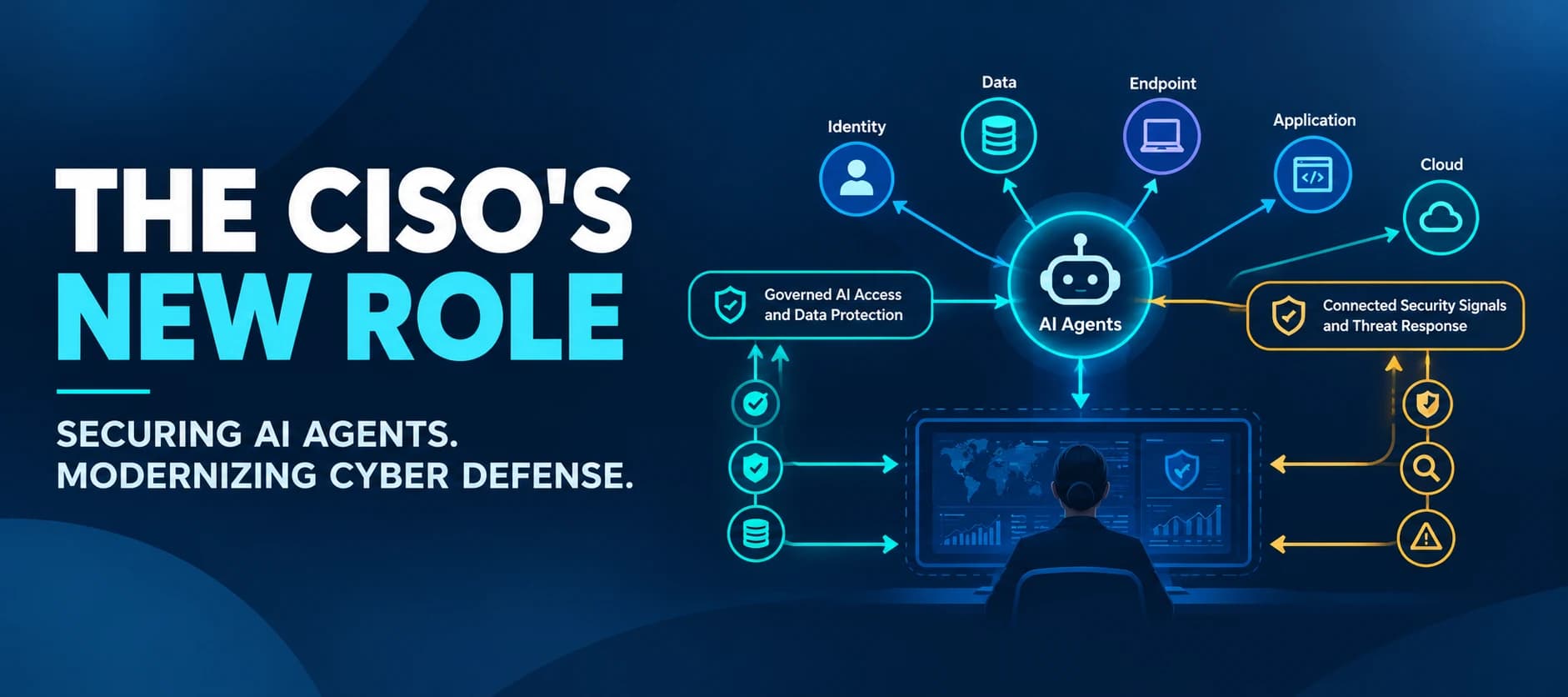
Microsoft is calling on chief information security officers (CISOs) to rethink enterprise security as AI agents become more common in workplace environments. In a new Microsoft Security Blog post, the company identifies two priorities for security leaders: protecting organizations as they adopt AI agents and adapting cyber defense to threats that increasingly use AI.
The article, published during Cybersecurity Awareness Month, highlights how employees are building and deploying AI systems that can access company data, interact with applications, and perform actions on their behalf. While these systems can support workplace productivity, Microsoft warns that poorly governed access and behavior can introduce security risks.
According to Microsoft's Work Trend Index Annual Report, the number of active agents in the Microsoft 365 ecosystem grew 15-fold year over year, while the number in large enterprises grew 18-fold. These figures illustrate the pace of agent adoption described by Microsoft.
The company also notes that AI development is no longer limited to experienced software developers. More employees can now build AI-powered systems, making it important to involve security teams early in the development process.
Why AI Agents Change Enterprise Security
Traditional security practices must account for systems that can access information and take actions rather than simply provide answers. An AI agent may be given access to applications, business data, and other organizational resources to complete assigned tasks.
Microsoft's concern is that access can create risk when an agent's permissions, ownership, and behavior are not properly governed. Even when an agent is built with good intentions, it may use the information and systems available to it in ways that require stronger controls.
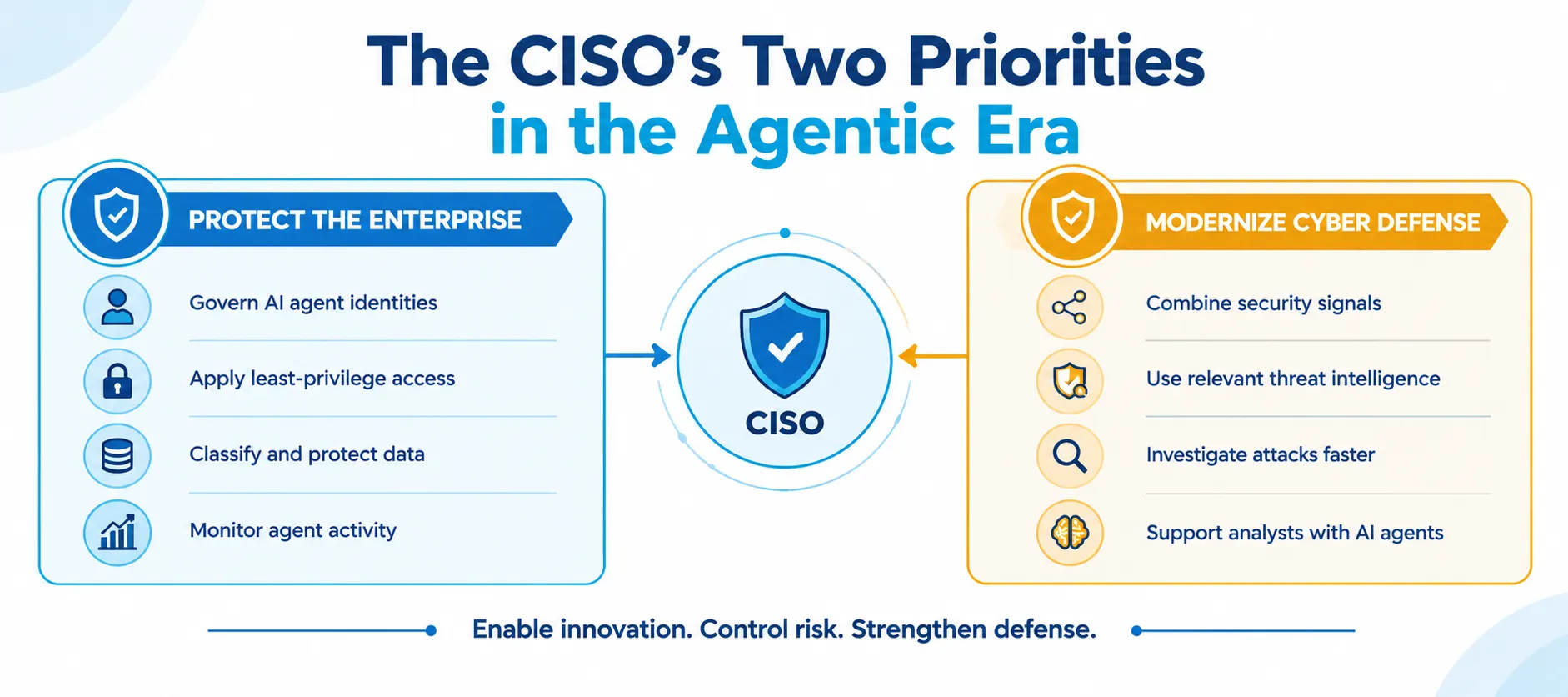
The company identifies two broad responsibilities for CISOs:
Protect the enterprise as AI adoption grows: Establish governance and security controls for the agents employees build and use.
Modernize cyber defense: Adapt security operations to attackers who use AI to work faster and at greater scale.
Microsoft argues that organizations need to enable innovation without introducing unmanaged risk, while maintaining the security fundamentals that remain important.
Guidance for Builders: Secure AI Agents Before Deployment
Microsoft directs developers and other employees building AI agents to involve their security teams before connecting agents to organizational systems and information.
The company highlights two practical considerations.
1. Give agents governed identities
Where supported and appropriate, agents should have their own governed identities instead of relying on personal or shared credentials. This helps organizations identify which agent performed an action and provides a way to disable it when necessary.
Clear identity management also helps security teams establish accountability for agent activity.
2. Protect the data agents can access
Organizations should put appropriate data protections in place before connecting agents to information sources. Microsoft emphasizes that an agent does not share human judgment about what information is appropriate to access or use.
As a result, developers should consider an agent's data access and permissions during design, rather than waiting until after deployment.
Microsoft also encourages builders to communicate with their CISO or security team early. This gives security teams an opportunity to understand what is being developed and help establish suitable controls.
Guidance for CISOs: Improve Visibility and Governance
For security leaders, Microsoft's first recommendation is to establish guardrails that allow employees to innovate without creating unmanaged risks.
The company emphasizes deep observability, identity governance, and data protection as core elements of this approach.
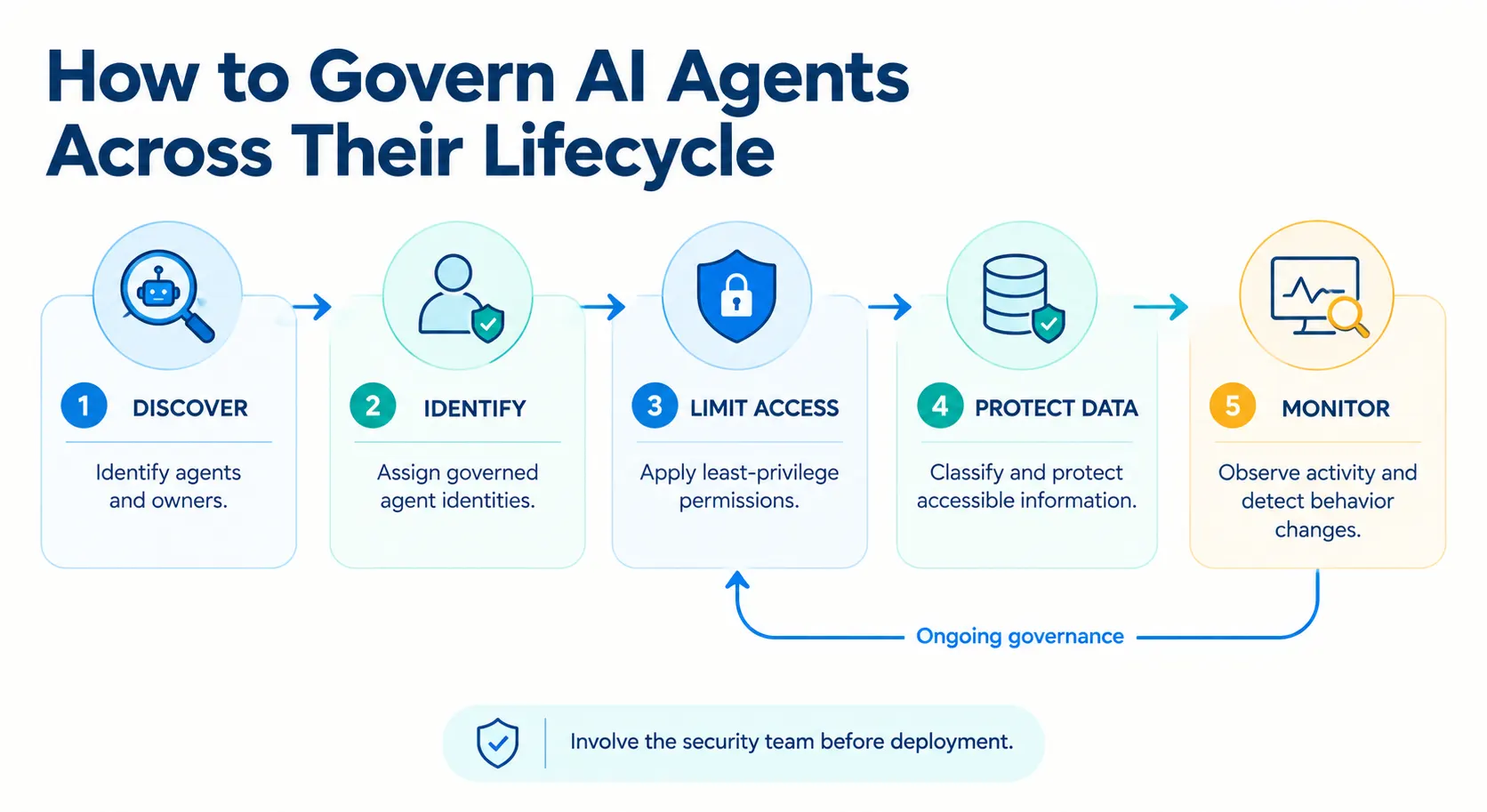
Gain visibility into agent activity
Security teams need to understand:
Which agents exist within the organization.
Who owns each agent.
Which information and systems each agent can access.
What actions the agents perform.
When an agent's behavior changes.
Microsoft argues that this visibility is necessary for identifying potential problems and allowing security teams to intervene before an issue grows.
Observability is therefore not limited to maintaining an inventory of agents. It also involves understanding their access and monitoring how they behave over time.
Enforce identity and data controls
Microsoft identifies identity and data as two areas where security leaders should maintain firm controls.
Each agent should have a governed identity and access only to the resources it needs. Information available to agents should also be classified and protected appropriately.
These controls provide a foundation for other governance decisions as organizations expand their use of AI agents.
Microsoft Calls for a Different Approach to Cyber Defense
Microsoft's second priority is adapting security operations to a threat environment in which attackers can use AI to move faster.
The company points to its 2026 Microsoft Digital Defense Report as evidence of the pressure this creates on defenders. Microsoft argues that modern defense requires more than adopting faster tools. Security teams need to improve how they combine information, assess threats, and act on what they learn.
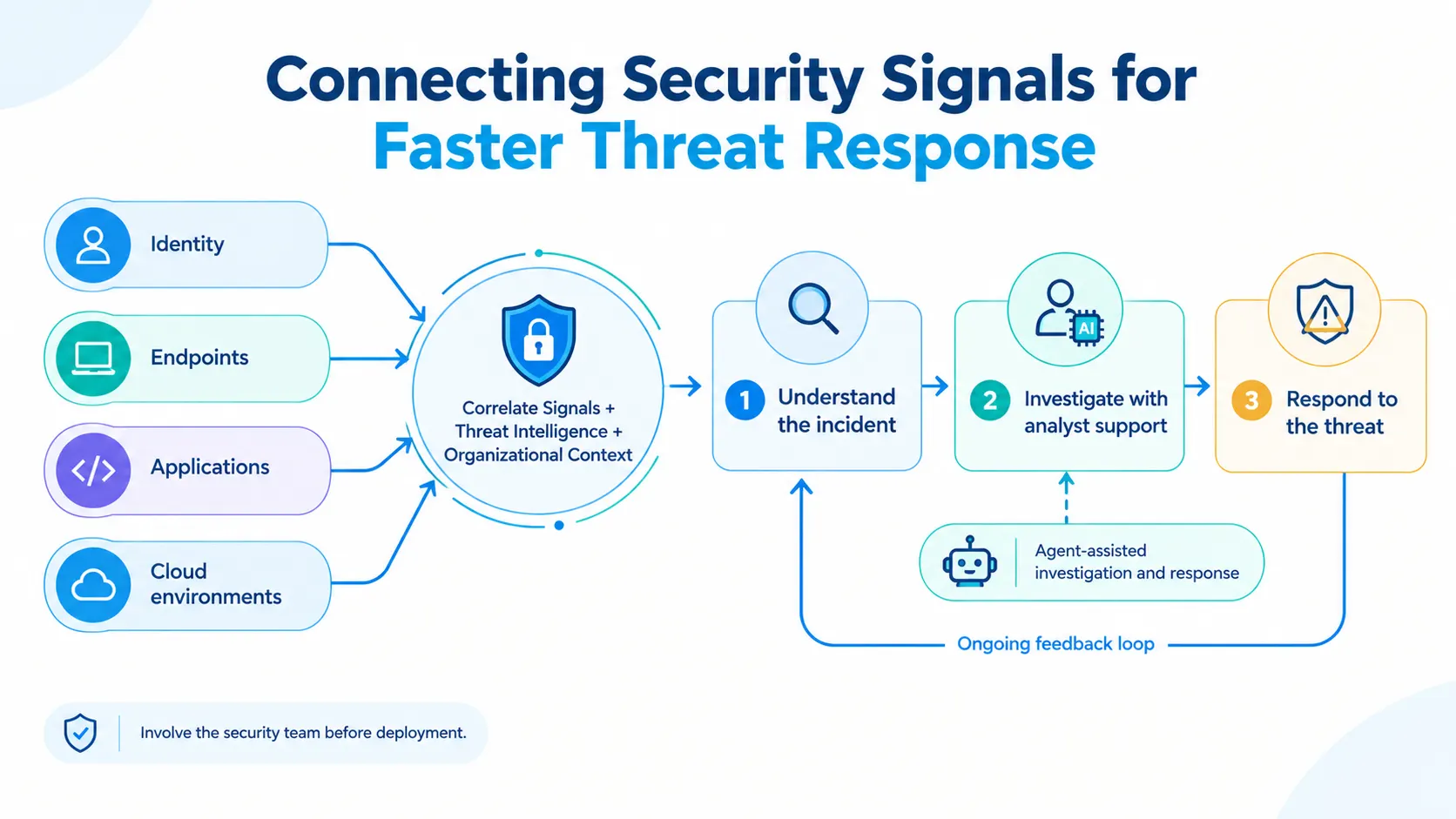
Connect security signals across environments
Attacks rarely appear in a single system or security layer. Microsoft says defenders need to bring together signals from:
Identity systems
Endpoints
Applications
Cloud environments
These signals should be considered alongside threat intelligence and organizational context. Connecting information from different environments can help security teams develop a more complete understanding of an attack and respond before an incident escalates.
The broader point is that disconnected security information can make it harder to understand what is happening across an organization.
Use threat intelligence to prioritize defense
Microsoft also emphasizes the importance of relevant threat intelligence and external security partnerships.
Threat intelligence helps organizations understand how threats are changing, which threats are relevant to their environments, and where defensive attention should be focused.
Partners with visibility across multiple industries and organizations may provide a broader perspective than an individual organization can obtain on its own.
Use AI agents to support security teams
Microsoft says defenders will also need agents to help them operate at the pace of AI-enabled threats. It describes agents working alongside security analysts to investigate and respond to threats.
The company links this direction to its work to bring integrated security operations and agentic defense together through Project Perception.
The article does not disclose specific performance measurements or quantify how much these agent-assisted operations reduce investigation or response times.
What This Means for Enterprise Security
Industry analysis: Microsoft's guidance reflects a broader challenge for organizations adopting agentic AI. Security governance must account not only for human users and conventional applications, but also for AI systems that can access resources and take actions.
Identity governance, least-privilege access, data protection, and monitoring remain central to managing these risks. Security teams also need to connect information across identity systems, endpoints, applications, and cloud environments to understand potential threats in context.
For enterprises, this means addressing security during the development and deployment of AI agents rather than treating it solely as a post-deployment review.
Conclusion
As AI agents become more common across enterprises, CISOs must balance innovation with effective security governance. Microsoft recommends governing agent identities, limiting access to necessary resources, protecting data, and improving visibility into agent activity.
At the same time, security teams need to adapt to AI-enabled threats by connecting security signals, using relevant threat intelligence, and supporting analysts with AI agents.
The central message is to involve security teams early when building AI agents while strengthening the controls and defensive capabilities needed to manage their growing use.
Source: Microsoft Security Blog
About the Author