
Google DeepMind Backs 16 Green AI Projects Across APAC
Google DeepMind has selected 16 organizations across Asia-Pacific for its inaugural AI for the Planet accelerator, supporting projects in biodiversity, sustainable agriculture, climate resilience, and carbon solutions.
Xcademia Team
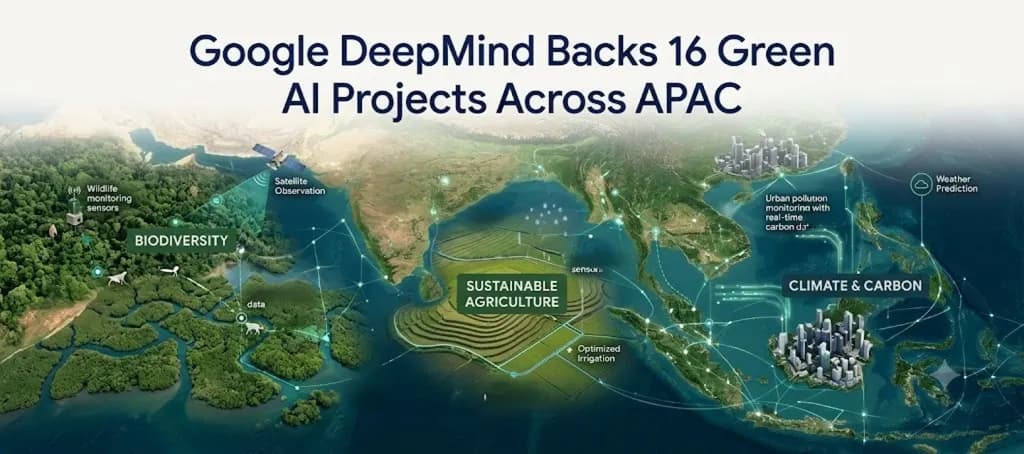
Google DeepMind Selects 16 Organizations for Its APAC AI Accelerator
Google DeepMind has selected 16 organizations for the inaugural Google DeepMind Accelerator: AI for the Planet in APAC cohort.
The program brings together startups, nonprofits, and research teams across Asia-Pacific that are using AI to address environmental challenges.
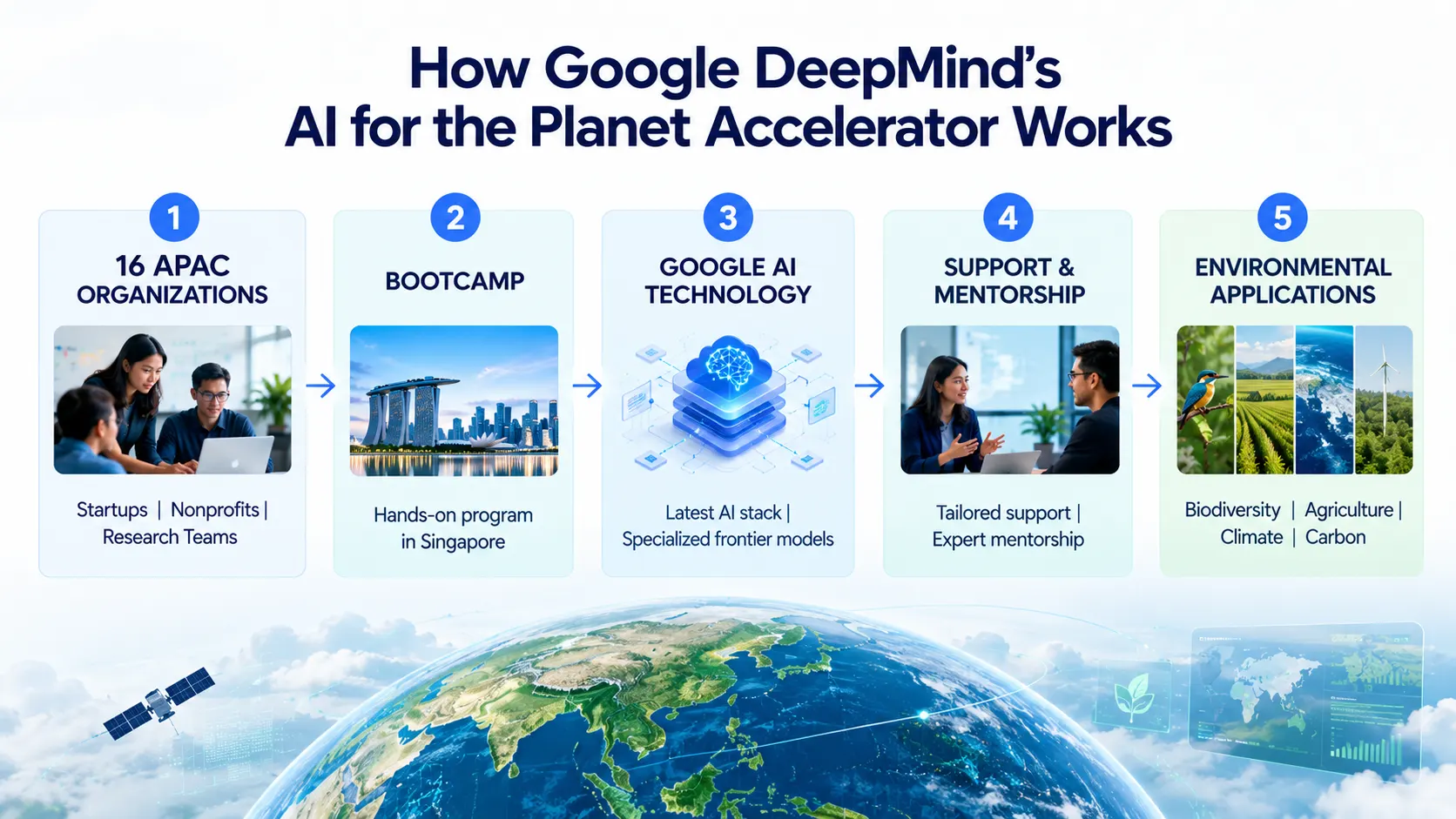
The selected organizations will receive access to Google's AI technologies, tailored support, and mentorship as they work to develop and scale their environmental solutions.
The program begins with a hands-on bootcamp in Singapore and will run for three months.
According to Google, participants will receive access to its latest AI stack, including specialized frontier models, alongside technical support and mentorship from Google experts.
Protecting Nature and Building Climate Resilience
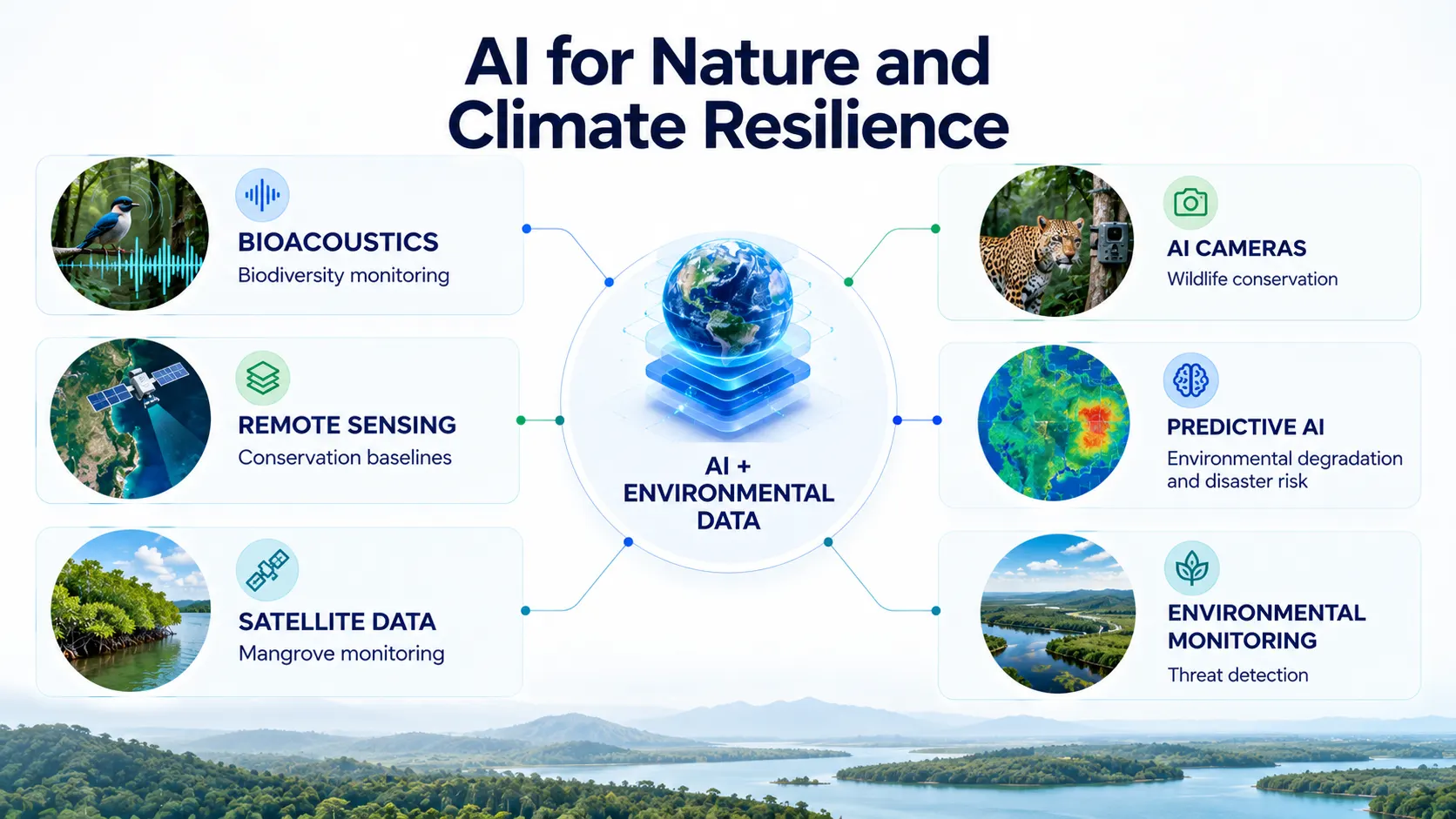
Six organizations in the cohort are focused on biodiversity, conservation, environmental monitoring, and climate resilience.
800 Trust - New Zealand is using AI and bioacoustics to continuously monitor biodiversity and detect environmental threats.
Kumi Analytics - Singapore is integrating remote sensing and deep learning to establish environmental baselines for conservation projects.
Listening Lab - New Zealand is developing data-efficient bioacoustic tools to monitor biodiversity through sound.
TelePIX - South Korea is transforming satellite data into actionable intelligence for global mangrove monitoring.
Wildlife.ai - New Zealand is building open-source, AI-powered cameras for wildlife conservation.
Yayasan Ekosistem Lestari - Indonesia is creating a predictive AI platform to connect environmental degradation with disaster risk.
These projects use different forms of environmental data, including sound, satellite observations, and camera-based monitoring, to support conservation and environmental assessment.
Advancing Sustainable Agriculture
Five organizations are focused on sustainable agriculture and agricultural intelligence.
Edufarmers - Indonesia is delivering near real-time pest, disease, and weather guidance to smallholder farmers through everyday messaging apps.
Living Roots - Thailand is using data and AI to design biological fertilizers tailored to specific crop needs.
SIGMA - Singapore is developing satellite-based AI models to estimate crop yields and build climate resilience.
Terrastack - India is combining satellite and agronomic data to provide plot-level land intelligence for smallholder farmers.
X-Centric - Australia is developing portable, AI-enabled X-ray hardware for geochemical insight.
The projects demonstrate different approaches to applying AI and data to agricultural challenges, including crop monitoring, farming guidance, land intelligence, fertilizer development, and soil-related analysis.
Scaling Climate and Carbon Solutions
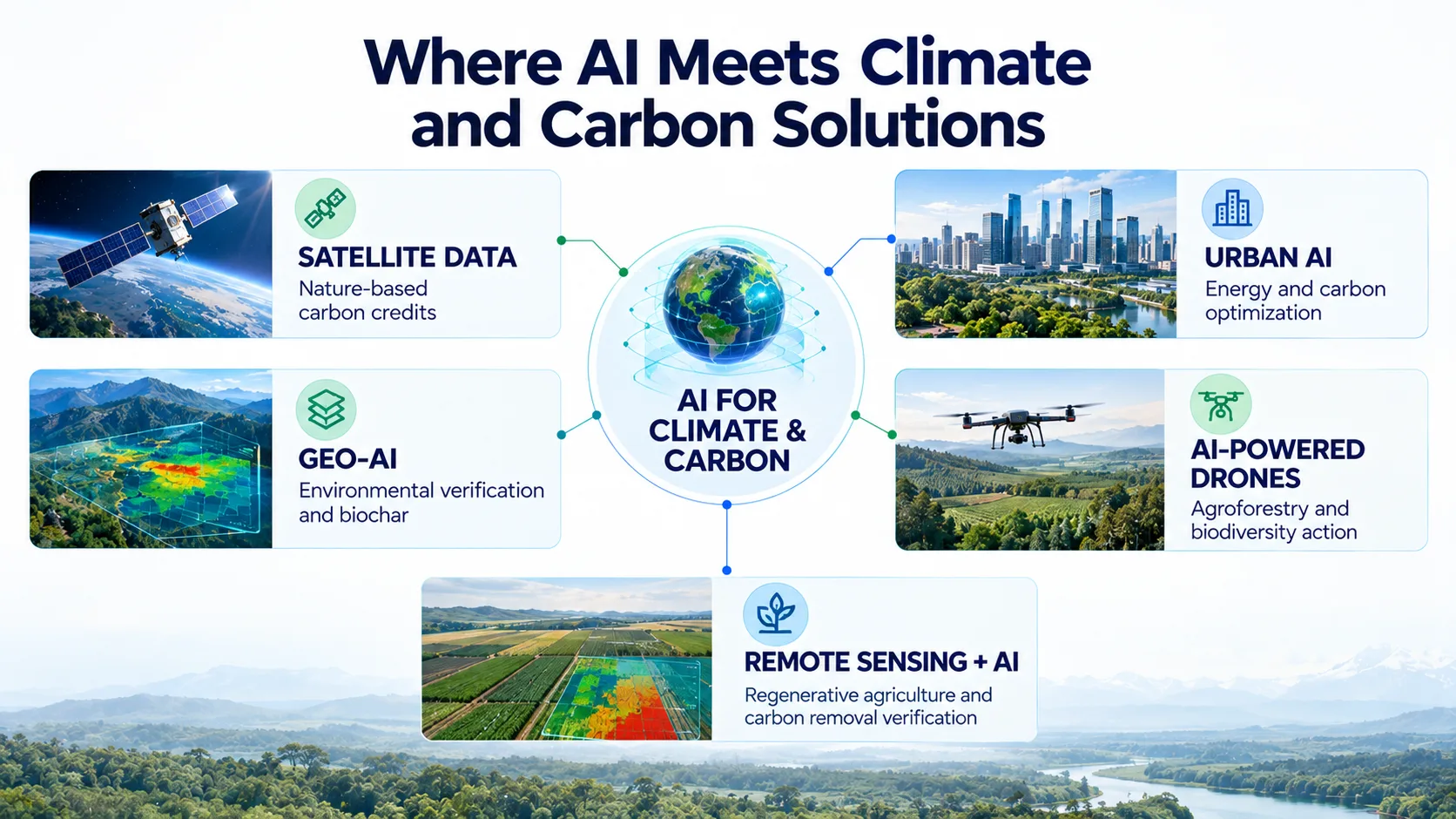
Five organizations are working on climate and carbon-related applications.
Archeda - Japan is using satellite data to transform nature-based carbon credits into measurable, high-integrity assets at scale.
City Syntax Lab - Singapore is building an agentic AI platform to optimize energy and carbon across urban districts.
Climitra Carbon - India is deploying Geo-AI to verify the removal of invasive species and convert them into biochar.
Farmers for Forests - India is using AI-powered drones to support measurable carbon and biodiversity action through smallholder agroforestry.
Varaha Climate - India is using remote sensing and AI to verify regenerative agriculture and carbon removal, helping smallholder farmers earn carbon credits.
These projects apply AI, satellite data, geospatial technologies, and drones to different aspects of climate and carbon-related work.
Google DeepMind Will Provide AI Access and Mentorship
Over the next three months, the selected organizations will receive access to Google's latest AI stack, including specialized frontier models, along with tailored support and mentorship from Google experts.
Google says the program will help participants navigate technical complexities as they develop, deploy, and scale their environmental solutions.
The announcement also highlights AI and research projects including AnthroKrishi, ForestCast, AlphaEarth Foundations, SpeciesNet, and Perch in the context of applying AI to environmental challenges.
Google does not provide specific information about individual model allocations, project milestones, funding arrangements, or expected environmental results for the cohort.
Why the APAC Focus Matters
Analysis: The announcement highlights a broader industry shift toward applying AI alongside environmental data to address challenges in areas such as conservation, agriculture, climate resilience, and carbon management.
The selected projects use different forms of information, including satellite imagery, acoustic signals, agronomic data, geochemical measurements, and drone observations.
This range shows how AI can be applied across different stages of environmental work, from monitoring and measurement to analysis and prediction.
However, the accelerator is only beginning. The announcement does not provide measured environmental outcomes from the participating organizations.
A Diverse APAC Cohort
The inaugural cohort includes organizations from New Zealand, Singapore, South Korea, Indonesia, Thailand, India, Australia, and Japan.
The 16 organizations are:
800 Trust
Kumi Analytics
Listening Lab
TelePIX
Yayasan Ekosistem Lestari
Edufarmers
Living Roots
SIGMA
Terrastack
X-Centric
Archeda
City Syntax Lab
Climitra Carbon
Farmers for Forests
Varaha Climate
Their projects span three focus areas identified by Google DeepMind:
Protecting nature and building climate resilience
Advancing sustainable agriculture
Scaling climate and carbon solutions
The accelerator provides a common support framework while allowing each organization to apply AI to a different environmental challenge.
Google DeepMind Expands AI's Role in Environmental Innovation
The inaugural AI for the Planet APAC cohort brings together 16 organizations using AI across biodiversity, conservation, agriculture, climate resilience, and carbon-related applications.
Over the next three months, participants will receive access to Google's AI technologies, specialized frontier models, tailored support, and mentorship from Google experts.
The announcement highlights a broader effort to connect AI development with practical environmental applications across Asia-Pacific.
The longer-term impact of the participating projects will depend on how their solutions develop and scale beyond the accelerator.
Source: Google Blog
About the Author