
Google Cloud Adds OpenAI Models to Its Enterprise AI Platform
Google Cloud is bringing GPT-6 Astra, GPT-6.1 Sol, and GPT-6 Luna to its Model Garden in private preview, giving selected enterprise customers more model choices alongside Google Cloud's governance, security, and billing capabilities.
Xcademia Team
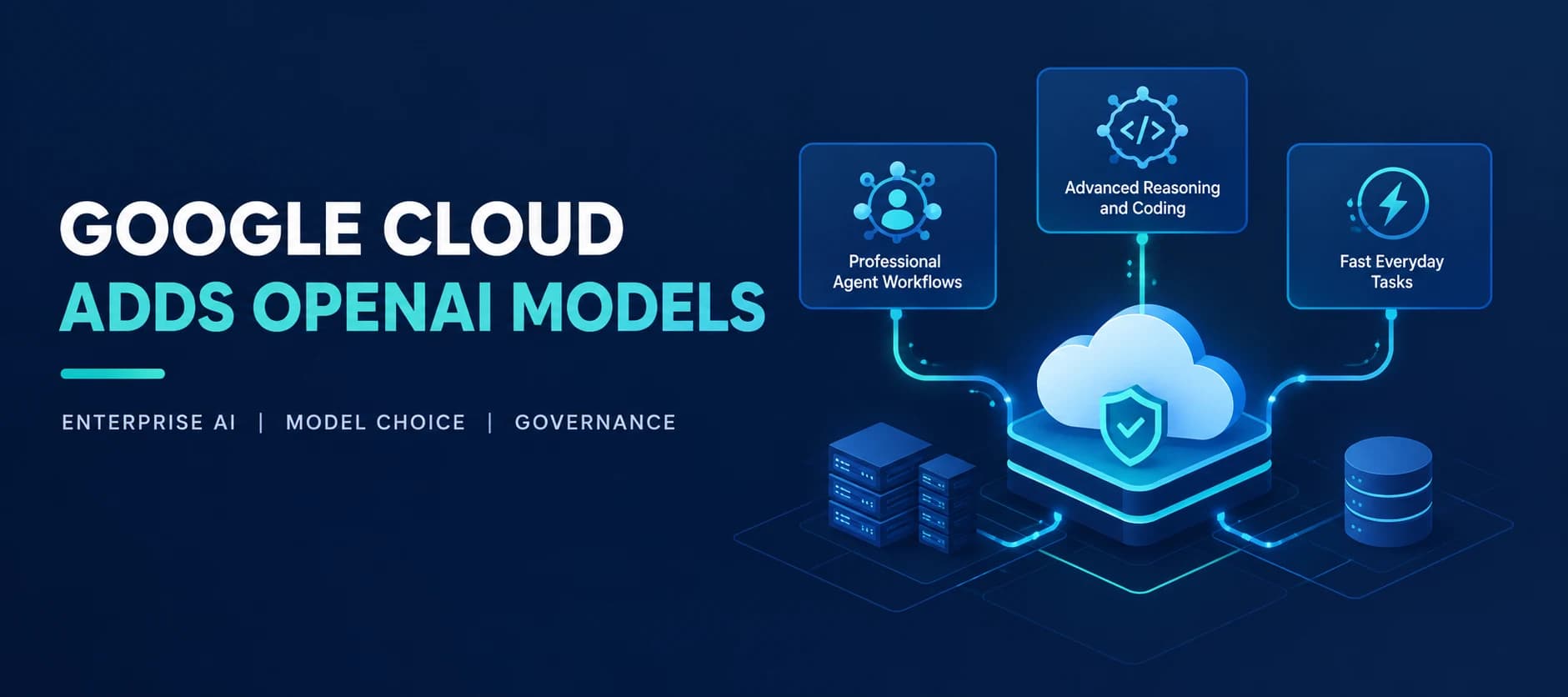
Google Cloud has announced that OpenAI models are coming to its Model Garden, expanding the range of artificial intelligence models available to enterprise customers through its cloud platform.
The initial offering includes GPT-6 Astra, GPT-6.1 Sol, and GPT-6 Luna, which are rolling out in private preview to select enterprise customers. Google Cloud says the models will be available through APIs, allowing developers to access OpenAI models alongside other first-party, third-party, and open models on the platform.
The announcement focuses on model choice, enterprise governance, and the ability to select models based on the requirements of individual workloads. Google Cloud also says OpenAI model usage will be handled through Google Cloud Marketplace, with usage consolidated on a single Google Cloud invoice.
The company positions the launch as an extension of its broader enterprise AI platform, where organizations can choose models and infrastructure based on factors such as capability, cost, and performance.
OpenAI Models Arrive in Google Cloud Model Garden
Google Cloud says its Model Garden now includes access to OpenAI models alongside more than 200 first-party, third-party, and open models. The company describes this as a unified enterprise AI platform intended to give organizations greater flexibility in selecting models for different tasks.
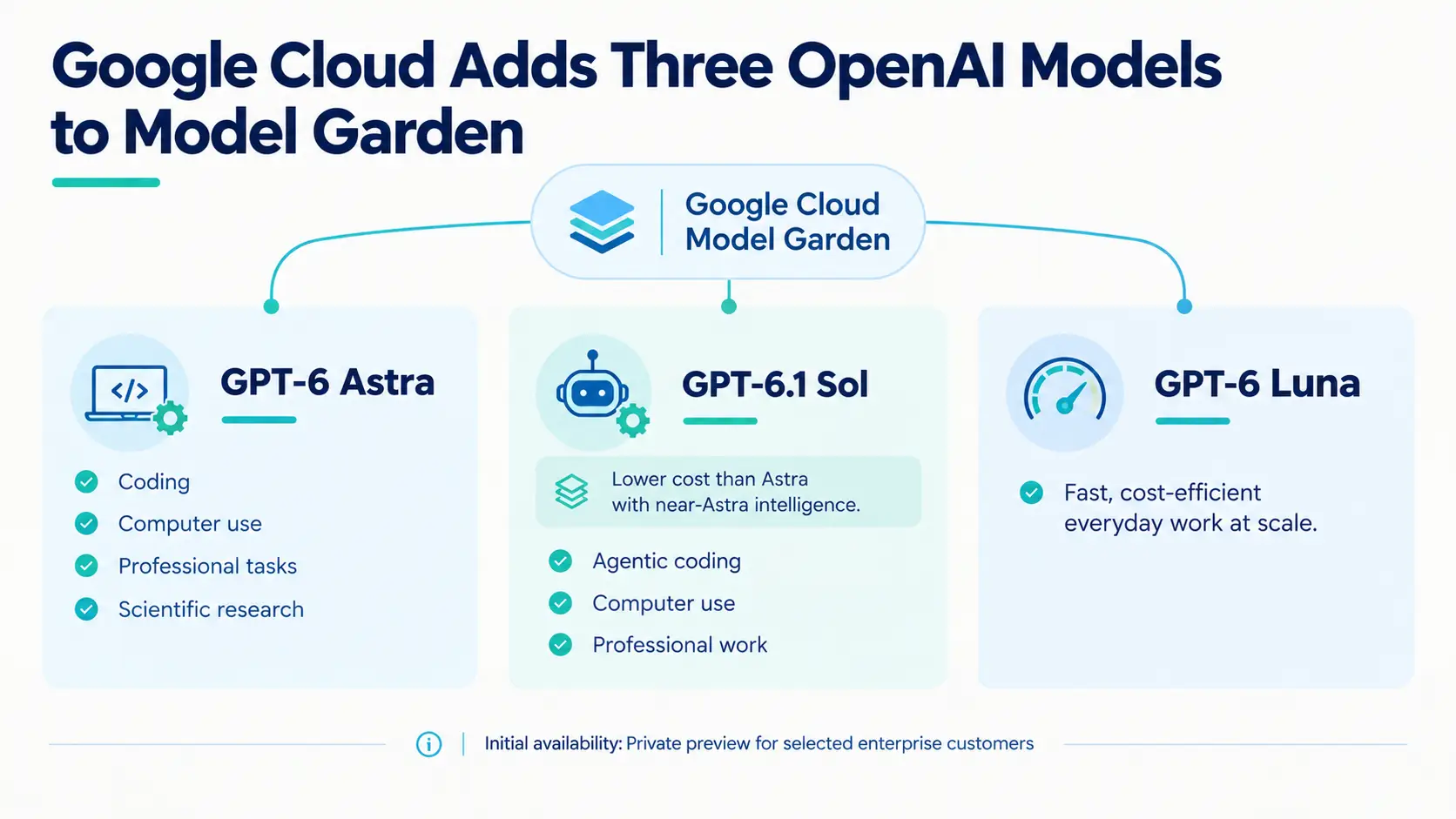
The three OpenAI models announced for the initial private preview have different intended use cases:
GPT-6 Astra
Designed for demanding workloads involving coding, computer use, professional tasks, and scientific research.
GPT-6.1 Sol
Positioned as offering intelligence close to Astra at a lower cost, with applications in agentic coding, computer use, and professional work.
GPT-6 Luna
Designed for fast, cost-efficient performance across everyday workloads at scale.
According to Google Cloud, organizations can select and switch models based on workload requirements, including performance, latency, and cost efficiency. The company says this flexibility is intended to reduce architectural lock-in and the need for separate vendor contracts.
The source does not provide independent benchmark results or comparative performance measurements for the three models.
Enterprise Billing and Model Flexibility
Google Cloud says OpenAI models will be transacted directly through Google Cloud Marketplace. According to the announcement, this means customers can see model usage on a single Google Cloud invoice, draw down existing cloud commitments, and count eligible usage toward Flexible Savings Plans (FSP).
This billing arrangement is part of the wider model-choice proposition. Instead of treating each model as a separate procurement decision, organizations can access the announced OpenAI models through their existing Google Cloud environment.
For enterprises evaluating multiple models, the ability to switch models according to workload requirements may simplify how teams manage different AI applications. The practical benefits will depend on each organization's existing cloud commitments, model usage, and deployment requirements.
Google Cloud Highlights Data Governance and Enterprise Security
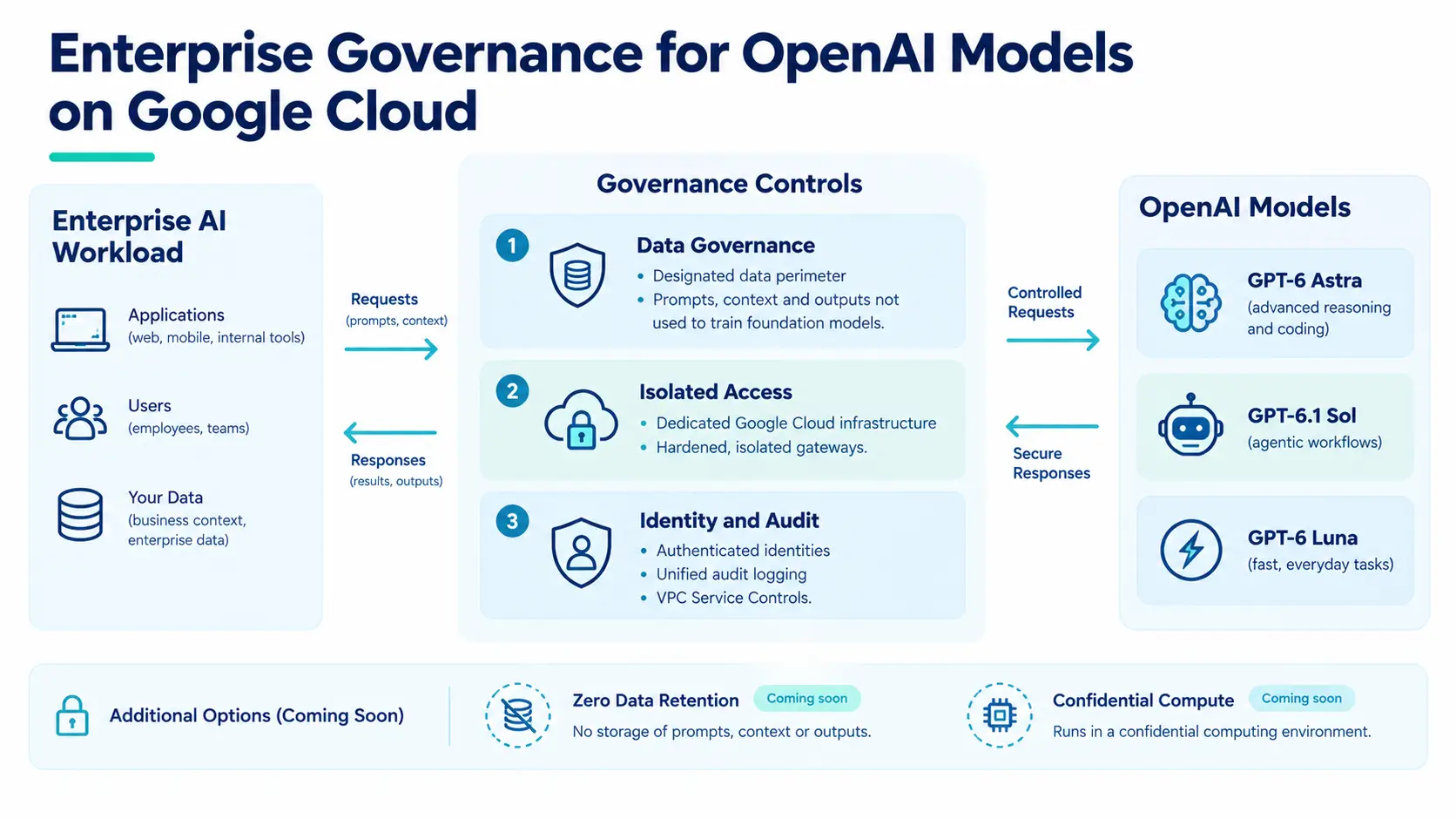
Alongside model choice, Google Cloud emphasizes governance and security for enterprise AI workloads. The announcement describes several controls intended to help organizations use third-party models within their existing cloud security framework.
Data perimeters and training restrictions
Google Cloud states that customer prompts, context, and outputs remain within the customer's designated data perimeter and are not used to train foundation models.
The company also says Zero Data Retention (ZDR) options are coming soon. These options are not described as generally available in the announcement.
Isolated access boundaries
According to Google Cloud, OpenAI models run on dedicated Google Cloud infrastructure, with requests routed through hardened, isolated gateways. The company says this arrangement is designed to keep data transit within Google Cloud's secure environment and prevent third-party model providers from obtaining unauthorized access to a customer's cloud environment.
Confidential Compute support is listed as coming soon, rather than as an existing capability of this launch.
Identity, auditing, and network controls
Google Cloud says agent and model interactions operate under authenticated identities. The platform also provides visibility through unified audit logging and protection through VPC Service Controls, according to the announcement.
These controls are relevant to enterprises that need to track AI activity, apply access policies, and maintain oversight across their cloud environments.
The source does not provide a detailed independent security assessment or technical configuration guide for the newly announced OpenAI model integration.
Box Sees Potential in Enterprise Content Workflows
The announcement includes a statement from Yashodha Bhavnani, VP of AI Products at Box, who says access to OpenAI models through Google Cloud could help Box provide customers with frontier AI models alongside Google Cloud's security and compliance capabilities.
The statement frames the integration as an opportunity to help customers work with enterprise content and improve operational efficiency. However, the announcement does not provide specific deployment details, customer results, or performance measurements from Box related to this integration.
Availability and How to Get Started
Google Cloud says GPT-6 Astra, GPT-6.1 Sol, and GPT-6 Luna are rolling out in private preview to select enterprise customers through Model Garden.
According to the announcement, customers can begin building with the models through APIs. Developers can also connect local Codex CLI and Desktop workflows directly to the Gemini platform for inference.
Organizations interested in access can use the official Google Cloud interest form for OpenAI models.
Google Cloud also says OpenAI models are expected to become available in Gemini for business and Google Antigravity in the future. The announcement does not provide specific general-availability dates for those integrations.
What This Means for Enterprise AI
The announcement highlights a broader industry shift toward giving enterprises more choice over the models powering their AI applications. Rather than depending on a single model for every task, organizations can evaluate different options against workload needs, cost, latency, and capability.
For businesses already using Google Cloud, access to OpenAI models through the same platform could make it easier to manage model usage and billing within an existing cloud environment. The governance controls described by Google Cloud may also be relevant to organizations with strict requirements for identity, auditing, and data boundaries.
However, the announcement represents a private-preview launch, not evidence of broad general availability. Organizations will need to assess access eligibility, feature availability, workload suitability, and the specific terms that apply to their deployments.
The company has not published comparative benchmark results in the supplied announcement, so claims about which model performs best for a particular workload should be evaluated using the organization's own requirements and testing.
Conclusion
Google Cloud's addition of OpenAI models to Model Garden expands the choices available to selected enterprise customers. The initial private preview includes GPT-6 Astra, GPT-6.1 Sol, and GPT-6 Luna, with different intended workload profiles.
The announcement also emphasizes cloud billing integration, enterprise governance, identity controls, and auditing. With additional integrations and features described as coming soon, the next steps will depend on rollout progress and the availability of those capabilities.
For enterprises, the central development is the option to access OpenAI models through Google Cloud's AI platform while evaluating how model choice fits their existing infrastructure, governance requirements, and application needs.
Source: Google Cloud Blog
About the Author