
Cisco Patches High-Severity Secure Client Privilege Escalation Vulnerability
Cisco has released a fix for CVE-2026-76462, a privilege escalation vulnerability in the Secure Firewall Posture module of Cisco Secure Client for Windows, macOS, and Linux. The company says no workarounds are available and recommends upgrading to a fixed release.
Xcademia Team
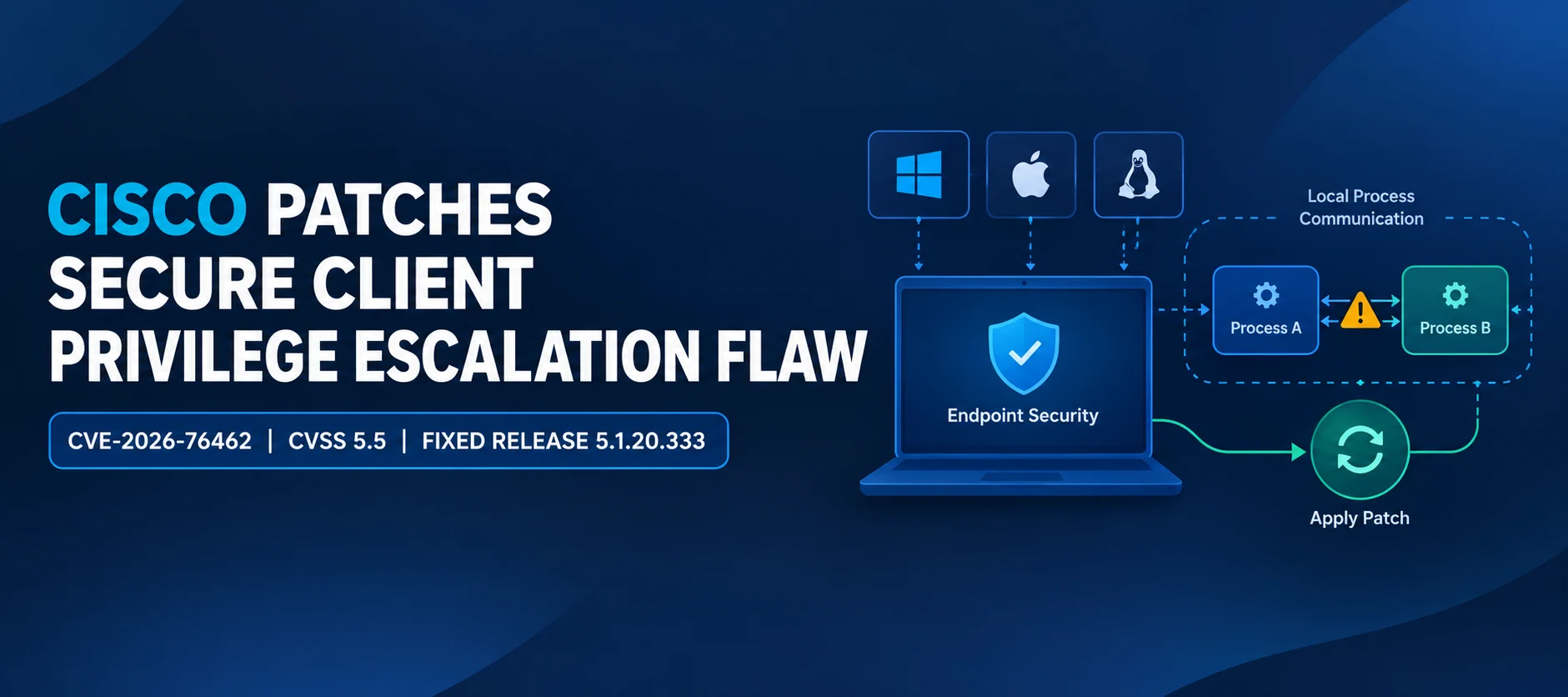
Cisco has published a security advisory about a privilege-escalation vulnerability affecting the Secure Firewall Posture module in Cisco Secure Client on Windows, macOS, and Linux. Tracked as CVE-2026-76462, the flaw could let an authenticated local attacker perform limited file-write operations with SYSTEM or root privileges on an affected device.
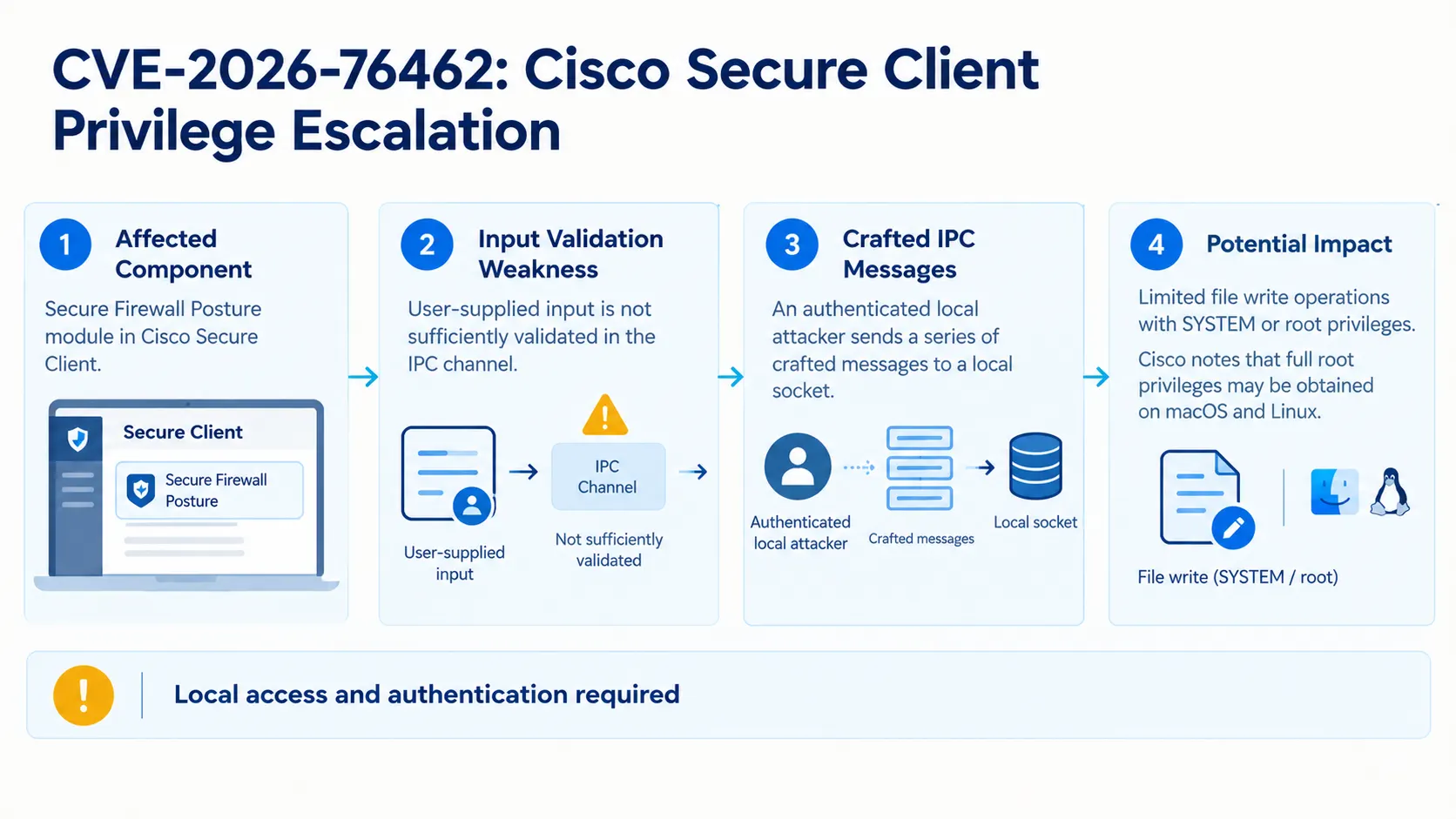
The vulnerability stems from insufficient validation of user-supplied input in the module's interprocess communication (IPC) channel. Cisco says an attacker could exploit the issue by sending a series of specially crafted IPC messages to a local socket.
Although Cisco assigns the vulnerability a CVSS score of 5.5, it has given the advisory a High Security Impact Rating. The company explains that successful exploitation could result in full root privileges on macOS and Linux, which is why its security impact rating is higher than the CVSS score alone might suggest.
Cisco has released a software update to address the vulnerability. The advisory states that no workarounds are available, and customers are advised to upgrade to the fixed release.
What Is CVE-2026-76462?
CVE-2026-76462 is a local privilege escalation vulnerability in the Secure Firewall Posture module included with Cisco Secure Client.
The issue involves the module's IPC channel, which enables communication between processes. According to Cisco, insufficient validation of user-supplied input could allow an authenticated local attacker to send crafted messages to a local socket and trigger unintended file write operations with elevated privileges.
A successful exploit could allow limited file writes under SYSTEM or root privileges. Cisco specifically warns that the vulnerability could be used to obtain full root privileges on macOS and Linux.
The advisory identifies the weakness as CWE-20, which refers to improper input validation.
Affected Products and Operating Systems
Cisco confirms that the vulnerability affects the Secure Firewall Posture module in Cisco Secure Client for the following operating systems:
Windows
macOS
Linux
The advisory does not identify all affected software releases in the summary. Instead, Cisco directs customers to the fixed-software guidance to determine whether their installed release is vulnerable and which version includes the correction.
Organizations using Cisco Secure Client should check whether the Secure Firewall Posture module is deployed and verify their installed release against Cisco's official advisory.
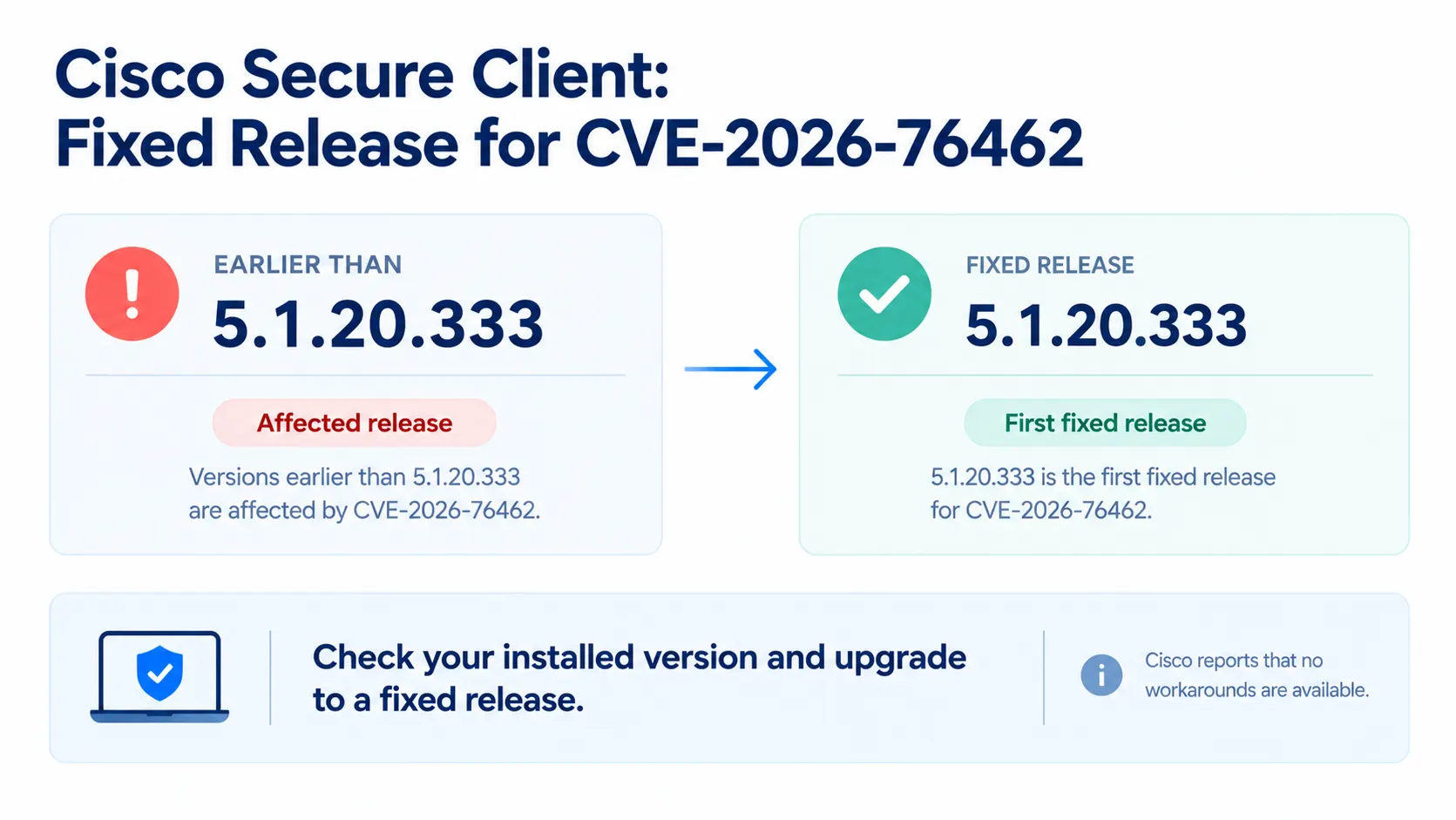
Fixed Version: Upgrade to Cisco Secure Client 5.1.20.333
Cisco lists the following fixed-release information:
Cisco Secure Client release | Status |
|---|---|
Earlier than 5.1.20.333 | Affected |
5.1.20.333 | First fixed release |
Cisco recommends upgrading to an appropriate fixed software release to remediate the vulnerability. The advisory identifies no workaround that addresses the issue.
Customers should obtain updates through Cisco's official support and software-download channels. Cisco notes that customers who are eligible for an upgrade but cannot obtain the fixed software through their point of sale may need to contact Cisco Technical Assistance Center (TAC).
Organizations should consult the official Cisco Security Advisory before planning an upgrade.
No Public Exploitation Reported by Cisco
In its October 21, 2026, advisory, Cisco says its Product Security Incident Response Team (PSIRT) is not aware of any public announcements or malicious use of CVE-2026-76462.
This statement reflects Cisco's awareness at the time of publication. It does not establish that exploitation is impossible or that every affected system is safe.
Cisco credits an external researcher for reporting the vulnerability. The advisory does not disclose the researcher's identity.
Recommended Actions for Security Teams
Organizations using Cisco Secure Client should take the following steps:
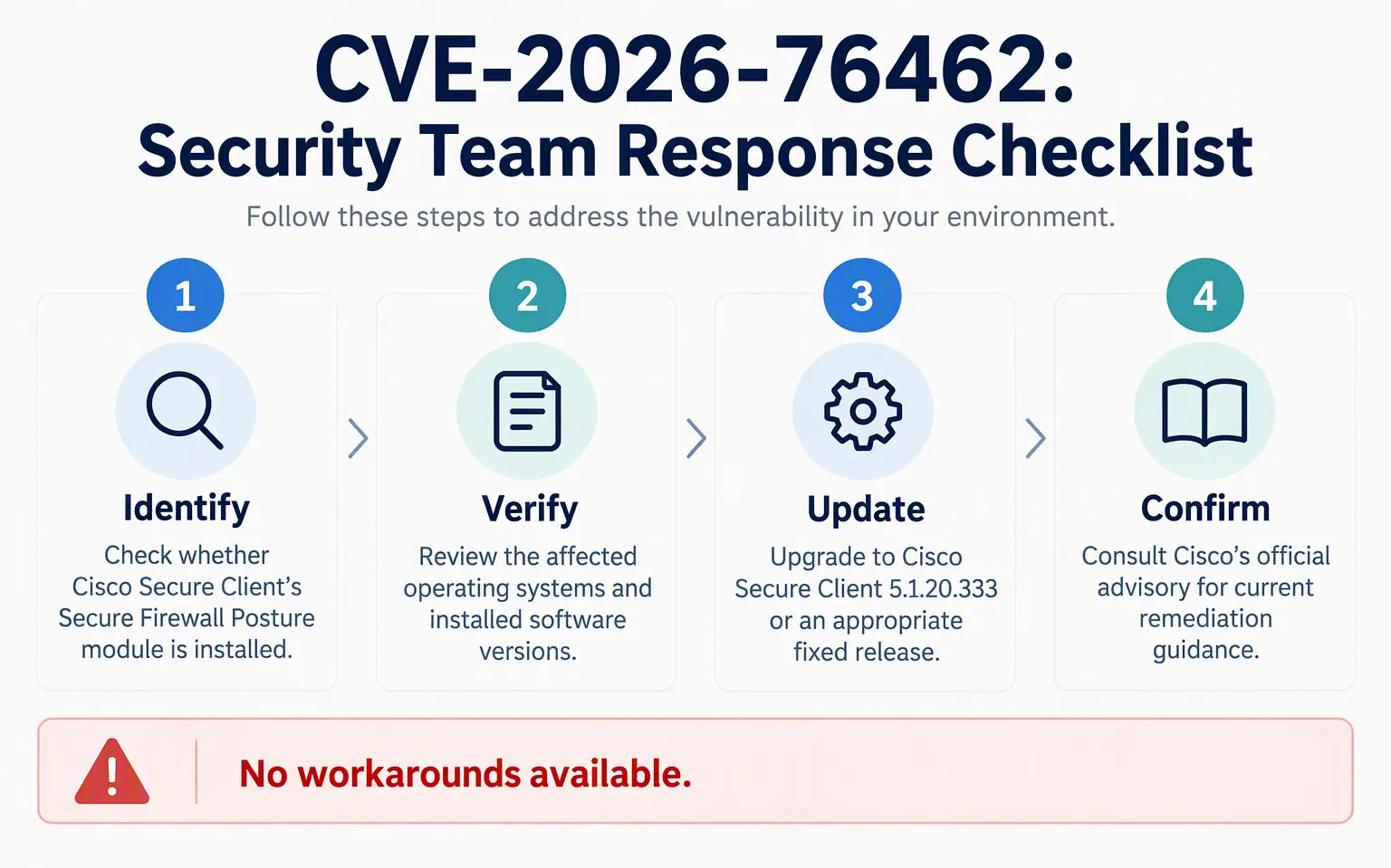
Check affected systems: Identify devices running the Secure Firewall Posture module on Windows, macOS, or Linux.
Verify software versions: Compare installed releases with the fixed-version information in Cisco's advisory.
Upgrade to a fixed release: Cisco identifies version 5.1.20.333 as the first fixed release.
Do not rely on a workaround: Cisco confirms that no workaround addresses this vulnerability.
Consult Cisco's advisory: Review the official guidance and follow the applicable software upgrade process.
Conclusion
Cisco's advisory addresses CVE-2026-76462, a privilege escalation vulnerability in the Secure Firewall Posture module of Cisco Secure Client across Windows, macOS, and Linux. Although the CVSS score is 5.5, Cisco assigns the issue a High Security Impact Rating because exploitation could result in full root privileges on macOS and Linux.
Cisco has released a fix in Secure Client version 5.1.20.333 and states that no workarounds are available. Organizations using the affected module should verify their installed versions and follow Cisco's official upgrade guidance.
Source: Cisco Security Advisory
About the Author