
Trump Mobile Customer Data Exposed After Hackers Claim Breach of Telecom Backend
Hackers have published data allegedly belonging to 3,615 Trump Mobile customers, including names, phone numbers, email and home addresses. The incident highlights renewed concerns around telecom data security and third-party access.
Xcademia Team
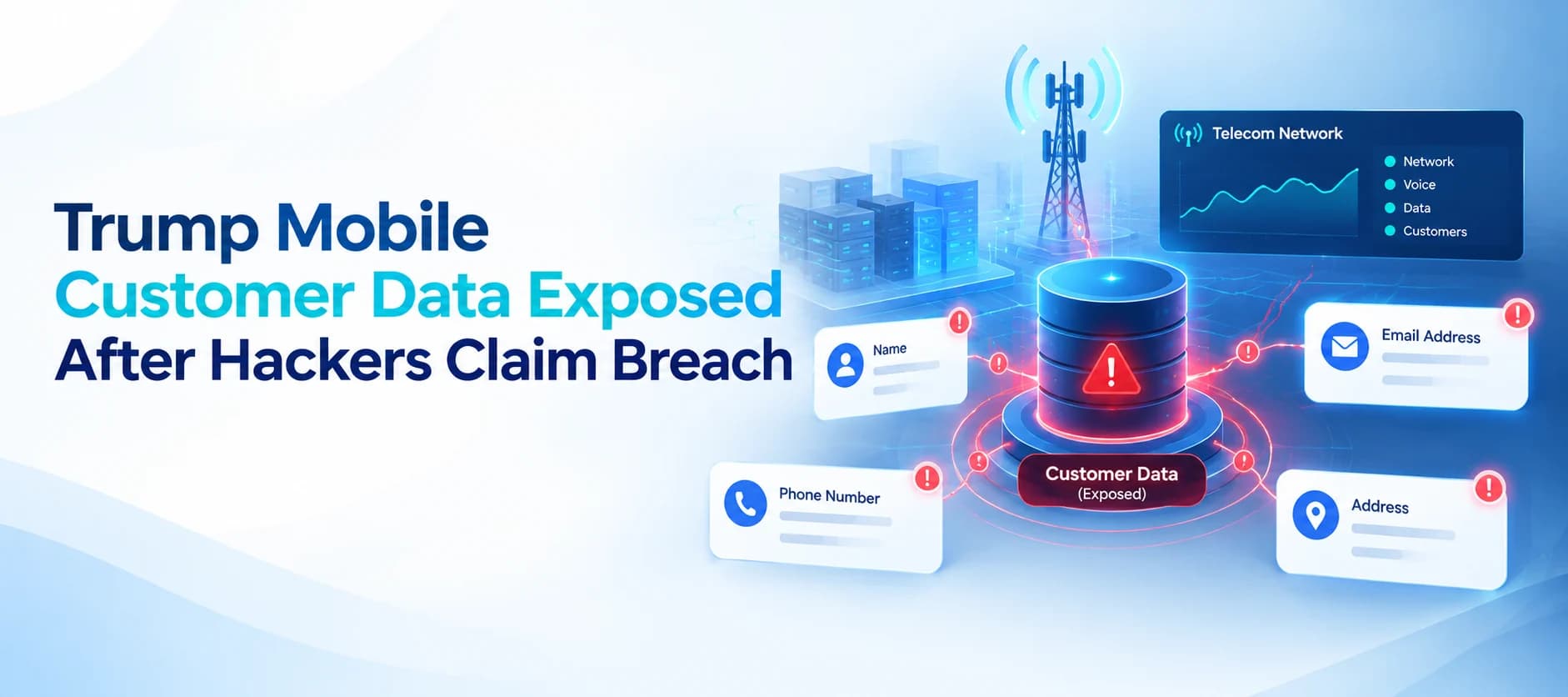
Trump Mobile is facing a new cybersecurity incident after a recently established cybercrime group claimed to have breached systems connected to the wireless provider and published customer information on a dark web leak site.
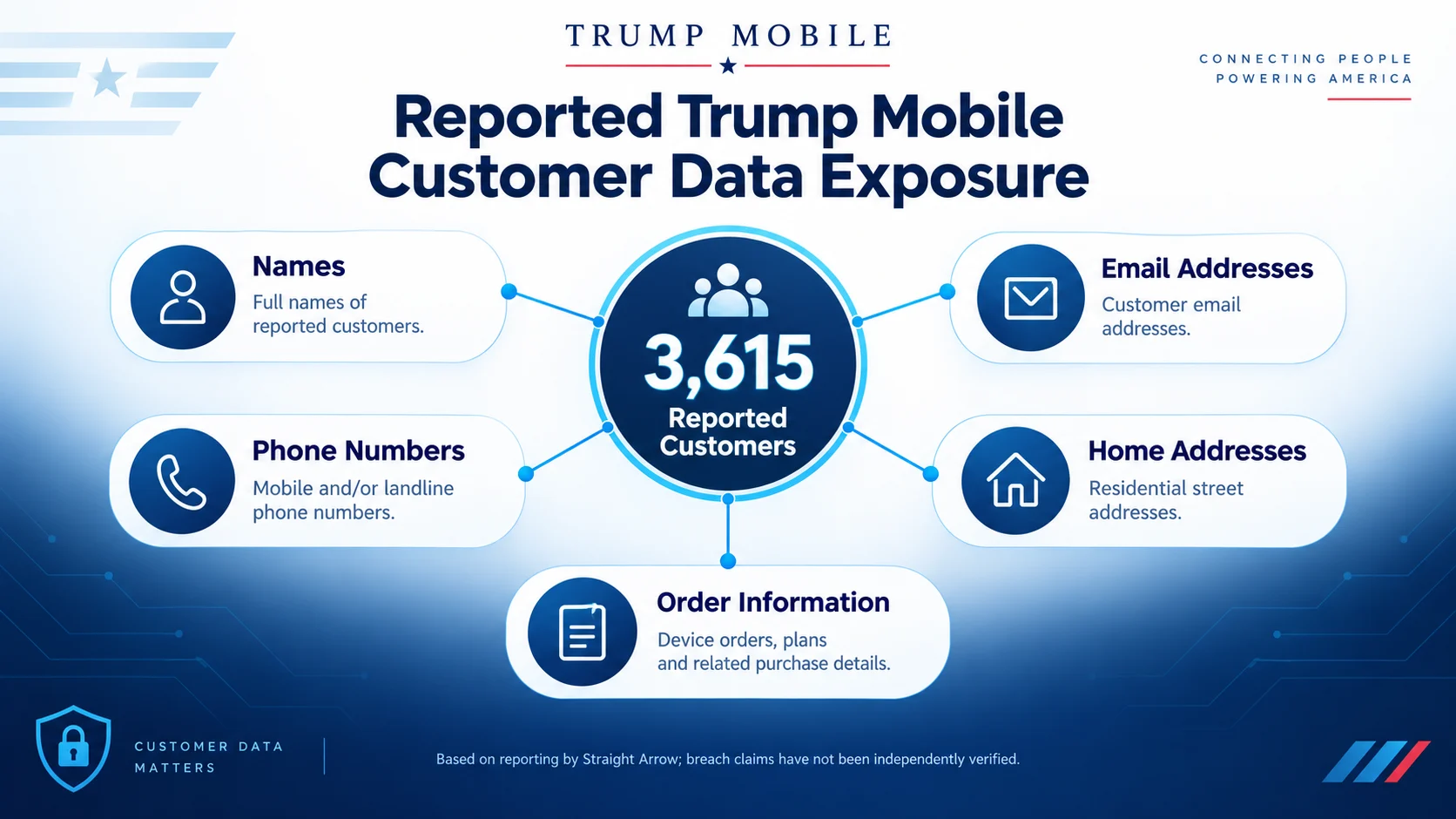
According to Straight Arrow, the data reportedly relates to 3,615 customers and includes personally identifiable information such as names, email addresses, telephone numbers, home addresses and order information.
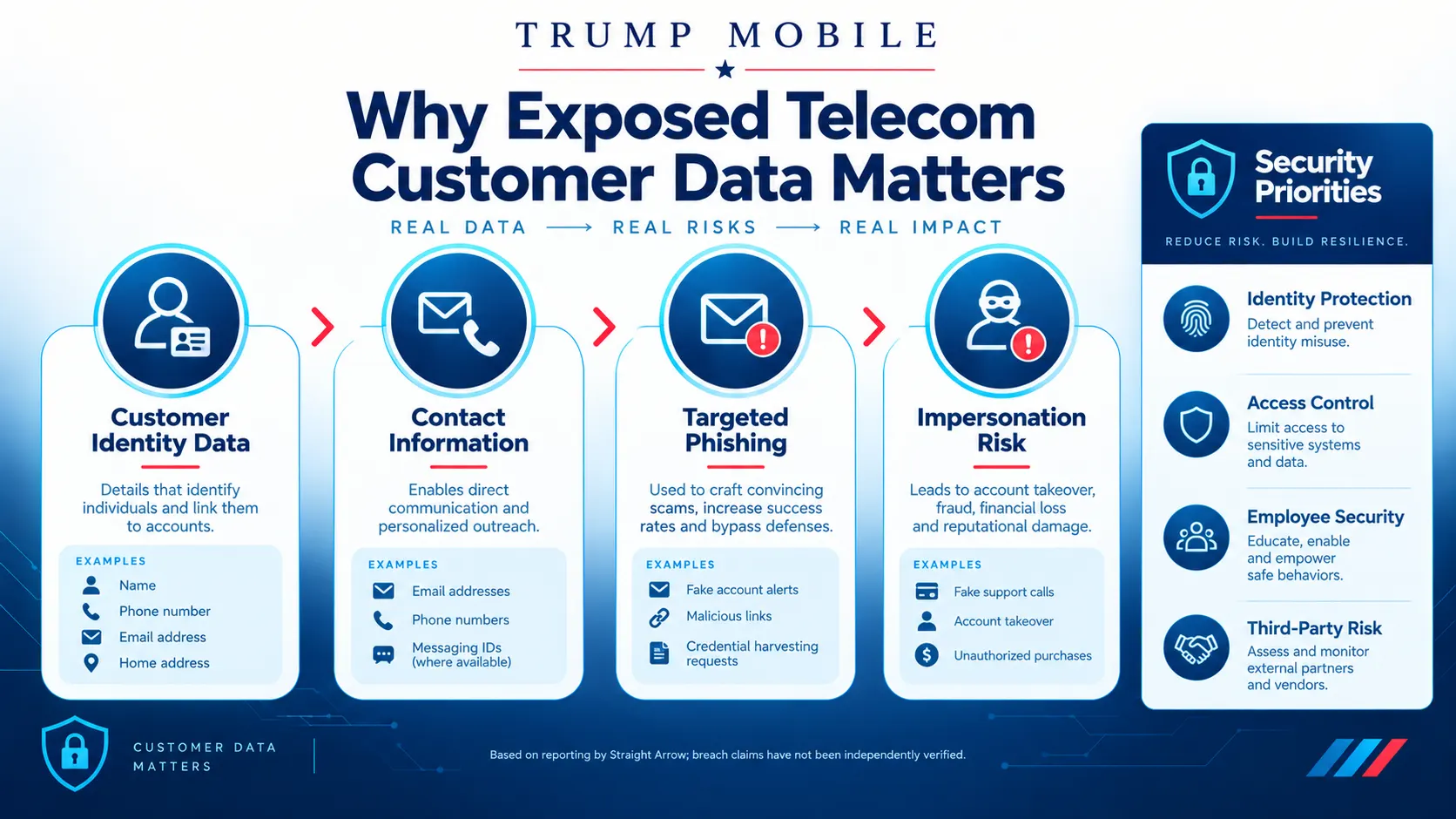
The incident is significant because the reported exposure involves telecommunications customers, whose personal information can potentially be useful for phishing, impersonation and other forms of fraud.
What happened to Trump Mobile?
The cybercrime group, identified by Straight Arrow as BYOD, reportedly published the information on its leak site during the week before the October 5 report.
BYOD claimed that it had compromised Trump Mobile and alleged that the company had been notified about the breach before the information was published. Straight Arrow reported that its analysis of the leaked material found customer names, email addresses, telephone numbers, home addresses and order-related information.
However, the precise technical details of the alleged intrusion have not been independently established.
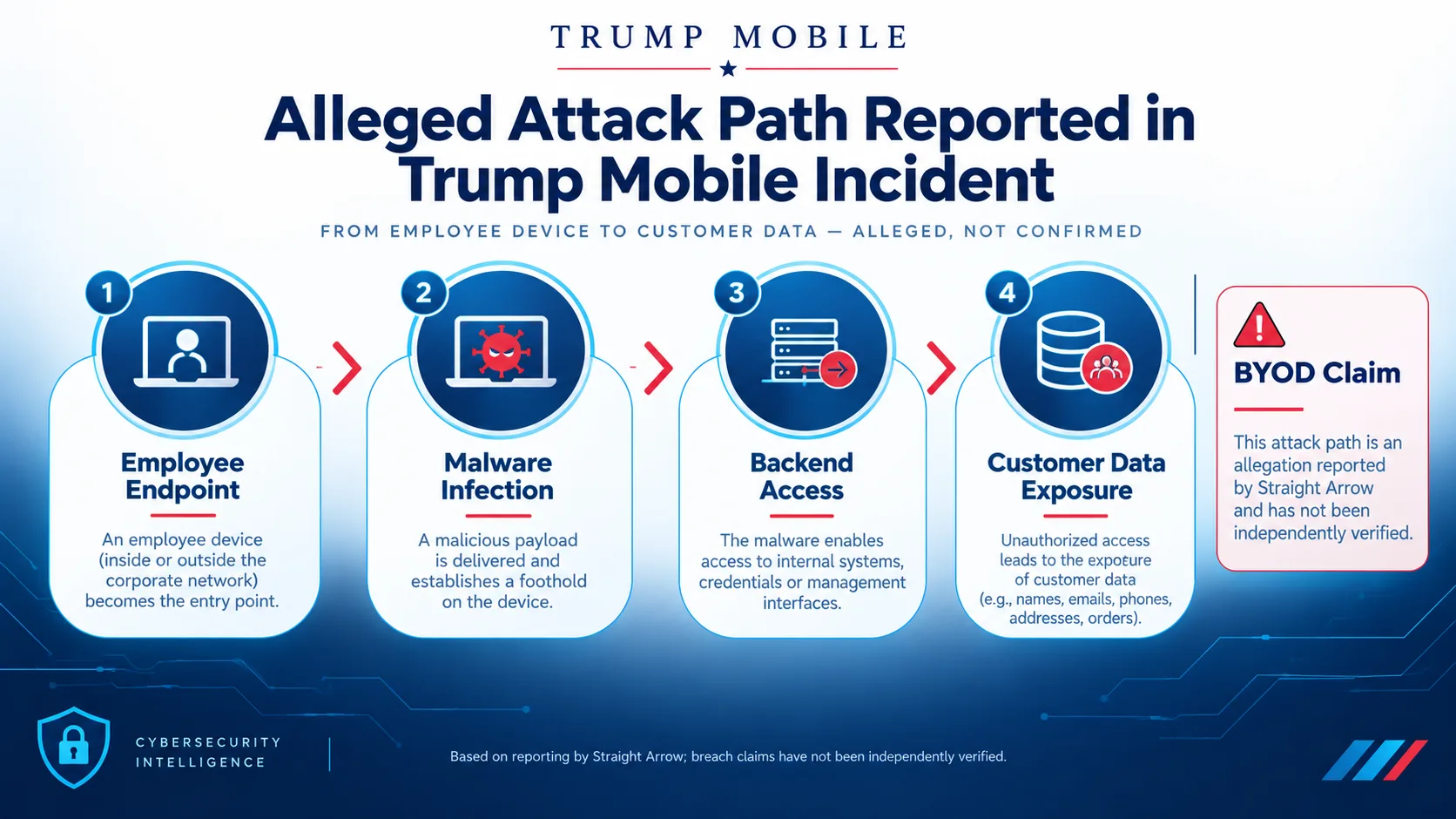
A representative of BYOD claimed that the attackers gained access after malware infected an employee at Florida-based Liberty Mobile. Trump Mobile is owned by T1 Mobile, which uses the Trump brand under licence from The Trump Organization.
What customer information was exposed?
The reported dataset contains several categories of personal information:
First and last names
Email addresses
Telephone numbers
Home addresses
Order information
Details associated with Trump Mobile services
Straight Arrow also reported that some records appeared to relate to purchases of Trump Mobile data plans.
The publication said it contacted individuals whose information appeared in the dataset, with some confirming that the information was accurate. One customer reportedly confirmed having paid a $100 deposit for the T1 smartphone but said the device had not been received.
The report also found information belonging to individuals associated with the Trump Organization, although the publication said no member of the Trump family was among the affected customers.
BYOD claims continued backend access
One of the more serious allegations in the report concerns the attackers' claimed continued access.
A BYOD representative reportedly provided Straight Arrow with a screenshot that allegedly showed personal customer information in a Trump Mobile backend dashboard. The group claimed it still had access to the backend at the time of the report.
This claim has not been independently verified.
Trump Mobile did not immediately respond to Straight Arrow's request for comment, according to the publication.
Why the incident matters
The reported incident demonstrates why telecom providers and their technology partners remain attractive targets for cybercriminals.
Customer databases can contain combinations of identity and contact information that are valuable for targeted social engineering. Even when financial information is not involved, exposed names, addresses and phone numbers can create privacy and security risks for affected individuals.
The incident also illustrates the importance of securing employee endpoints, administrative systems and backend access. If the attackers' claims about an employee infection and subsequent access prove accurate, the incident could highlight how an initial compromise can potentially lead to access to business systems.
Analysis: The announcement highlights a broader industry shift toward attacks that target identity and operational access rather than focusing exclusively on financial information. For enterprises, this could mean that protecting customer data requires controls across employees, third-party providers, administrative interfaces and backend systems.
Trump Mobile has faced earlier data-security scrutiny
The latest incident follows earlier concerns about Trump Mobile customer information.
In May 2026, TechCrunch reported that customer information, including email and home addresses, had been exposed. Trump Mobile subsequently acknowledged that personal data had been exposed through a third-party platform and said it had found no evidence that its own network, systems or infrastructure had been breached.
The current report describes a separate and more recent alleged incident involving the publication of customer information by BYOD.
At the time of Straight Arrow's October 5 report, the company had not publicly provided a detailed technical explanation of the latest alleged breach. Additional details were not disclosed in the announcement.
What happens next?
The most important unanswered questions concern the initial access method, the systems allegedly accessed, whether attackers still have access and whether the complete dataset has been removed or copied elsewhere.
Until those questions are independently resolved, the claims made by BYOD should be treated as allegations rather than confirmed technical findings.
For affected customers, the reported exposure of contact and address information creates a practical risk of targeted phishing and impersonation attempts. Customers should be cautious about unexpected messages claiming to come from Trump Mobile and avoid sharing passwords, authentication codes or other sensitive information in response to unsolicited communications.
The incident adds another cybersecurity challenge for Trump Mobile while raising broader questions about how telecom companies protect customer information across internal systems, employees and technology partners.
Source: Straight Arrow News (SAN)
About the Author