
ShinyHunters Hacker Detained in Jordan as FBI Data Theft Investigation Expands
A suspected ShinyHunters hacker has been detained in Jordan and is reportedly cooperating with the FBI, offering investigators potential leads on other members of the group following the alleged theft of sensitive FBI employee data.
Xcademia Team
A suspected member of the ShinyHunters cybercrime group has been detained in Jordan and is reportedly cooperating with the FBI, according to three people familiar with the matter cited by Reuters.
Saif al-Din Khader, who is allegedly known online by the nickname "Rey", was detained by Jordanian authorities this week. Two sources told Reuters that he was taken into custody on Tuesday and is now assisting investigators in efforts to identify other members of the hacking group.
The development comes weeks after ShinyHunters claimed it had stolen data relating to FBI employees. Reuters previously analysed a sample of the allegedly stolen information and found personally identifiable information alongside sensitive employment, medical and psychiatric data.
Jordan Detention Could Give Investigators New Leads
The circumstances surrounding Khader's detention have not been publicly established.
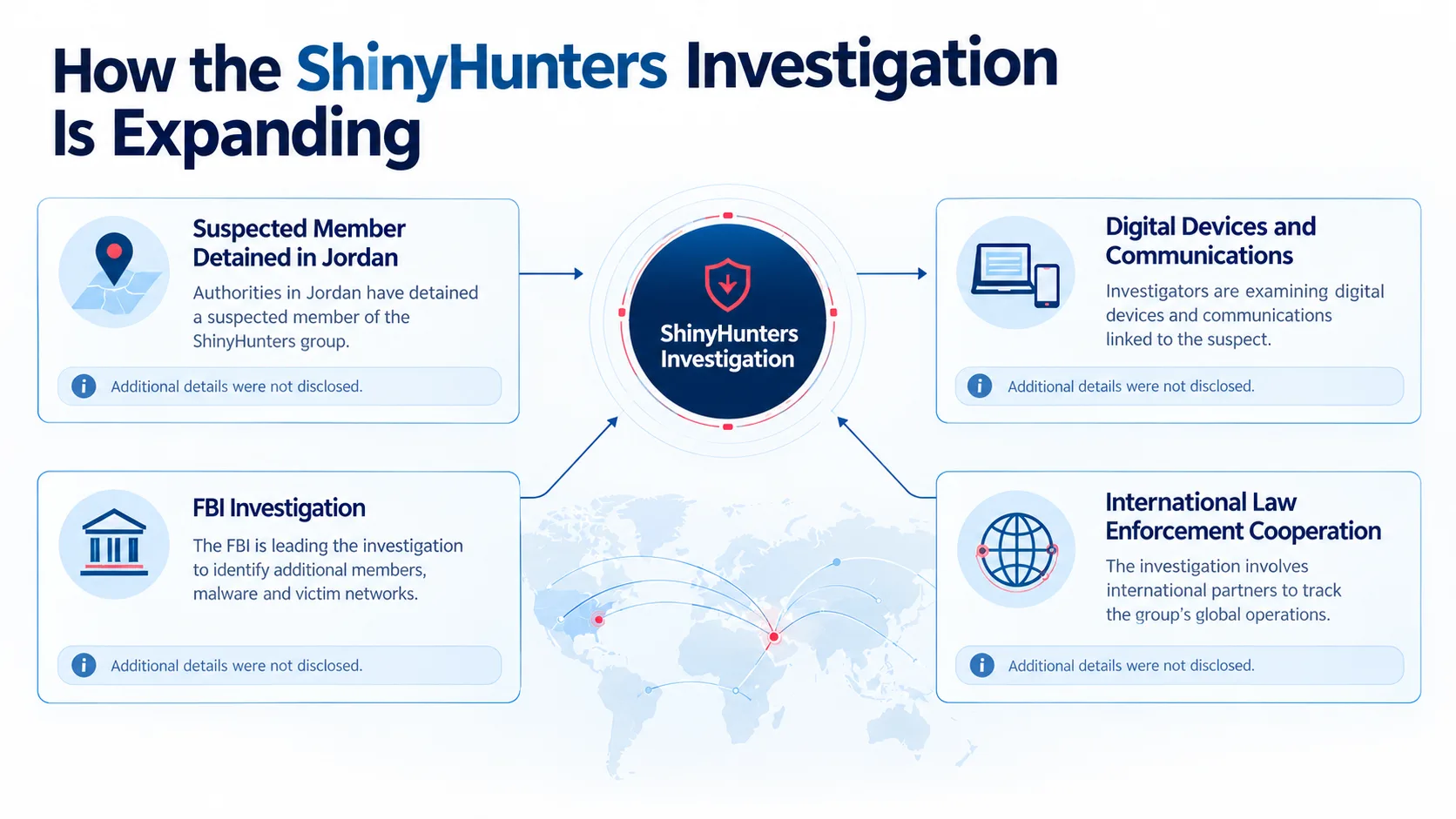
Reuters reported that two sources said Khader was cooperating with the FBI and other international law enforcement agencies. One source said investigators were being taken through his electronic devices and digital correspondence as part of efforts to identify other alleged members of the group.
The FBI has not confirmed Khader's detention or commented on a specific overseas operation. In a statement to Reuters, the bureau said it continues to investigate the cyber incident allegedly involving ShinyHunters and is working with partners to pursue those responsible.
If the reported cooperation continues, investigators could potentially gain additional information about communications, relationships and activities connected to the wider group.
What Was Allegedly Taken From the FBI
The incident has attracted particular attention because of the nature of the information ShinyHunters claimed to have obtained.
Reuters reported that its analysis of a sample of the data found extensive personally identifiable information belonging to FBI employees. The material also reportedly included information relating to employees' job roles as well as medical and psychiatric information.
The nature of the exposed information creates risks beyond conventional account compromise.
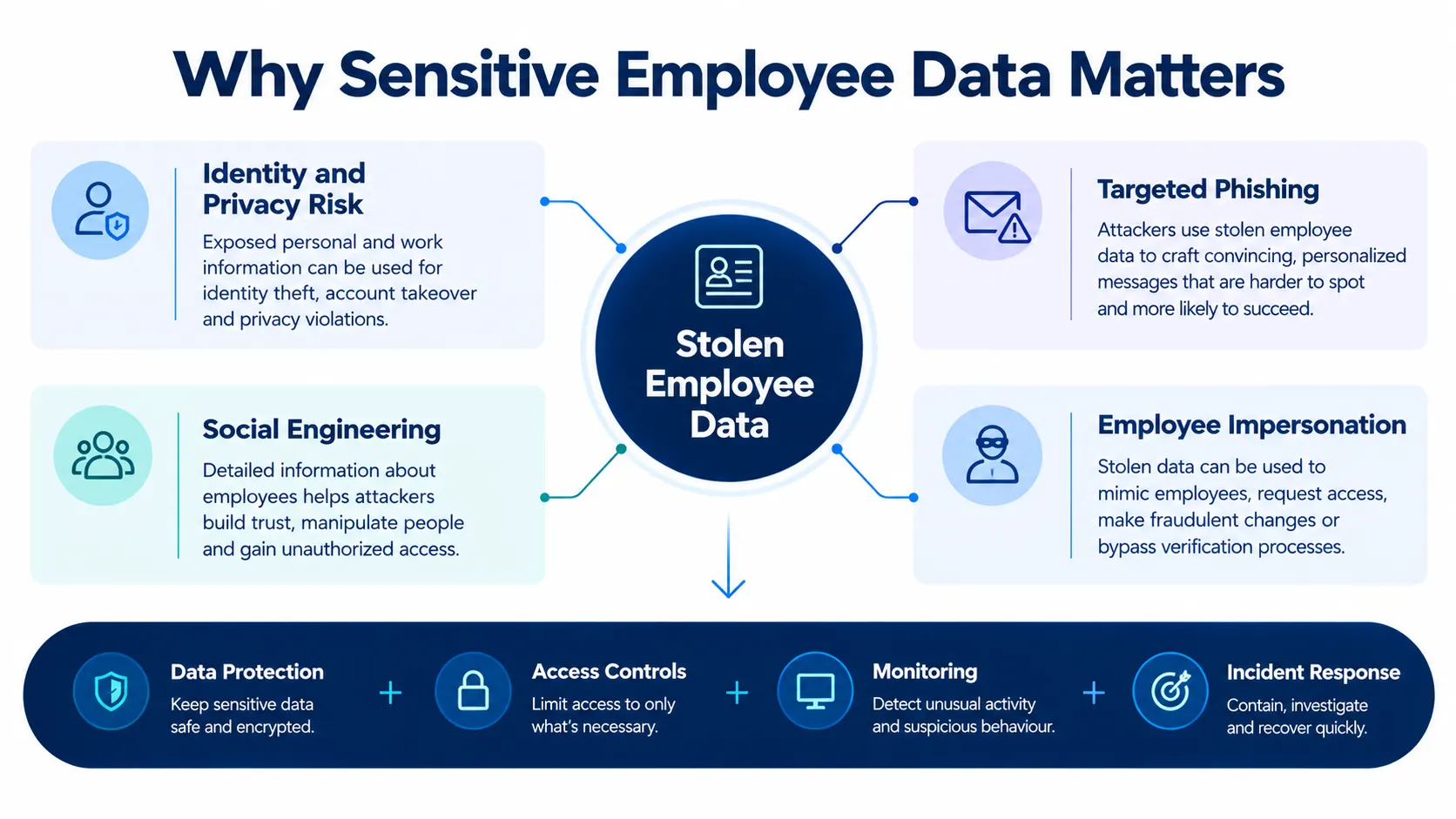
Employee information can provide attackers with context about individuals, their roles and their relationships within an organisation. Such information can potentially be useful for social engineering, impersonation or targeted phishing.
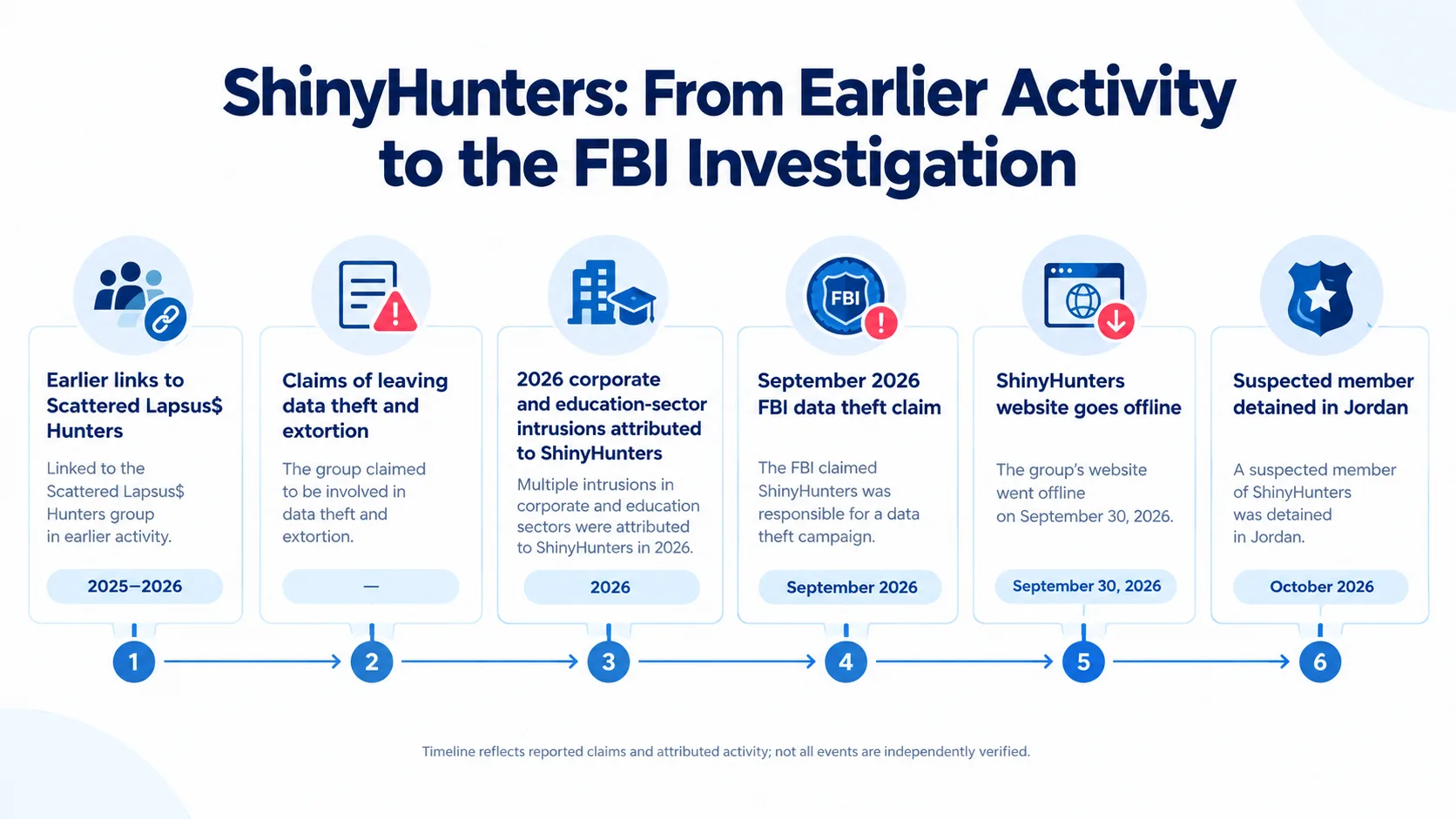
The FBI had already warned in an earlier May 2026 advisory that ShinyHunters is known for large-scale data breaches and extortion. The agency also warned that stolen information can potentially be used to craft highly targeted phishing and impersonation attempts.
The latest incident therefore illustrates why the impact of a data breach cannot be measured only by the number of records involved. The type and sensitivity of the information can be equally important.
ShinyHunters' Online Presence Has Also Been Disrupted
The reported detention follows several signs that ShinyHunters' operations were facing disruption.
According to Reuters, the group's previously used online communication account became unreachable around the same time as the FBI investigation intensified. Its dark web site subsequently went offline after the group had issued a deadline demanding that the FBI withdraw or change an advisory concerning ShinyHunters.
The group had previously taken a confrontational position toward the FBI.
In September, ShinyHunters said its alleged attack on the bureau was retaliation for an FBI advisory that accused the group of making exaggerated claims about access to victims' information. The group gave the agency a deadline to withdraw the advisory.
After that deadline passed, however, ShinyHunters' communication became more conciliatory. Reuters reported that operators told the publication they wanted "no further escalation" and suggested the group was backing down.
The disappearance of the group's site does not, by itself, establish that its operations have ended.
Khader Had Previously Been Linked to the Hacking Community
Khader's alleged connection to the broader ShinyHunters ecosystem was reportedly known before the current investigation.
Reuters noted that journalist Brian Krebs had previously identified Khader as a key member of Scattered Lapsus$ Hunters, an umbrella group associated with several hacking communities, including ShinyHunters.
Khader had reportedly previously claimed to have left data theft and extortion behind and to be cooperating with law enforcement. Despite that, ShinyHunters continued to claim responsibility for major intrusions during 2026.
Reuters cited alleged attacks involving Rockstar Games and Canvas, an education technology platform, among the group's recent activities.
The apparent contradiction between previous claims of leaving cybercrime and the continued activity attributed to ShinyHunters remains an important part of the investigation.
Why ShinyHunters Has Been Difficult to Disrupt
The case also highlights a broader law enforcement challenge surrounding loosely organised cybercrime groups.
Reuters reported that law enforcement agencies have struggled to consistently arrest and prosecute members of groups associated with ShinyHunters, Lapsus$ and Scattered Spider.
Several factors can complicate these investigations.
The groups may have informal structures rather than conventional organisational hierarchies. Some alleged participants are also very young, creating additional legal and investigative complications. Victims may also be reluctant to cooperate with investigators, particularly when an extortion case involves sensitive business information or reputational concerns.
These characteristics can make attribution and prosecution more difficult even when investigators identify individual suspects.
The reported cooperation of a suspected member could therefore be significant because investigators may gain information that is difficult to obtain through conventional forensic investigation alone.
Why the FBI Data Matters
The alleged theft is particularly concerning because of the sensitivity of the information Reuters found in its sample.
Personal information, employment information and medical details can create different categories of risk. When combined, they may provide a much more detailed picture of an individual than any single data field would provide.
For organisations, this reinforces the importance of treating employee information as a security asset rather than simply an administrative dataset.
The FBI's own May advisory on ShinyHunters warned that compromised information could be reused for sophisticated spearphishing, impersonation and other attacks.
For enterprises, this could mean that protecting employee information requires controls that extend beyond traditional perimeter security. Data classification, access controls, monitoring and incident response all become relevant when sensitive employee information is targeted.
What Happens Next
The reported detention does not mean the investigation is complete.
According to Reuters, Khader's reported cooperation could assist authorities in identifying other individuals allegedly connected to ShinyHunters. The FBI has also previously indicated that additional arrests could follow its investigation.
The bureau has not publicly disclosed the full scope of its overseas investigative activity.
The investigation is therefore still developing, and further information about the alleged breach, the identities of other suspects and the legal status of those involved may emerge as authorities continue their work.
A Broader Cybersecurity Lesson
The ShinyHunters investigation highlights a broader industry shift toward treating stolen data as an intelligence resource rather than simply a collection of records.
The value of compromised information can increase when separate pieces of personal, professional and organisational information are combined.
For security teams, that means incident response increasingly has to consider not only how attackers entered an environment, but also what information they could access, how that information could be combined and how it might be used after an intrusion.
The case also demonstrates the importance of international cooperation in cybercrime investigations. A suspect may operate in one country, target organisations in another and communicate with associates across multiple jurisdictions.
That creates challenges that cannot always be addressed by a single national law enforcement agency.
The reported detention in Jordan and cooperation with the FBI show how international investigations can become central to efforts to identify and disrupt distributed cybercrime networks.
What Enterprises Can Learn
The incident provides several practical lessons for organisations handling sensitive employee information:
Classify sensitive employee data: Medical, personal and employment information should receive appropriate protection based on sensitivity.
Limit unnecessary access: Employees and systems should only have access to information required for legitimate business functions.
Monitor unusual data access: Unexpected access or large-scale data movement can be an important incident indicator.
Prepare for targeted phishing: Stolen employee information can make social engineering attempts more convincing.
Coordinate incident response: Legal, security, privacy and communications teams should have clearly defined responsibilities.
Preserve evidence: Logs, communications and other relevant records can become important during investigations.
Maintain law enforcement channels: Timely reporting and cooperation can help investigators understand the scope of an incident.
The FBI's existing guidance on ShinyHunters also recommends caution around unsolicited communications and advises potential victims to verify suspicious requests through trusted channels.
Conclusion
The reported detention of Saif al-Din Khader in Jordan marks another significant development in the investigation into ShinyHunters and its alleged theft of sensitive FBI employee information.
The reported cooperation with investigators could provide new leads into the group's structure and activities. At the same time, the case remains active, and the FBI has not publicly disclosed the full details of the investigation.
For the wider cybersecurity community, the incident reinforces a familiar but increasingly important lesson: sensitive employee data can become a powerful asset for attackers when combined with other information.
As international law enforcement agencies continue pursuing members of loosely organised cybercrime groups, organisations should also focus on reducing the value and accessibility of the information attackers could obtain from a successful intrusion.
Source: Reuters
About the Author