
NIST Publishes Draft Taxonomy for Adversarial Machine Learning Attacks on Agentic AI Systems
NIST has released a draft taxonomy of adversarial machine learning attacks targeting agentic AI systems. The publication establishes common terminology, classifies attack methods and outlines mitigation approaches, with public comments open until 18 December 2026.
Xcademia Team
Introduction
As artificial intelligence systems become more capable of performing tasks with greater autonomy, securing their underlying machine learning processes is becoming an increasingly important cybersecurity challenge.
The US National Institute of Standards and Technology (NIST) has released an initial public draft of a new publication, NIST SP 2400-102e2026, titled "Adversarial Machine Learning: A Taxonomy and Terminology of Attacks and Mitigations."
Published on 9 November 2026, the document establishes a structured classification of adversarial machine learning (AML) concepts, with particular attention to attacks targeting Agentic Super Intelligence (SI) systems and their corresponding mitigation approaches.
The publication aims to establish a common language for understanding AI security threats and supporting the development of future standards and practical security guidance.
What Is NIST's New Adversarial Machine Learning Taxonomy?
Adversarial machine learning examines how machine learning systems can be targeted, manipulated or compromised through malicious actions.
NIST's new draft organises this security landscape into a conceptual hierarchy rather than treating individual attacks as isolated incidents.
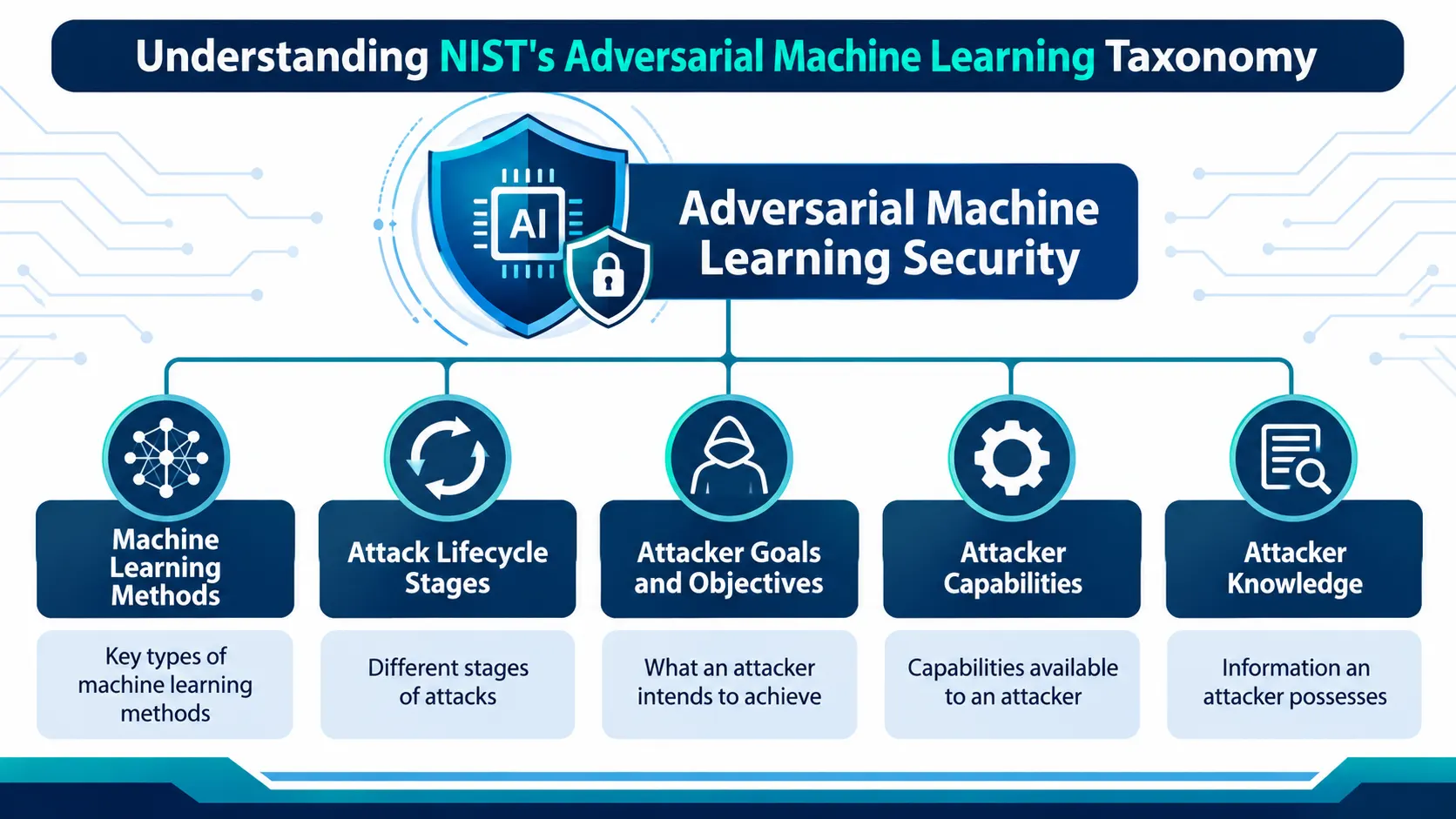
The taxonomy covers several important dimensions:
Machine learning methods: Key types of machine learning methods relevant to the classification of adversarial threats.
Attack lifecycle stages: Different stages associated with attacks against SI systems.
Attacker goals and objectives: What an attacker intends to achieve.
Attacker capabilities: The capabilities available to an attacker when attempting to target an AI system.
Attacker knowledge: The level of information an attacker possesses about the targeted system.
By bringing these dimensions together, NIST aims to provide security professionals and AI developers with a consistent framework for discussing adversarial threats.
The publication also includes a glossary of security-related terminology to support consistent interpretation across the AI security community
Focus on Security Risks in Agentic AI Systems
One of the most important aspects of the publication is its specific focus on attacks targeting Agentic SI systems.
Unlike AI applications that primarily respond to individual user requests, agentic systems are designed to perform tasks through sequences of actions. This makes understanding their security requirements an important area of AI risk management.
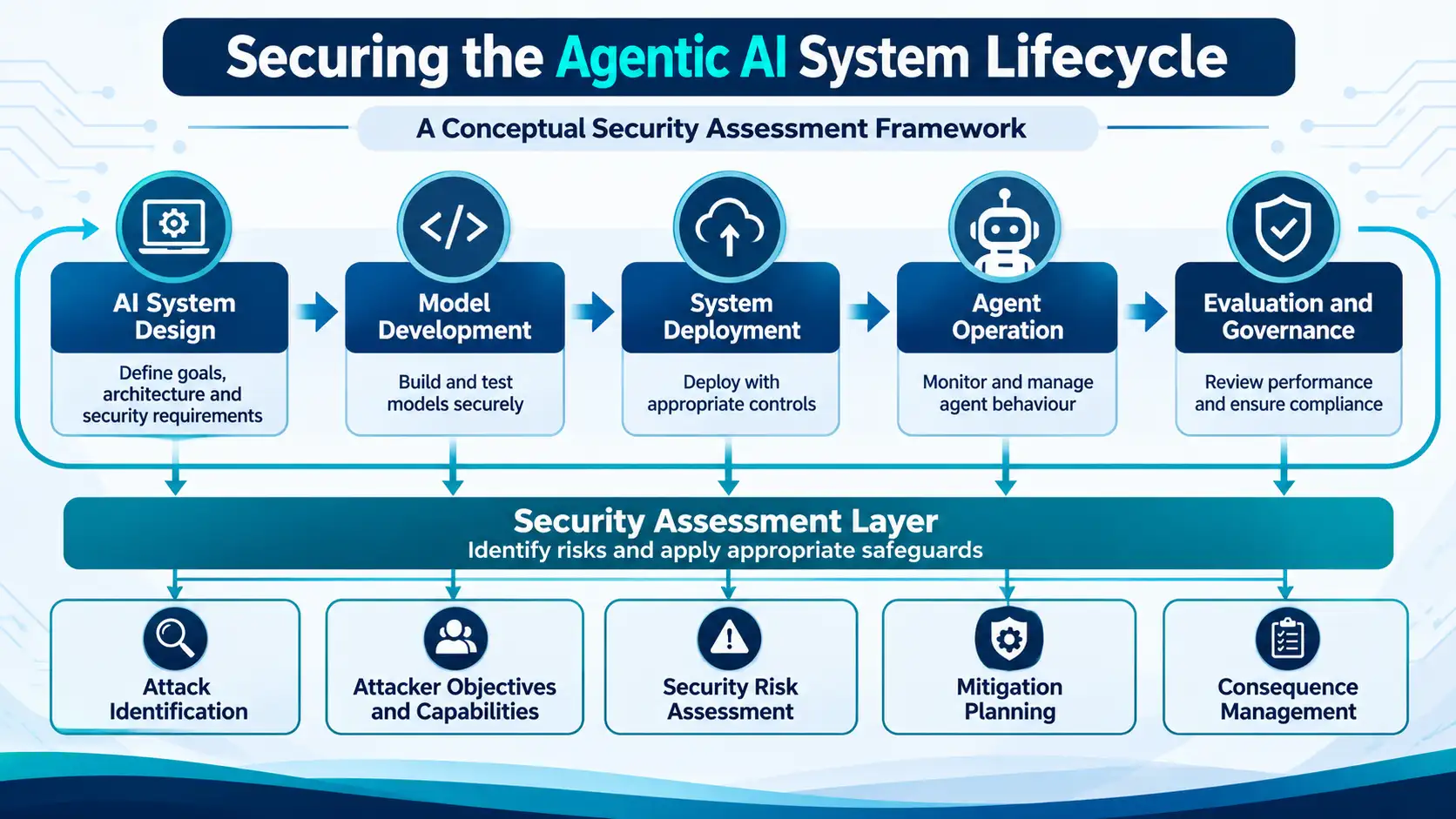
NIST's draft examines challenges throughout the lifecycle of these systems and describes corresponding methods for mitigating attacks and managing their consequences.
However, the announcement does not disclose a complete list of individual attack techniques or detailed implementation instructions for each mitigation.
The company did not provide specific information about this area. Rather, the publication itself should be consulted for the detailed technical taxonomy, particularly Section 4, which focuses on attacks against Agentic SI systems.
Why NIST Is Establishing Common AI Security Terminology
Another major objective of the publication is to establish consistent terminology for the rapidly developing adversarial machine learning landscape.
AI security research involves different attack concepts, technical approaches and mitigation strategies. Without consistent definitions, security teams, researchers and developers can interpret similar threats differently.
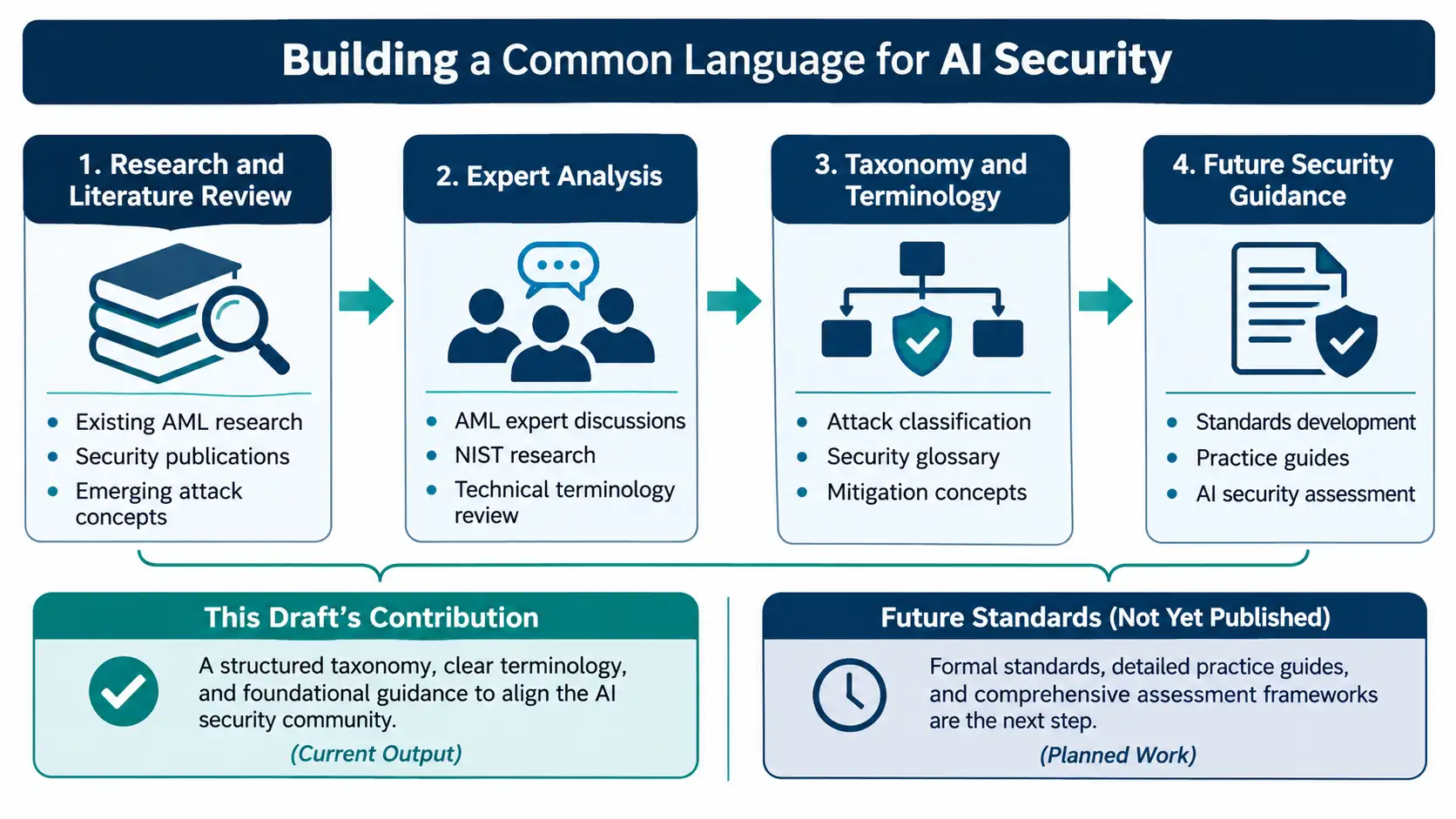
NIST has developed this draft following:
An extensive review of existing research and literature.
Discussions with experts in adversarial machine learning.
Research conducted by NIST's AML experts.
Examination of security challenges throughout the lifecycle of SI systems.
The report also builds on the historical NIST AI 100-2 publication series.
Its taxonomy indexes, including an updated SI Attacks Taxonomy Index and a new Agentic SI Attacks Taxonomy Index, are intended to make navigation and detailed referencing easier.
NIST expects the terminology and classification framework to inform future standards and practice guides for evaluating and managing SI system security.
Public Comment Period: NIST Invites Industry Feedback
NIST has opened the draft for public comments and is encouraging feedback from professionals and organisations involved in designing, developing, deploying, evaluating and governing SI systems.
The agency has identified three specific areas where it is seeking recommendations:
Emerging attacks: What are the latest attacks threatening existing SI systems, particularly Agentic SI systems?
Effective mitigations: What mitigation approaches are currently effective against these threats?
Standardised terminology: Are there additional terms that should be standardised within the adversarial machine learning field?
What This Means for the Cybersecurity Industry
Industry analysis
NIST's initiative highlights a broader industry shift towards treating AI security as a lifecycle-wide responsibility rather than focusing exclusively on model accuracy or conventional application security.
For enterprises developing or deploying agentic AI, a structured understanding of attacker objectives, capabilities, system lifecycle stages and mitigation approaches could help improve security assessments.
The emphasis on shared terminology is also relevant to collaboration between AI researchers, cybersecurity professionals, developers and governance teams.
However, this publication remains an initial public draft. Its final contents and subsequent influence on standards and industry practices will depend on the review process and future developments.
For organisations working with advanced AI systems, the draft provides an opportunity to review emerging security concepts and contribute feedback to the development of a more consistent AI security framework.
Original Analysis: Significance for Enterprise Security
The announcement highlights three important considerations for the cybersecurity industry:
AI threat modelling: Security teams may benefit from assessing attacker knowledge, capabilities and objectives when evaluating agentic AI systems.
Lifecycle security: AI security assessments need to consider risks across system development, deployment and operation.
Common security language: Standardised terminology could improve communication between researchers, developers, security teams and governance professionals.
These are potential industry implications of the proposed framework, not claims of proven security improvements.
About the Author