
How Oracle Is Using AI to Connect Security Signals and Investigate Threats
Oracle explains how AI-assisted security operations can connect scattered activity, support threat hunting and gather investigation evidence, while keeping human judgement and approval central to security decisions.
Xcademia Team
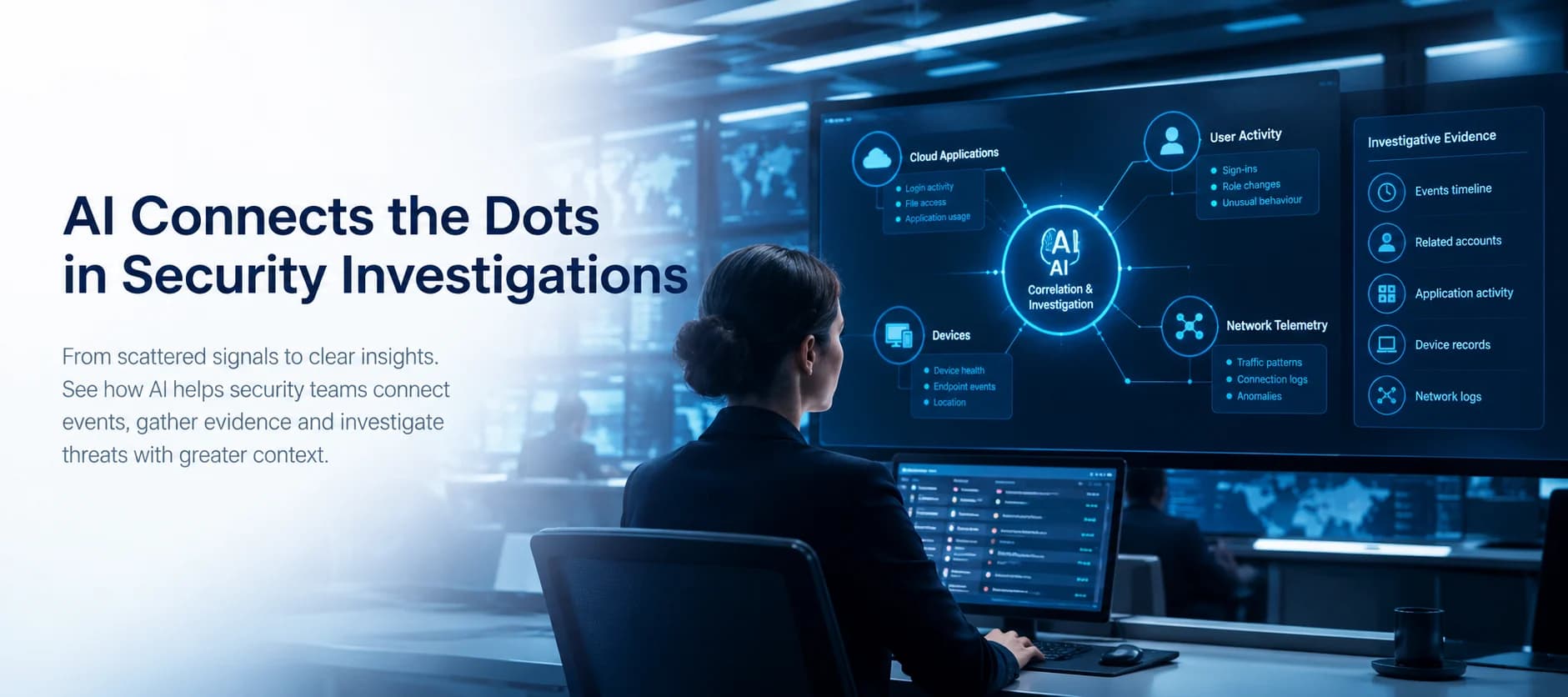
Artificial intelligence is becoming an increasingly important part of cybersecurity operations, particularly as security teams face large volumes of activity across cloud applications, devices and networks.
Oracle also emphasises that AI operates alongside existing security controls, monitoring and automation. Human judgement, oversight and approval remain important when an investigation requires business context or a decision about what action to take.
Why Security Teams Need More Context Than Individual Alerts Provide
A single security alert can identify unusual activity, but it may not explain whether that activity represents a genuine threat. Relevant events can occur at different times and appear in separate application, device or network records.
This creates an investigation challenge. Security analysts need to determine how individual actions relate to one another, whether the behaviour has a legitimate business explanation and whether other accounts or business information may be affected.
Oracle highlights the difficulty of investigating activity that initially appears legitimate. For example, a user may sign in to a cloud application using a valid session and perform requests permitted by existing controls. However, the user may gradually access more areas of the application, retrieve additional information or repeat particular actions.
Each event may appear acceptable when considered independently. Examining the timing, scope and sequence of those actions can reveal a pattern that warrants further investigation.
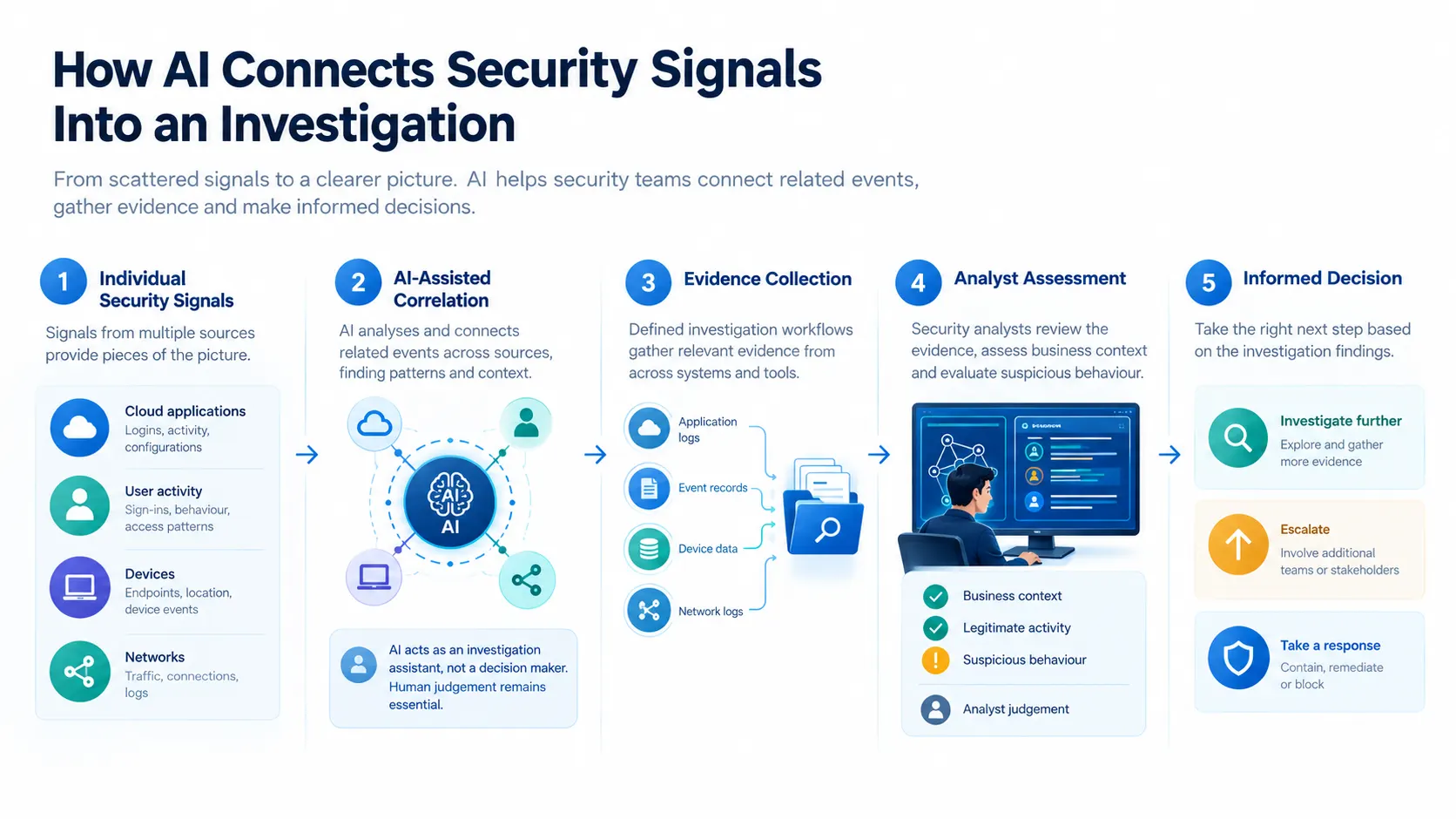
AI-based behavioural analysis can help connect these related actions and identify changes in activity. Defined investigation workflows can then gather supporting evidence and help assess the finding.
The objective is to provide analysts with a more complete picture of the activity, rather than requiring them to perform every search and evidence lookup manually.
AI-Assisted Security Operations: From Detection to Response
Oracle describes AI-assisted security operations as a way to connect detection, investigation and response within a broader workflow.
Security operations centres, commonly known as SOCs, monitor systems for suspicious activity and coordinate investigations when potential security concerns emerge. Their work can involve reviewing alerts, searching application records, gathering supporting information and determining whether an incident requires further action.
When evidence is scattered across different systems, analysts may need to repeat searches and move between tools to understand the situation. This can create additional investigative work before they can make an informed assessment.
Oracle's approach uses AI-assisted workflows to connect related behaviour, gather evidence and help assess what a finding may represent. The company presents this as a way to reduce repetitive manual investigation steps and improve the context available to security teams.
The blog illustrates this approach through a scenario involving a user with a valid cloud application session whose activity changes over time. Behavioural analysis can help identify those changes, while investigation workflows gather relevant evidence for review.
Importantly, the example does not suggest that valid authentication automatically makes subsequent activity safe, nor that unusual activity alone proves malicious intent. The investigation must establish whether the behaviour fits a legitimate business need or warrants additional action.
Oracle explores these concepts in its AI World session, Automated Security Operations in Action: Scaling the AI-Powered SOC.
AI-Assisted Threat Hunting: Investigating the Clues Before the Full Picture Emerges
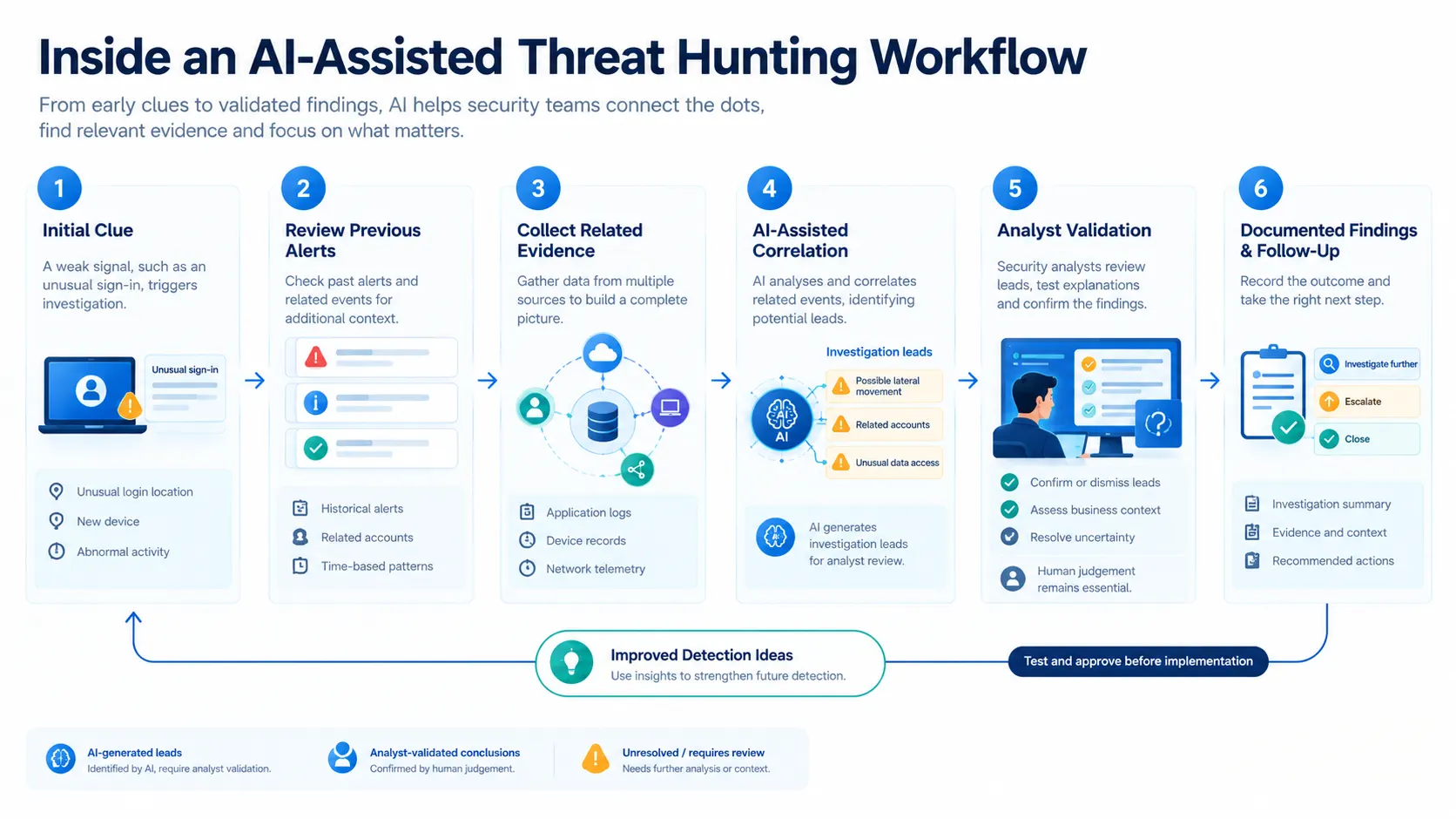
Not every security investigation starts with a clear alert. In some cases, analysts notice an unusual sign-in or another weak signal without having enough evidence to explain what is happening.
This is where threat hunting becomes relevant. Rather than relying exclusively on existing alerts, security teams actively examine available evidence to identify potentially suspicious activity that may otherwise remain unexplained.
Oracle's second focus is AI-assisted threat hunting across software-as-a-service (SaaS) environments.
According to the company, an investigation may begin with an unusual sign-in and expand to previous alerts, application activity, device records or network events. Connecting this evidence can help analysts assess whether the concern is isolated or potentially affects other accounts and business information.
AI-assisted workflows can support repeatable searches, correlate relevant evidence and identify leads for follow-up. Analysts then examine possible explanations, test their validity and address uncertainty as the investigation progresses.
This distinction is important: AI can help organise and connect evidence, but investigators still need to determine what the evidence actually means.
Oracle discusses this approach in its AI World session, AI-Assisted Threat Hunting: Surfacing Suspicious Activity Across SaaS Environments.
Turning Investigation Findings Into Better Future Detection
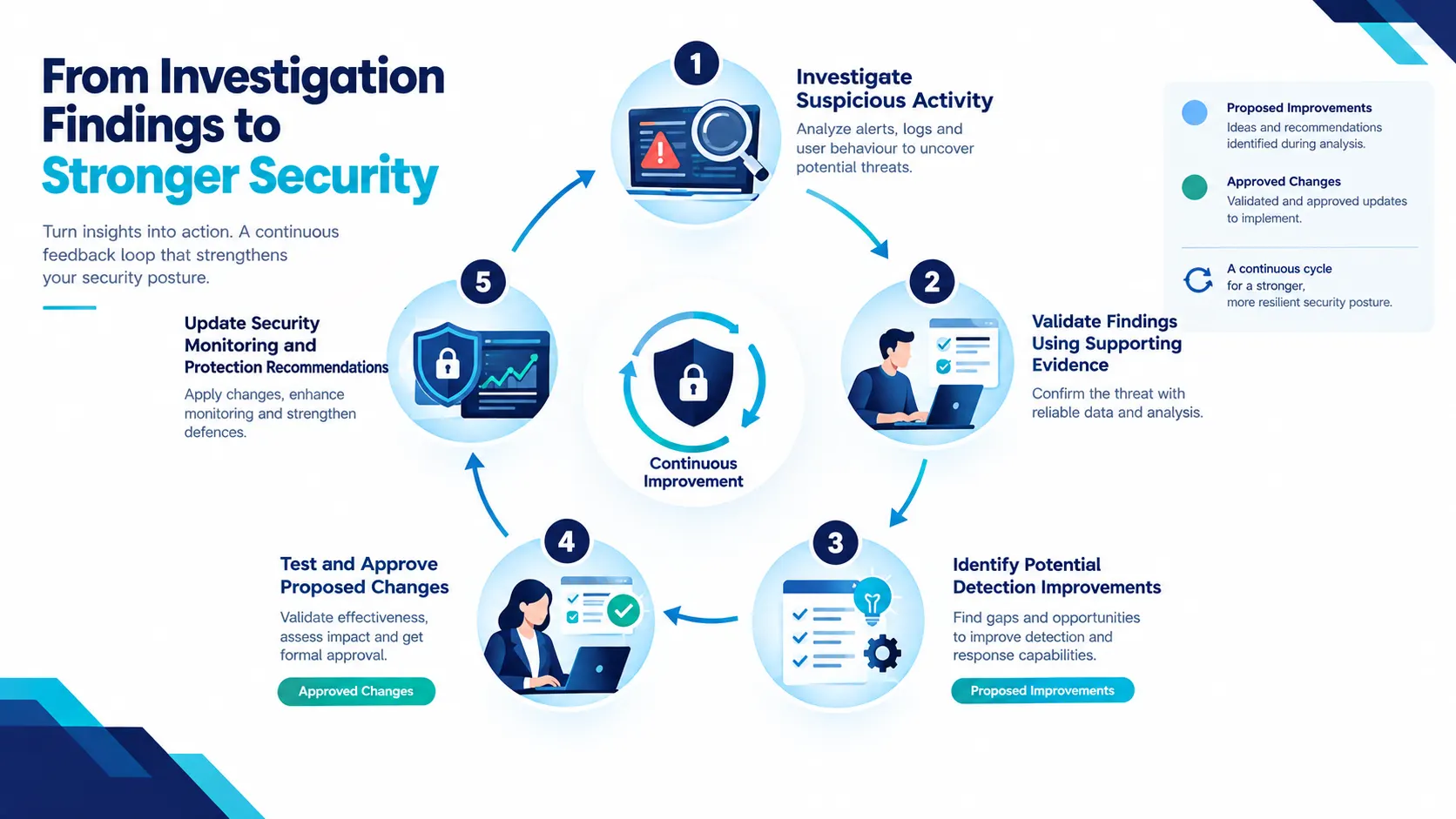
An investigation can provide value beyond resolving the immediate concern. Once a finding has been validated, security teams can examine whether similar behaviour could be recognised earlier in the future.
Oracle says investigation findings can inform new detection approaches and protection recommendations. Any changes remain subject to appropriate testing and approval processes.
This creates a feedback loop between incident investigation and future security monitoring. Evidence gathered during one case can help teams identify patterns, refine detection logic and consider where additional safeguards may be appropriate.
However, a recommendation is not the same as a deployed security control. Oracle's description makes clear that proposed changes require suitable validation and approval.
For security leaders, this distinction matters when evaluating AI-assisted operations. Investigation support can help identify possible improvements, but organisations still need to verify findings and assess the consequences before changing their production security environments.
Human Oversight Remains Part of the Security Process
Although AI can help connect events and gather evidence, Oracle does not present it as a replacement for security analysts.
Human involvement remains necessary when investigators must interpret business context, evaluate uncertainty, exercise judgement or approve a response. The role of AI is to support the investigation and help analysts make better-informed decisions.
This approach also reflects the importance of layered security. Monitoring, established security controls and existing automation remain the foundation of the process, with AI-assisted workflows providing additional investigative support.
Organisations considering similar approaches should distinguish between automating repetitive evidence gathering and delegating consequential security decisions. The former can reduce manual work; the latter requires careful consideration of authorisation, oversight and accountability.
Oracle's announcement does not disclose quantitative performance results, measured reductions in investigation time or comparative detection accuracy for the approaches described. Additional details were not disclosed in the announcement.
What This Means for Enterprise Cybersecurity
Oracle's article highlights a broader industry shift toward using AI to help security teams interpret relationships between events rather than treating alerts as isolated items.
For enterprises, the potential value lies in bringing relevant evidence together, supporting repeatable investigations and helping analysts focus on the questions that require human expertise.
The approach also highlights several practical considerations:
Evidence quality: AI-assisted conclusions depend on the relevance and availability of the underlying records.
Context matters: A suspicious pattern needs to be assessed against legitimate business activity and other available evidence.
Human accountability: Analysts must retain appropriate responsibility for validation, escalation and approval.
Controlled improvements: New detections and protection recommendations should be tested before implementation.
Operational integration: Investigation workflows need to work alongside existing monitoring, security controls and response procedures.
These are practical implications of the approach described, not claims that Oracle has independently demonstrated every potential outcome.
For organisations evaluating AI in security operations, the key question is not simply whether AI can analyse more activity. It is whether the resulting investigation is evidence-based, understandable to analysts and connected to an appropriate decision-making process.
Conclusion
Oracle's latest article outlines how AI-assisted security operations and threat hunting can help connect scattered signals, collect relevant evidence and support investigations across cloud and SaaS environments.
The two approaches address different stages of the same challenge. AI-assisted security operations help move from a detected concern towards an evidence-backed investigation and response. AI-assisted threat hunting helps analysts follow early clues when the available evidence does not yet explain what is happening.
Both approaches retain an important role for human judgement, validation and approval.
As enterprise environments generate activity across more systems, the ability to connect related evidence may become increasingly important to effective security investigations. Oracle's message is that AI can assist this work, while established security controls and accountable human decision-making remain essential.
Source: Oracle Cloud Infrastructure Blog
About the Author