
AWS Amplify API Vulnerability Could Expose Other Users' Data: CVE-2026-108096
AWS has disclosed CVE-2026-108096, an authorization vulnerability affecting AWS Amplify API components that could allow authenticated users to read other users' records through crafted GraphQL queries. Developers should upgrade affected packages and redeploy their backends.
Xcademia Team
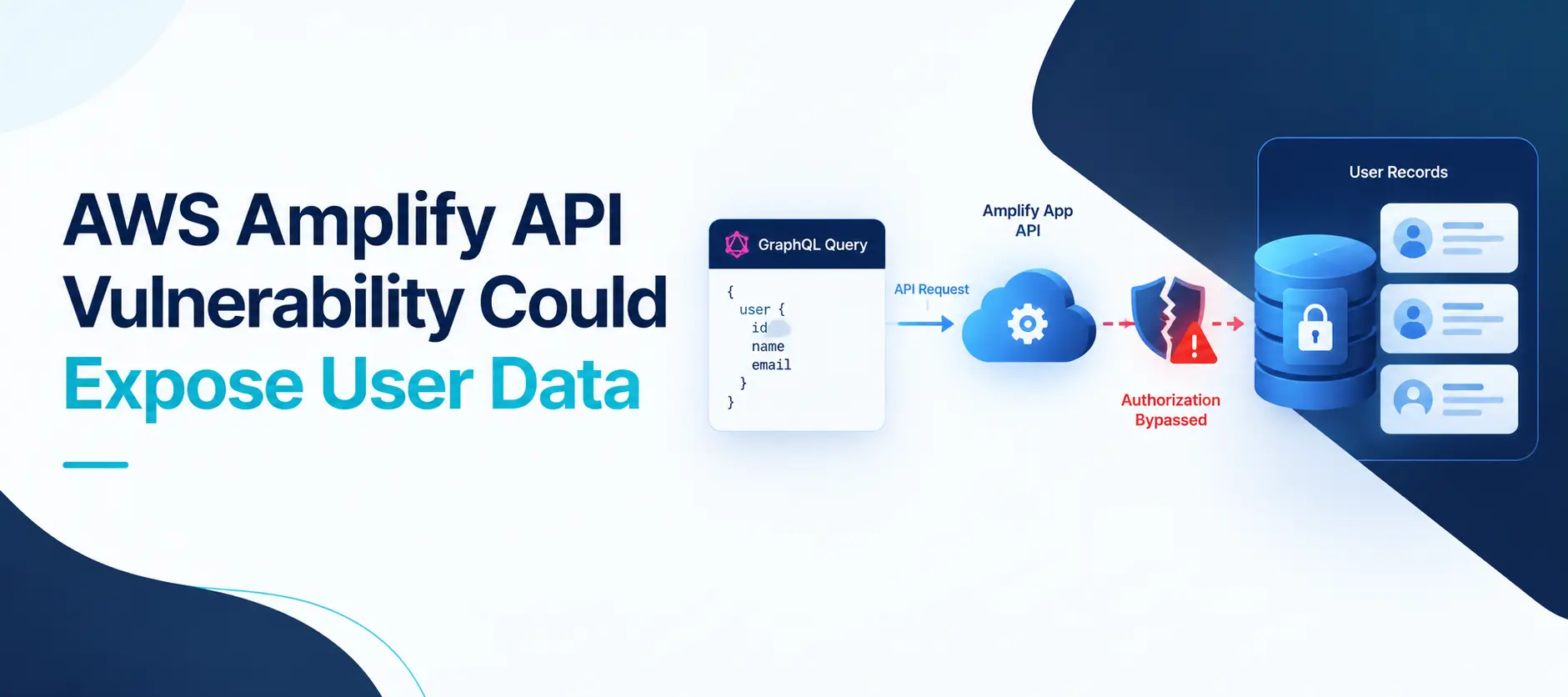
AWS has disclosed a security vulnerability in its Amplify API components that could allow authenticated users to access records belonging to other users within the same application.
Tracked as CVE-2026-108096, the vulnerability involves improper authorization in query resolvers generated by the @aws-amplify/graphql-index-transformer package. An attacker with valid authentication could potentially exploit crafted queries to read records they should not be authorized to access.
AWS published the security bulletin on October 9, 2026, classifying it as an important issue requiring attention. The company has released patched versions of the affected components and recommends upgrading to the latest versions and redeploying the backend.
According to the official advisory, no workarounds are available.
What Is CVE-2026-108096?
CVE-2026-108096 affects authorization checks in query resolvers used by AWS Amplify API applications.
AWS Amplify API Category is a library of AWS Cloud Development Kit (CDK) constructs for defining GraphQL data models and authorization rules for AWS AppSync APIs.
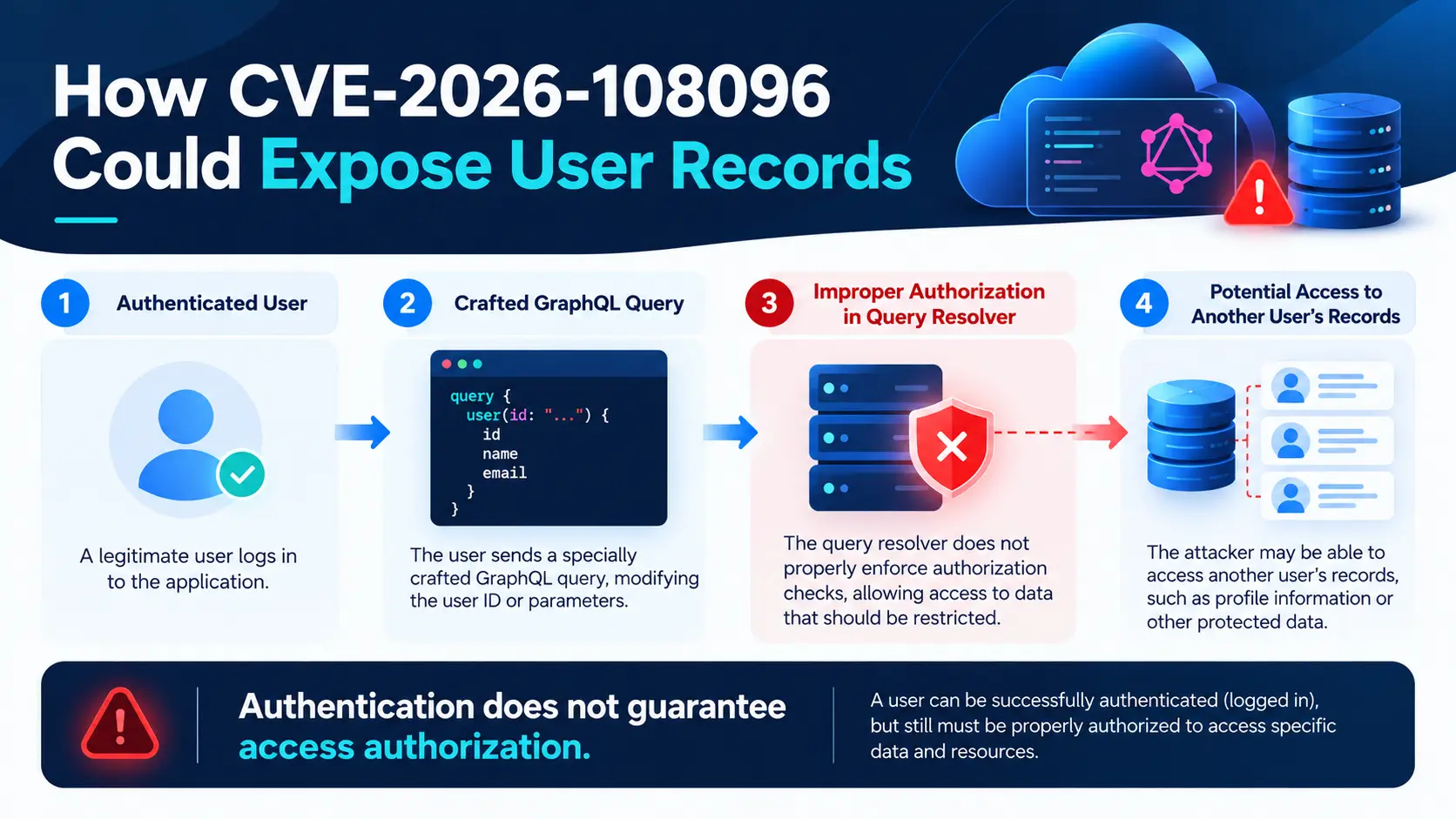
GraphQL query resolvers process requests for application data. Authorization rules help determine which records a user is permitted to access.
When these authorization checks do not work correctly, an authenticated user may be able to retrieve records belonging to another user.
In this case, AWS identified an issue in query resolvers generated by the @aws-amplify/graphql-index-transformer package. A remote user who is already authenticated could potentially exploit crafted queries to read other users' records within the same application.
The advisory does not disclose the number of affected applications or confirm that the vulnerability was exploited in real-world attacks. Additional details were not disclosed in the announcement.
Which AWS Amplify Packages Are Affected?
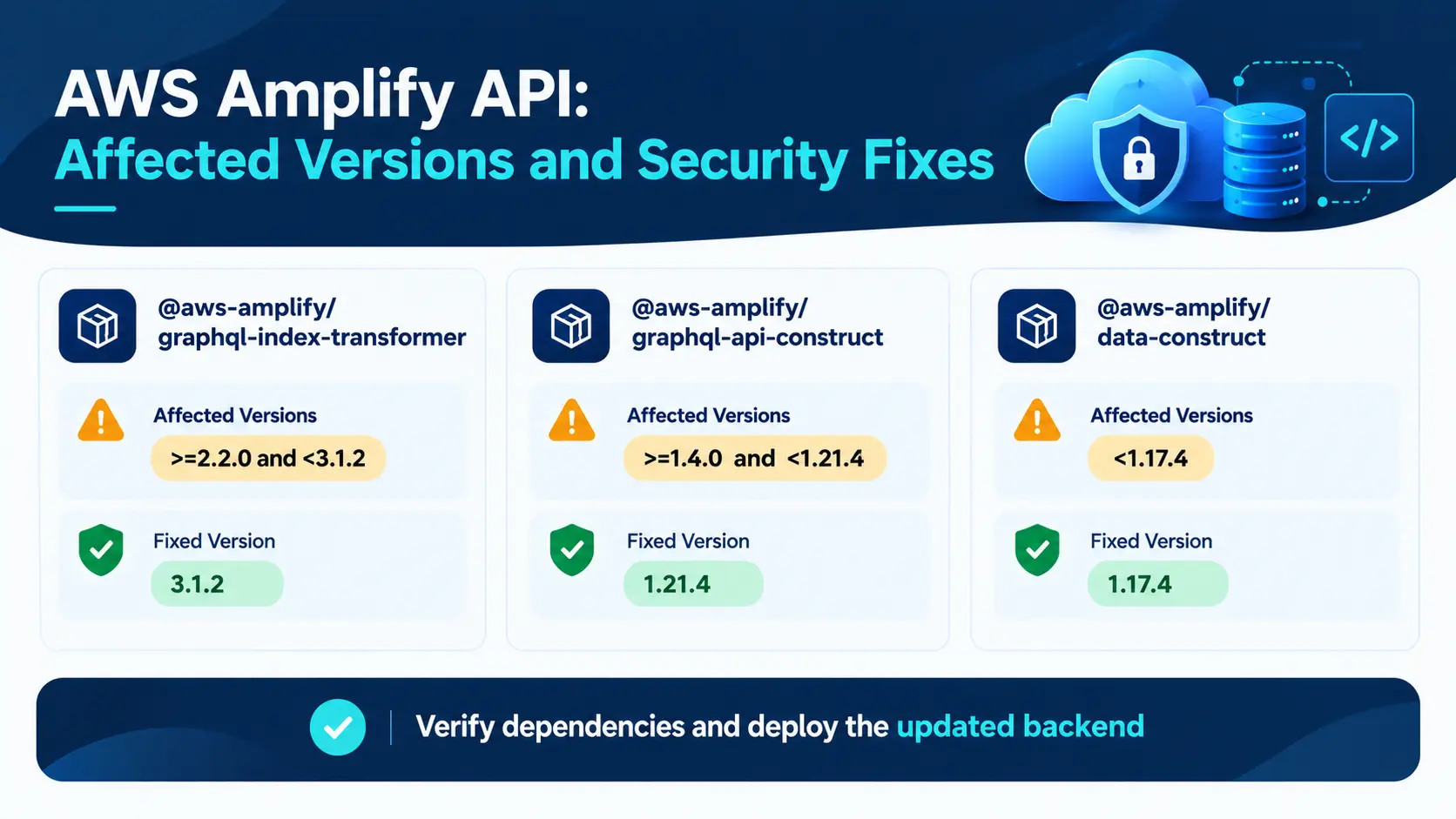
AWS identified three affected package ranges in its security bulletin.
Package | Affected versions | Patched version |
|---|---|---|
|
|
|
|
|
|
|
|
|
The vulnerability affects the specified package versions, not every AWS Amplify application automatically. Developers should check whether their projects use the affected packages and version ranges.
AWS states that the fix for @aws-amplify/graphql-index-transformer version 3.1.2 is included in @aws-amplify/data-construct version 1.17.4 and @aws-amplify/graphql-api-construct version 1.21.4.
Organizations should review their dependency versions and determine whether their applications require updates.
How Could the Vulnerability Affect Applications?
The primary concern is unauthorized access to application records.
Applications built with AWS Amplify may use GraphQL APIs to retrieve and manage user-specific information. Authorization rules help enforce boundaries between users and the records they are permitted to access.
If an affected query resolver fails to enforce the intended authorization rules, a properly authenticated user could potentially access records belonging to other users in the same application.
Depending on the data an application stores, unauthorized record access could create privacy and confidentiality risks.
However, the advisory does not identify specific exposed data types, affected customer applications, or confirmed data breaches. The actual impact depends on the application's implementation and the records accessible through the affected query paths.
Developers should therefore treat the issue as a dependency and authorization review priority rather than assume that every application using Amplify has experienced a data exposure.
How to Fix CVE-2026-108096
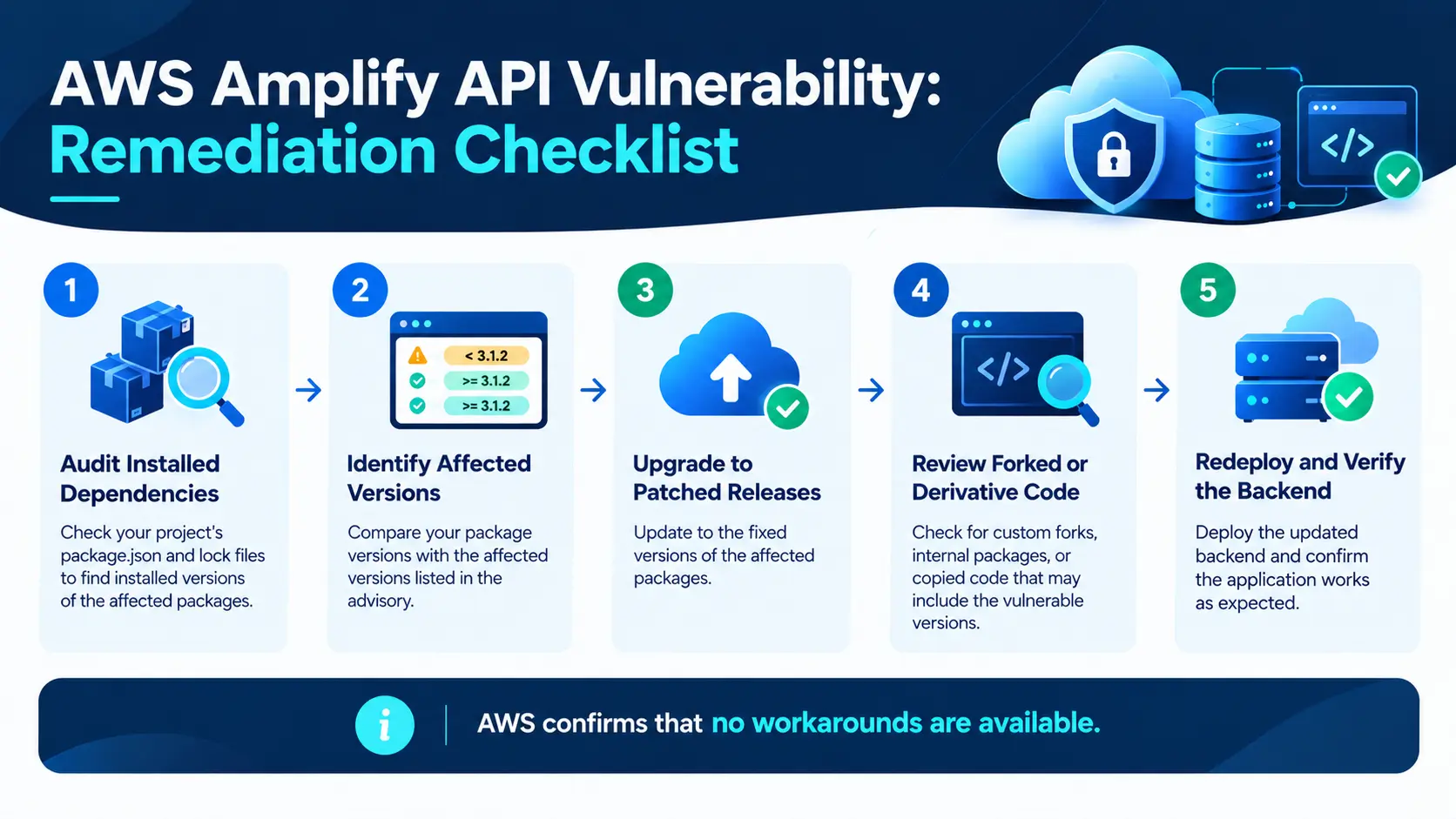
AWS has released fixes for all three affected packages and recommends upgrading to the latest versions.
The company also advises developers to ensure that forked or derivative code incorporates the security fixes before redeploying their backends.
1. Check Your Project Dependencies
Review your project's dependency files and installed package versions.
Look for these packages:
@aws-amplify/graphql-index-transformer@aws-amplify/graphql-api-construct@aws-amplify/data-construct
Compare the installed versions against the affected ranges listed in the AWS advisory.
For JavaScript projects using npm, you can inspect installed package versions with:
npm ls @aws-amplify/graphql-index-transformer
npm ls @aws-amplify/graphql-api-construct
npm ls @aws-amplify/data-construct
These commands help identify the versions installed in your project. They do not independently establish whether every generated backend component is affected.
2. Upgrade the Affected Packages
Update affected dependencies to versions containing the security fixes.
The minimum patched versions specified in the advisory are:
@aws-amplify/graphql-index-transformer:3.1.2@aws-amplify/graphql-api-construct:1.21.4@aws-amplify/data-construct:1.17.4
AWS recommends upgrading to the latest version rather than relying solely on these minimum versions.
Before making changes, review package compatibility and the dependency relationships within your project.
3. Review Forked or Modified Code
Applications may use forked packages or derivative implementations based on the affected components.
AWS specifically recommends ensuring that such code incorporates the fixes.
Simply updating a dependency declaration may not be sufficient if the application continues to use vulnerable generated code or a modified implementation that does not include the correction.
4. Redeploy the Backend
After upgrading and ensuring the security fixes are included, redeploy the backend as recommended by AWS.
The deployment process should follow the application's established release and verification procedures.
Teams should also confirm that the deployed environment uses the intended patched dependencies.
5. Review Authorization Rules
As a practical security measure, review the application's GraphQL authorization configuration and test whether users can access only the records permitted by the application's access rules.
This is an additional defensive recommendation, not a separate remediation requirement explicitly specified by AWS.
Important: AWS states that no workarounds are available for this vulnerability. Upgrading the affected components and redeploying the backend are the recommended remediation steps.
What Should Cloud Development Teams Learn From This Vulnerability?
The AWS advisory highlights the importance of enforcing authorization at the data-access layer.
Authentication verifies a user's identity, while authorization determines which resources that user can access. An application may authenticate a user correctly but still expose data if its authorization checks fail.
This distinction is particularly important for applications that serve multiple users through a shared API.
For development teams, several defensive practices are worth considering:
Review access-control rules: Ensure that data access follows the intended user and application boundaries.
Track vulnerable dependencies: Monitor security advisories for frameworks, libraries, and generated application components.
Test authorization boundaries: Include tests that verify users cannot access records belonging to other users without permission.
Verify production deployments: Confirm that security fixes are present in the deployed application, not just in local development files.
Review modified dependencies: Check whether internal forks or derivative implementations contain the relevant patches.
These are general security recommendations informed by the nature of the vulnerability. They should not be interpreted as additional requirements explicitly stated in the AWS bulletin.
The broader lesson is that secure application development requires more than login protection. Data-access controls must also be enforced correctly throughout the application stack.
Conclusion
CVE-2026-108096 identifies an authorization vulnerability affecting specific AWS Amplify API packages used to generate query resolvers for SQL-backed models.
The issue could allow authenticated remote users to read records belonging to other users of the same application through crafted GraphQL queries.
AWS has released patched versions of the affected packages and recommends upgrading to the latest versions, ensuring forked or derivative code contains the fixes, and redeploying the backend.
Because AWS reports that no workarounds are available, development teams using affected versions should prioritize checking their dependencies and applying the recommended remediation.
Source: Amazon Web Services (AWS)
About the Author