What Is Human Resource Management (HRM)? Functions, Roles and Importance
Human Resource Management (HRM) helps organisations recruit, develop and retain employees while supporting business goals. Explore its key functions, roles, responsibilities, importance and the impact of technology on modern HR.
Every organisation depends on people to achieve its goals. Employees develop products, serve customers, manage operations and contribute ideas that help a business grow. However, building and supporting an effective workforce requires more than simply hiring people. It involves planning, developing talent, managing performance, maintaining workplace relationships and creating an environment where employees can contribute effectively.
This is where Human Resource Management (HRM) plays an important role.
Human Resource Management helps organisations manage their workforce throughout the employee lifecycle, from recruitment and onboarding to professional development, performance management and employee separation. It also connects workforce needs with wider business objectives.
Whether a company is a small start-up or a large organisation, understanding HRM is essential for creating a productive, organised and supportive workplace.
What Is Human Resource Management?
Human Resource Management (HRM) is the process of planning, organising and managing an organisation's workforce to achieve business objectives while supporting employees' professional needs and development.
It includes activities such as workforce planning, recruitment, selection, onboarding, training, performance evaluation, compensation, employee relations and workplace compliance.
In simple terms, HRM ensures that an organisation has the right people, with the right skills, in the right roles, and provides them with the support they need to perform well.
For example, imagine a growing technology company that plans to launch a new software product. It may need software developers, designers, project managers and customer support professionals. The HR team helps identify these workforce requirements, recruit suitable candidates, organise onboarding and arrange training where necessary.
Its responsibilities do not end after employees join. HR also supports performance reviews, workplace policies, employee concerns and career development.
Therefore, HRM is not limited to hiring and maintaining employee records. It is an ongoing process that connects people management with organisational success.
What Are the Main Functions of Human Resource Management?
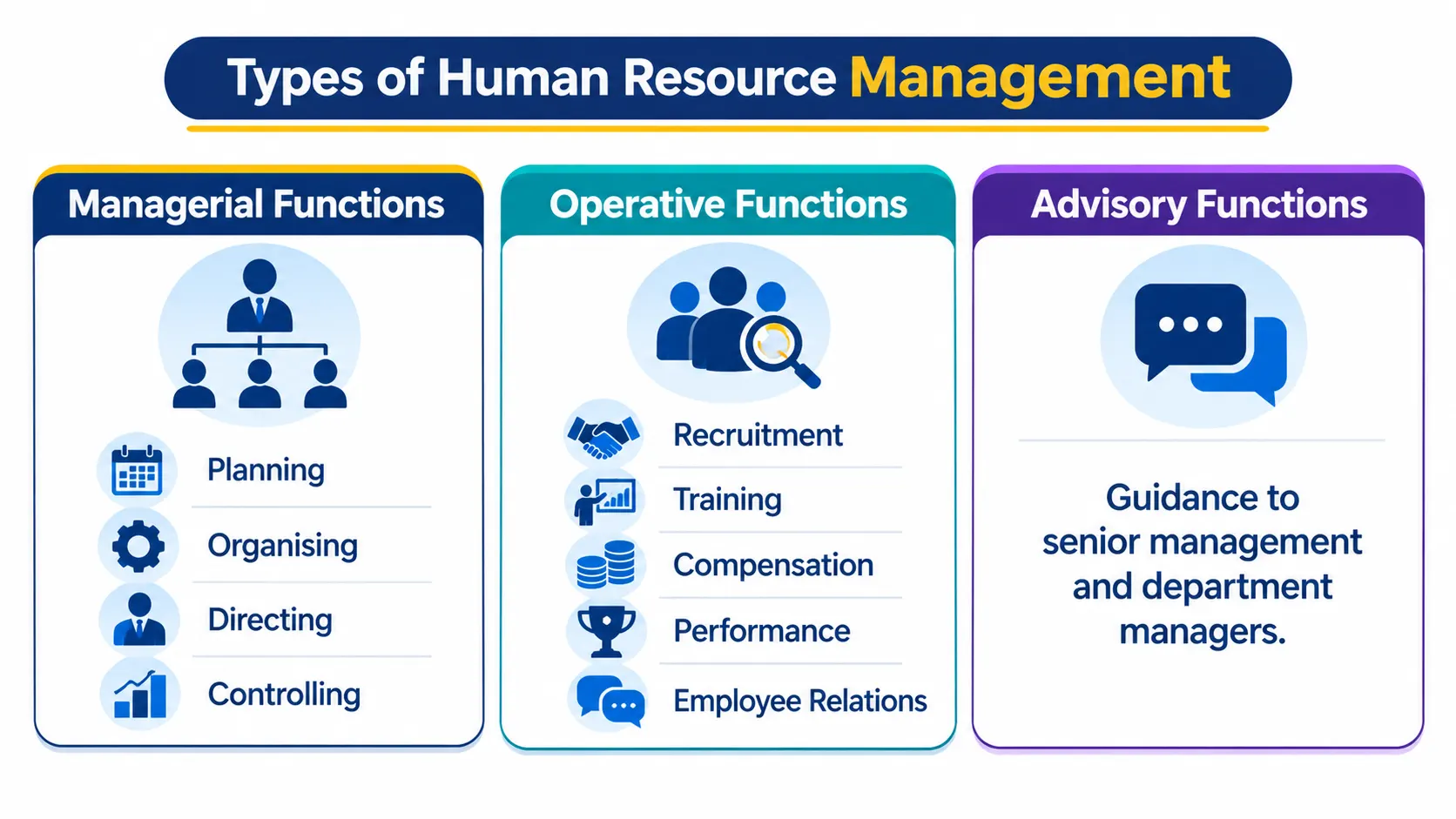
The functions of HRM cover the different activities required to attract, manage, develop and retain employees. These functions can be understood through three broad categories:
Managerial functions: Planning, organising, directing and controlling workforce activities.
Operative functions: Carrying out practical activities such as recruitment, training, compensation and employee relations.
Advisory functions: Guiding business leaders and department managers on workforce-related decisions.
Together, these categories help HR departments manage both everyday employee requirements and long-term workforce needs.
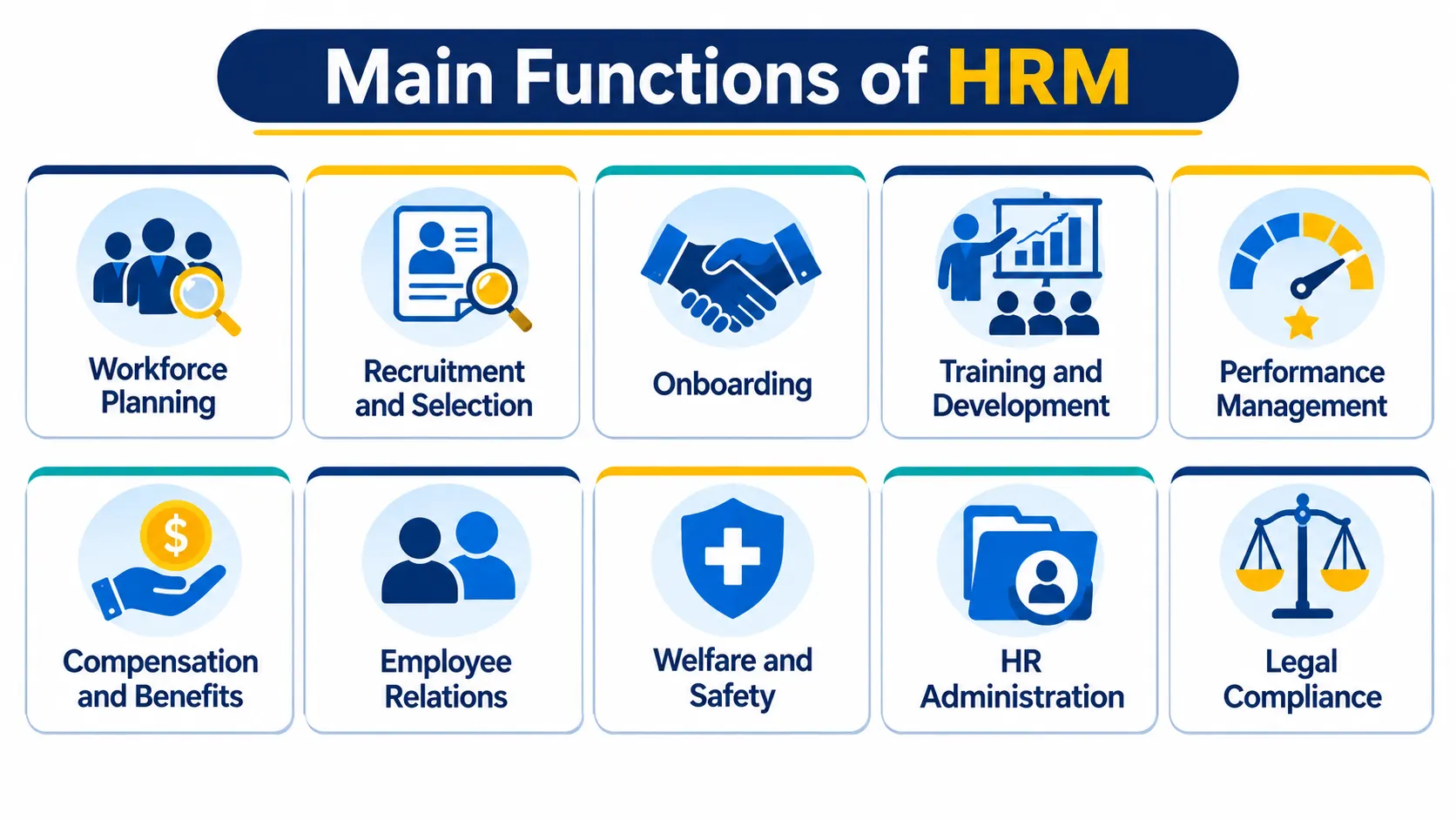
1. Human Resource Planning
Human resource planning involves identifying an organisation's current and future workforce requirements. It helps businesses determine how many employees they need, which skills are required and when additional staff may be necessary.
HR teams consider business goals, employee availability, expected growth, retirements, resignations and changes in job requirements.
For example, if a retail company plans to open three new stores, HR may estimate how many sales associates, supervisors and store managers will be needed.
Effective workforce planning helps prevent staffing shortages, unnecessary hiring costs and skill gaps.
2. Recruitment and Selection
Recruitment and selection focus on finding and choosing suitable candidates for available positions.
The process generally includes:
Identifying job vacancies and hiring requirements.
Preparing job descriptions and candidate criteria.
Advertising vacancies through suitable channels.
Reviewing applications and shortlisting candidates.
Conducting interviews and assessments.
Selecting candidates and making job offers.
Recruitment focuses on attracting potential candidates, while selection involves evaluating applicants and choosing the most suitable person for the role.
A well-managed hiring process helps organisations build capable teams and improve the chances of finding employees whose skills match job requirements.
3. Onboarding and Employee Orientation
Onboarding helps new employees understand their roles, responsibilities, workplace policies and organisational culture.
It may include introducing employees to their teams, explaining company procedures, providing access to required systems and arranging initial training.
For example, a newly hired customer support executive may receive training on the company's products, customer service standards, communication tools and escalation procedures.
A structured onboarding process helps employees settle into their roles, understand expectations and become productive more effectively.
4. Training and Development
Training and development help employees improve their existing abilities and acquire new skills.
Training usually focuses on the knowledge and skills required for current responsibilities. Development has a broader focus and prepares employees for future roles, greater responsibilities and career growth.
Common activities include:
Technical and job-specific training.
Communication and interpersonal skills development.
Leadership and management programmes.
Workshops and professional certifications.
Mentoring and coaching.
Digital skills and technology training.
For example, an organisation introducing a new project management system may arrange training sessions so employees can use the software effectively.
Continuous learning helps businesses address skill gaps, improve performance and prepare their workforce for changing industry requirements.
5. Performance Management
Performance management is the process of setting expectations, monitoring progress, evaluating employee contributions and providing feedback.
HR teams often work with department managers to establish performance goals, organise review cycles and identify areas where employees may need additional support.
Performance management activities may include:
Setting individual and team objectives.
Conducting performance reviews.
Providing constructive feedback.
Identifying strengths and improvement areas.
Recognising achievements.
Creating performance improvement plans when required.
For example, a sales employee may be evaluated based on customer relationships, sales targets, product knowledge and overall contribution to the team.
The purpose is not simply to measure employee performance. It is also to help employees understand expectations and improve their work.
6. Compensation and Benefits Management
Compensation and benefits management involves developing and administering the financial and non-financial rewards employees receive for their work.
Compensation generally includes salaries, wages, bonuses, incentives and other monetary payments. Benefits may include health insurance, paid leave, retirement-related benefits and other employee support programmes.
HR professionals work with management and finance teams to establish fair pay structures, maintain accurate compensation records and administer benefits according to organisational policies and applicable requirements.
A transparent and competitive compensation approach can help organisations attract suitable candidates, recognise employee contributions and support retention.
7. Employee Relations and Engagement
Employee relations focus on maintaining constructive relationships between employees and management. This function helps create a workplace where people can communicate, raise concerns and work together respectfully.
HR may support employee relations through:
Handling workplace grievances.
Helping resolve conflicts.
Communicating organisational policies.
Encouraging employee feedback.
Supporting employee engagement initiatives.
Promoting respectful and inclusive workplace practices.
Employee engagement refers to the level of employees' involvement, motivation and connection with their work and organisation.
For example, HR may conduct employee surveys to understand concerns about workload, communication or workplace practices. The findings can help managers identify issues and take appropriate action.
8. Employee Welfare, Health and Safety
Employee welfare focuses on supporting employees' well-being and maintaining suitable working conditions.
Depending on the organisation and applicable requirements, HR may coordinate workplace safety policies, welfare initiatives, health-related benefits and employee support programmes.
Activities may include:
Communicating workplace safety procedures.
Coordinating health and wellness initiatives.
Supporting work-life balance policies.
Addressing workplace concerns.
Promoting a safe and respectful work environment.
HR often works with managers, safety professionals and other departments to ensure that employee welfare is considered in workplace decisions.
9. HR Administration and Record Management
HR administration involves maintaining employee-related information and managing routine workforce processes.
These responsibilities may include maintaining records related to:
Employee personal and employment details.
Attendance and leave.
Payroll inputs and compensation.
Promotions and transfers.
Training and performance reviews.
Employment documents and policy acknowledgements.
Accurate records help organisations manage employee information, support administrative decisions and meet relevant documentation requirements.
Many organisations use Human Resource Information Systems (HRIS) or Human Resource Management Systems (HRMS) to organise employee data and automate routine processes.
10. Legal Compliance and Workplace Policies
Organisations must follow applicable employment laws, workplace regulations and statutory requirements. HR helps businesses understand and implement relevant policies and procedures.
Depending on the organisation and jurisdiction, this may involve areas such as wages, working hours, leave, employee benefits, workplace safety, employment documentation and grievance procedures.
HR professionals also help develop and communicate internal policies covering workplace conduct, attendance, disciplinary procedures and employee responsibilities.
Compliance is an ongoing responsibility. Organisations need to review their practices and stay informed about relevant regulatory changes rather than relying on outdated policies.
What Are the Key Roles and Responsibilities of HR Professionals?
The responsibilities of HR professionals extend across the employee lifecycle. While the exact duties vary depending on the organisation's size, industry and HR structure, their work generally includes the following areas.
Workforce and Talent Management
HR professionals identify staffing requirements, coordinate recruitment and help departments find employees with suitable qualifications and experience.
They may also support succession planning, which involves preparing employees to take on important roles when business needs change or existing role-holders move on.
Employee Support and Communication
HR acts as an important point of contact for employees and managers on workplace-related matters.
This may involve answering policy questions, supporting grievance procedures, communicating organisational changes and helping resolve employment-related concerns.
Policy Development and Implementation
HR works with management to develop workplace policies and ensure employees understand the rules and procedures that apply to their roles.
Clear policies help establish consistent expectations and support fair workplace practices.
Learning and Career Development
HR identifies training requirements, coordinates learning opportunities and supports employee career development.
It may also work with managers to identify employees who could benefit from mentoring, leadership training or additional responsibilities.
Organisational Development
Organisational development focuses on improving how a business operates by strengthening its structure, culture, processes and workforce capabilities.
HR may contribute to organisational changes, team restructuring, employee engagement initiatives and leadership development.
Data Management and HR Reporting
HR professionals maintain workforce information and may analyse data related to recruitment, employee turnover, attendance, training and performance.
These insights can help management understand workforce trends and make better-informed decisions.
Why Is Human Resource Management Important?
Human Resource Management contributes to organisational performance by ensuring that people-related activities support business requirements and employee needs.
Its importance can be understood through several key benefits.
1. Helps Organisations Hire Suitable Talent
A structured recruitment process helps businesses identify candidates whose qualifications, skills and experience match job requirements. This supports better hiring decisions and helps teams meet their responsibilities.
2. Improves Employee Productivity
Employees are more likely to perform effectively when they understand their roles, receive appropriate training and have access to the resources they need.
HR supports these conditions through onboarding, learning programmes, performance management and workforce planning.
3. Supports Employee Satisfaction and Retention
Fair policies, suitable compensation, career development opportunities and constructive workplace relationships can contribute to employee satisfaction.
When organisations address employee concerns and provide opportunities for growth, they may be better positioned to retain experienced employees.
4. Builds a Positive Workplace Culture
HR helps communicate organisational values and establish practices that encourage respect, collaboration, accountability and inclusion.
A positive workplace culture can strengthen relationships between employees and support teamwork.
5. Helps Manage Workplace Risks and Compliance
HR supports organisations in implementing relevant employment policies, maintaining records and addressing workplace issues.
This helps businesses manage compliance responsibilities and reduce risks associated with inconsistent or inappropriate employment practices.
6. Aligns Workforce Goals With Business Objectives
HR connects employee capabilities and workforce planning with the organisation's wider direction.
For example, if a business plans to expand its digital services, HR may help identify the skills required, recruit specialists and arrange training for existing employees.
7. Prepares Employees for Future Changes
Technology, customer expectations and industry requirements continue to change. HR helps organisations identify emerging skill requirements and support continuous learning.
This makes workforce development an important part of long-term organisational planning.
What Are the Different Types of Human Resource Management?
HRM covers several specialised areas. In larger organisations, these responsibilities may be handled by separate HR teams, while smaller businesses may assign multiple responsibilities to one HR professional.
Some important areas include:
1. Strategic Human Resource Management
Strategic HRM connects workforce planning and people-related decisions with an organisation's long-term business goals.
It focuses on future talent requirements, organisational development, leadership planning and workforce capabilities.
2. Recruitment and Talent Acquisition
This area focuses on attracting, identifying and hiring suitable candidates. It includes recruitment planning, candidate sourcing, selection processes and onboarding coordination.
3. Learning and Development
Learning and development focuses on improving employee knowledge and skills through training, coaching, mentoring and professional development opportunities.
4. Compensation and Benefits Management
This area manages employee pay structures, incentives and benefits. Its objective is to support fair and consistent compensation practices while helping organisations attract and retain talent.
5. Employee Relations
Employee relations focuses on workplace communication, grievance handling, conflict resolution and maintaining constructive relationships between employees and management.
6. Performance and Talent Management
This area supports performance evaluation, goal setting, employee recognition, career progression and the development of future leaders.
7. HR Operations and Administration
HR operations manages routine employee processes, documentation, attendance, leave administration, HR systems and other administrative activities.
These areas often overlap. For example, strategic workforce planning may influence recruitment, training and succession planning at the same time.
How Does Human Resource Management Work in an Organisation?
A practical example can make HRM easier to understand.
Imagine a growing e-commerce company that wants to expand its operations and improve customer service. It plans to hire additional employees for technology, logistics and customer support.
The HR team may contribute in the following ways:
Identify workforce requirements: Work with department managers to determine how many employees are needed and which skills are required.
Recruit suitable candidates: Prepare job descriptions, advertise vacancies, screen applications and coordinate interviews.
Complete onboarding: Introduce new employees to company policies, teams, tools and job responsibilities.
Arrange training: Provide role-specific training on systems, processes, products and customer service standards.
Monitor performance: Coordinate performance reviews and help managers identify areas for improvement.
Manage compensation and benefits: Administer salary-related processes and communicate applicable employee benefits.
Support employee relations: Address workplace concerns, encourage communication and help resolve conflicts.
Plan for future needs: Review workforce requirements and identify skills the company may need as it grows.
This example shows that HRM is not a single activity. It is a connected set of responsibilities that supports employees and helps the organisation achieve its objectives.
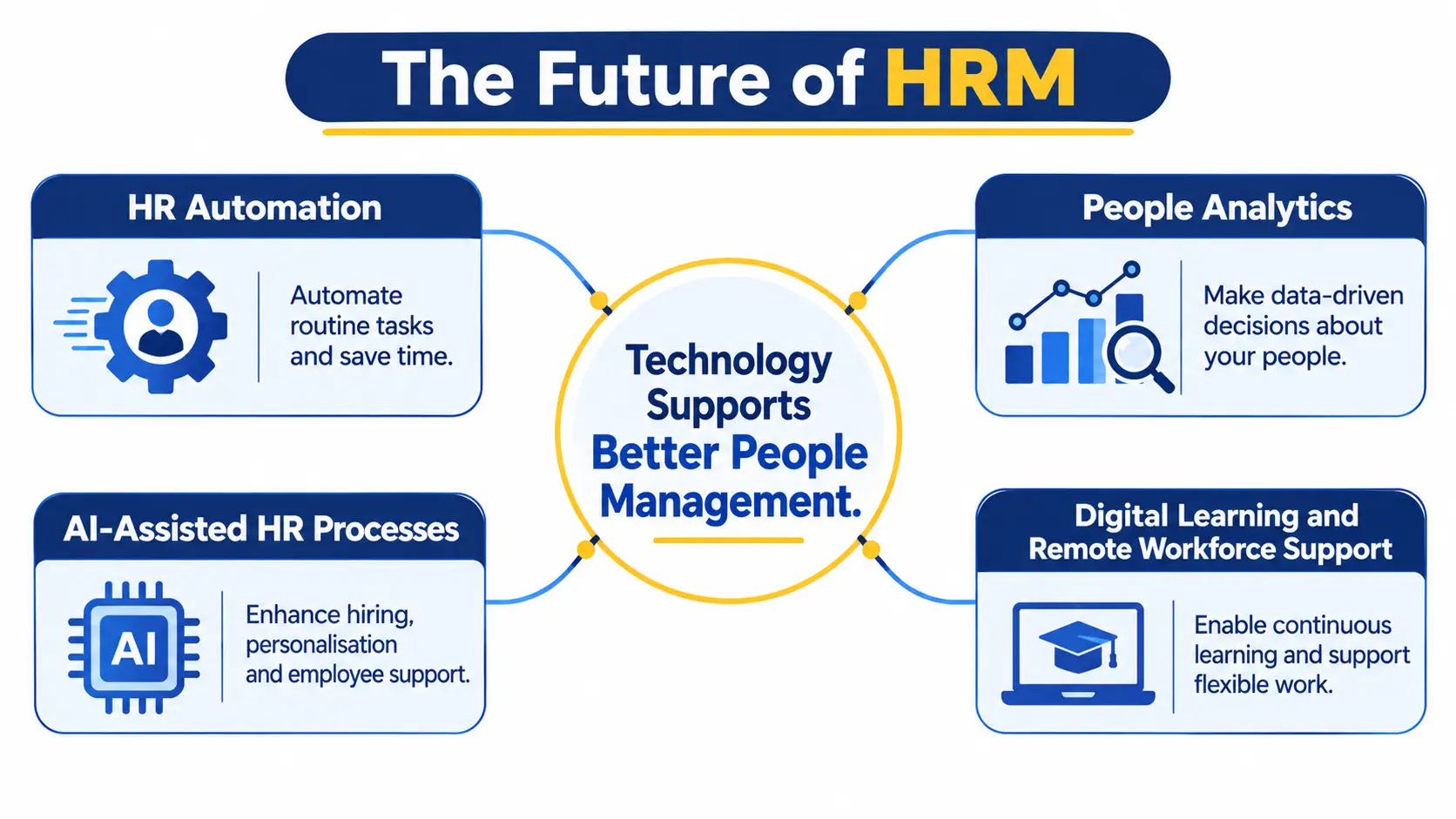
How Is Technology Changing Human Resource Management?
Technology is changing how HR teams manage employee information, coordinate processes and make workforce decisions.
Many organisations now use HR software and digital tools to reduce repetitive administrative work and improve access to workforce information.
Some important developments include:
HR Automation
HR systems can automate tasks such as leave requests, attendance tracking, employee record updates, onboarding workflows and payroll-related processes.
This can reduce manual work and help HR teams focus on more complex responsibilities.
People Analytics
People analytics involves using workforce data to identify patterns and support HR decisions.
For example, an organisation may analyse employee turnover, recruitment timelines, training participation or engagement survey results to understand where improvements may be needed.
Artificial Intelligence in HR
AI-powered tools can support selected HR activities, such as organising applications, assisting with job description preparation, answering routine employee questions and analysing workforce information.
However, AI-generated recommendations require appropriate human review. Hiring, performance evaluation and other employment decisions can have significant effects on individuals, so organisations should consider fairness, transparency, privacy and applicable regulations when using these tools.
Digital Learning and Remote Workforce Support
Online learning platforms, collaboration tools and virtual onboarding systems help organisations train and support employees across different locations.
These tools can make learning more accessible and help distributed teams stay connected.
Technology can improve HR processes, but it does not replace the need for sound judgement, communication and responsible people management.
Skills Required for a Career in Human Resource Management
A career in HR involves working with people, understanding organisational requirements and managing information responsibly. The skills required can vary by role, but several capabilities are useful across the profession.
Communication skills: Explaining policies, conducting interviews and communicating with employees and managers.
Interpersonal skills: Building professional relationships and understanding different workplace perspectives.
Problem-solving: Addressing employee concerns and helping managers resolve workplace challenges.
Organisation and time management: Coordinating recruitment, training, records and multiple HR activities.
Decision-making: Evaluating information and supporting fair, consistent workforce decisions.
Knowledge of employment practices: Understanding relevant workplace policies and applicable employment regulations.
Technology skills: Using HR software, spreadsheets, reporting tools and digital communication platforms.
Confidentiality and ethics: Handling employee information carefully and maintaining professional integrity.
As HR becomes more involved in organisational planning, analytical thinking, adaptability and business understanding are also valuable skills.
Conclusion
Human Resource Management is an essential part of how organisations attract, develop, support and retain their employees. Its responsibilities extend beyond recruitment and payroll to include workforce planning, training, performance management, employee relations, compliance and organisational development.
Effective HRM helps businesses connect employee capabilities with organisational goals while supporting a fair, productive and supportive workplace.
As technology and business requirements continue to evolve, HR professionals must combine people-management skills with strategic thinking, data awareness and responsible use of digital tools.
For students and aspiring professionals, understanding HRM provides a useful foundation for exploring careers in recruitment, employee relations, learning and development, HR operations and strategic human resource management.
Frequently Asked Questions (FAQs)
1. What is Human Resource Management in simple words?
Human Resource Management is the process of managing people in an organisation. It includes hiring employees, providing training, managing performance, handling compensation and supporting workplace relationships.
2. What are the main functions of HRM?
The main functions include human resource planning, recruitment and selection, onboarding, training and development, performance management, compensation and benefits, employee relations, employee welfare, record management and legal compliance.
3. What is the difference between HR and HRM?
Human Resources (HR) generally refers to the people function or department within an organisation. Human Resource Management (HRM) refers to the broader approach and processes used to manage, develop and support employees in alignment with business goals.
4. Why is Human Resource Management important?
HRM helps organisations hire suitable employees, improve productivity, support employee development, maintain workplace relationships, manage compliance responsibilities and align workforce capabilities with business objectives.
5. What are the three broad categories of HRM functions?
HRM functions are commonly grouped into three categories:
Managerial functions: Planning, organising, directing and controlling workforce activities.
Operative functions: Recruitment, training, compensation, performance management and employee relations.
Advisory functions: Guiding senior management and department managers on workforce-related matters.
Ready to go deeper?
Professional Training
Hands-on, mentor-led training aligned with industry certifications.
About the Author
Sharper every day
Daily tutorials, analysis, and career playbooks across all 12 Xcademia disciplines, straight to your inbox. No spam.