
Google Cloud: Security Fundamentals Matter More in the AI Era
Google Cloud CISO Chris Betz says AI is accelerating both cyberattacks and defense, making fundamentals such as MFA, Zero Trust, patching, threat modeling, and detection more important in the AI era.
Xcademia Team
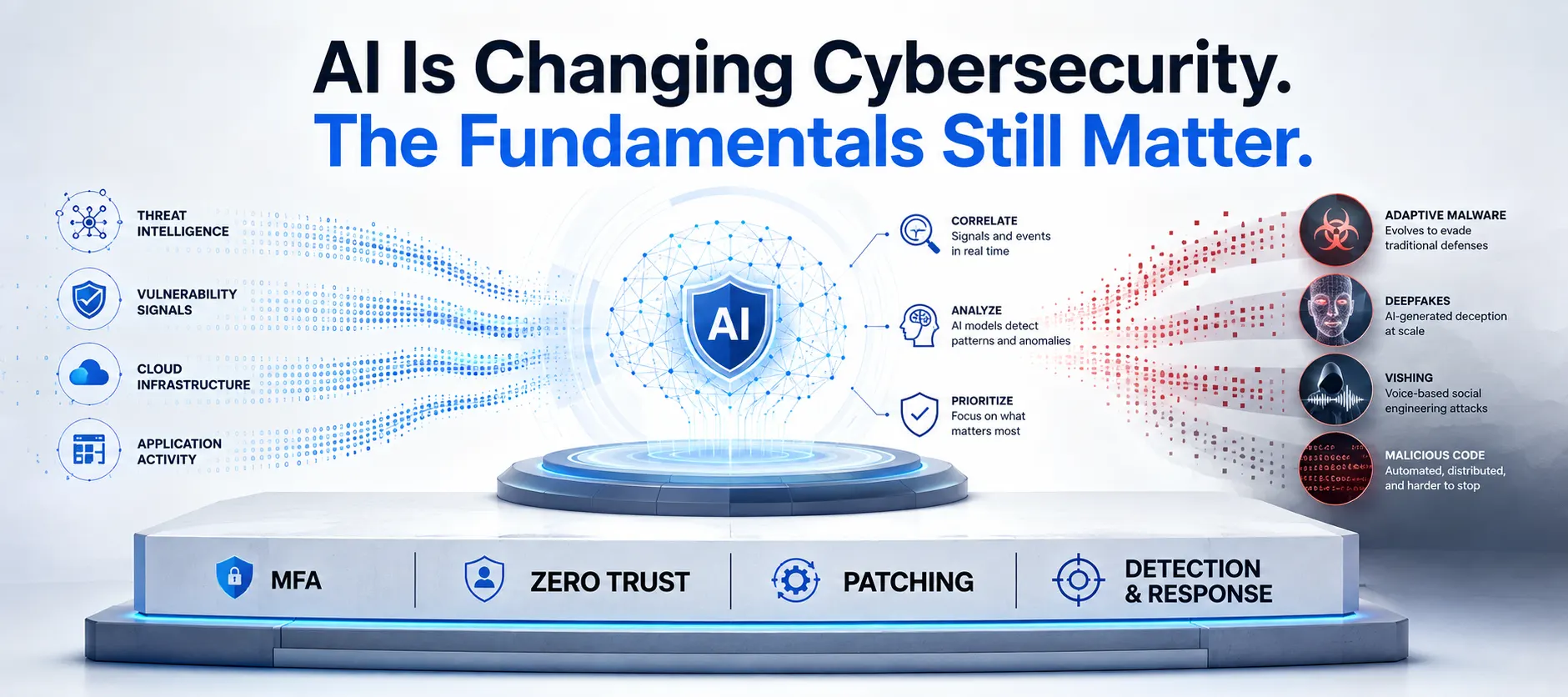
AI Is Changing Cybersecurity, But the Fundamentals Still Matter
Artificial intelligence is changing the speed and scale of cybersecurity.
For attackers, AI can support more targeted and adaptive activity. For defenders, it can help analyze vulnerabilities, bring together security context, and accelerate parts of the response process.
But according to Chris Betz, CISO of Google Cloud, this shift does not make traditional cybersecurity practices obsolete.
Instead, it makes a strong security foundation more important.
In the latest Cloud CISO Perspectives, Betz argues that organizations need to adopt AI securely while continuing to strengthen foundational controls and layered defenses. The objective is to help security teams respond at a pace that matches the changing threat environment.
AI Is Accelerating Attackers and Defenders
Traditional automation has helped organizations perform repetitive security activities at scale. AI extends those capabilities by enabling more customized actions at much greater speed.
That applies to both attackers and defenders.
Google Cloud says adversaries are using AI to support malware that can dynamically generate malicious scripts and obfuscate code during execution. The source also highlights sophisticated vishing and deepfakes used for identity theft and business email compromise.
Unauthorized AI tools are another concern, with the article pointing to the emergence of "shadow agents."
These developments create a security environment in which organizations cannot simply accelerate existing processes. They also need to examine whether their underlying security foundations are strong enough to support AI-enabled defense.
Security Fundamentals Remain the Foundation
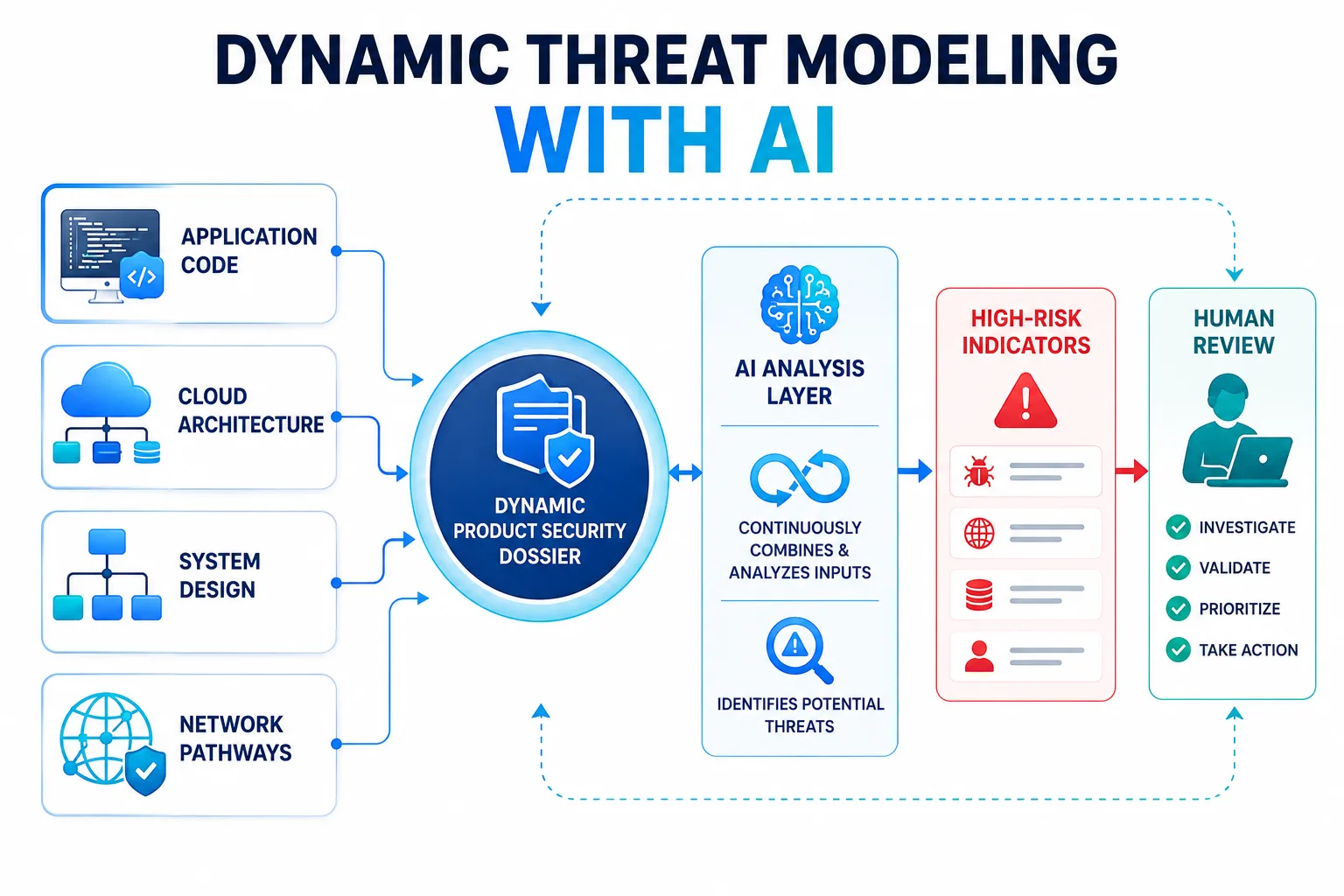
Betz argues that defending against AI-powered threats requires organizations to return to the fundamentals and build layered defenses with appropriate guardrails.
The source specifically highlights:
Multi-factor authentication (MFA)
Consistent system patching
Comprehensive detection and response
Layered security defenses
These controls remain important because they help reduce the attack surface and provide the context that defensive AI systems need.
The broader message is straightforward: AI should strengthen an organization's security program rather than replace the controls that form its foundation.
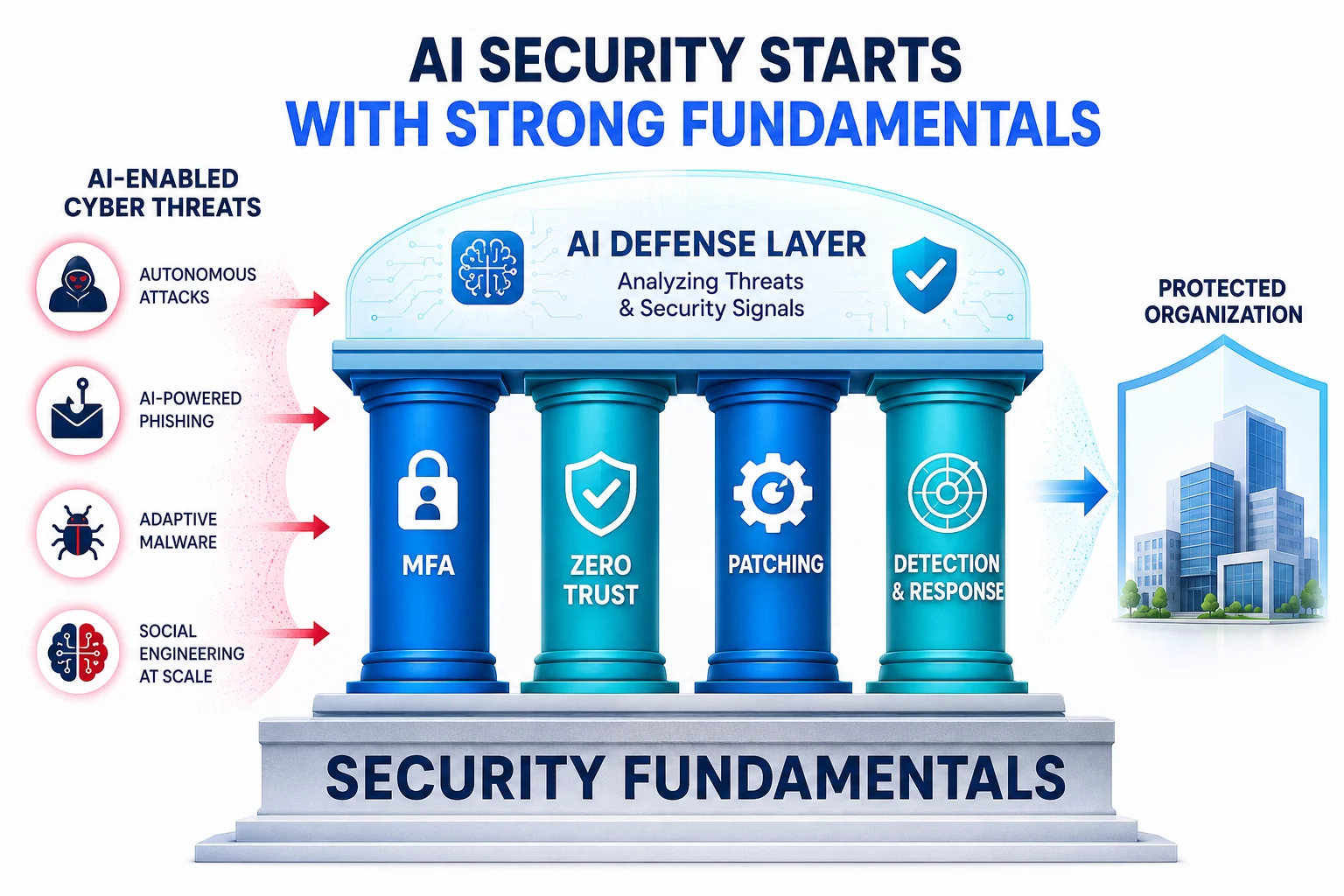
AI Is Changing Vulnerability Management
Vulnerability management is one of the areas where AI is changing established security workflows.
According to Google Cloud, vulnerability discovery has evolved from a largely manual process toward AI-assisted discovery at much greater volumes.
The challenge is that finding vulnerabilities is not enough.
Security teams must still determine which vulnerabilities create the most significant risk and prioritize remediation accordingly. At the scale enabled by AI, that prioritization and response need to happen quickly.
The source describes organizations using multiple models to scan for flaws and suggest code fixes that engineers can move into production. It also references capabilities such as AI Threat Defense.
Google Cloud says AI can support a broader software development lifecycle, from vulnerability discovery through testing and deployment, helping defensive practices evolve more quickly.
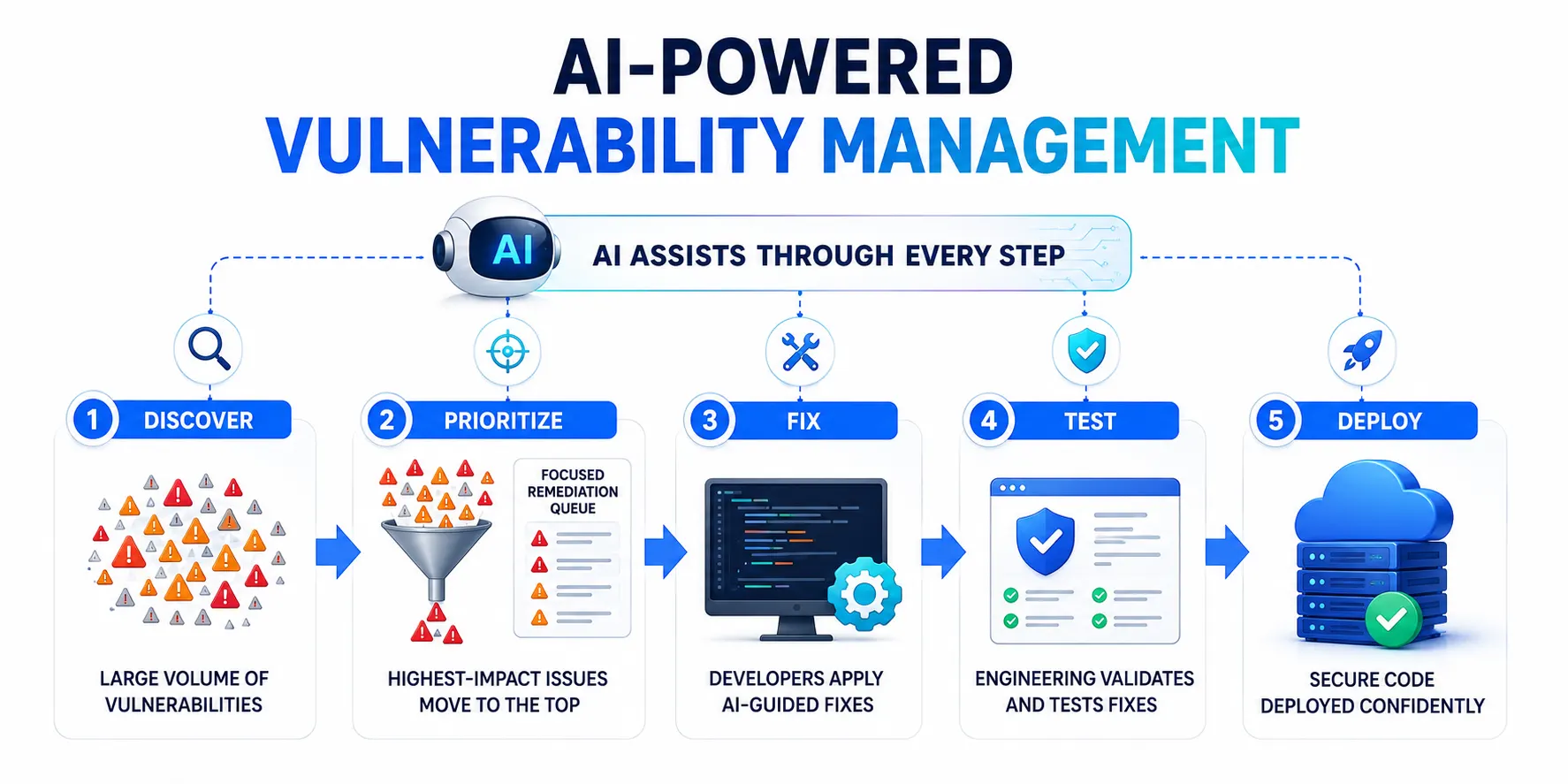
Threat Modeling Becomes More Dynamic
Threat modeling is another established security practice that AI can help scale.
Effective threat modeling requires context from multiple parts of an environment, including:
Application code
Cloud architecture
System design
Network pathways
Bringing all of this information together can be difficult.
Google Cloud says teams have been experimenting with multiple AI models to collect system information and enumerate threats.
The company also describes how its engineering teams now route product launches through an agent-based security review pipeline.
Under this approach, high-risk indicators are automatically flagged for human review. Google Cloud says it has also replaced static threat models with dynamic product dossiers that update in real time.
The approach illustrates how AI can be used to continuously assemble security context rather than relying only on a static assessment performed at one point in a product's lifecycle.
The CISO Is Becoming a Strategic Business Leader
The article also focuses on the changing role of the CISO.
Betz argues that effective security leaders need to be more than technologists. They also need to operate as strategic business leaders.
The growing attention around AI vulnerabilities has pushed cybersecurity further into boardroom and executive discussions.
For CISOs, Betz describes this visibility as an opportunity to lead.
Security leaders need to communicate clearly across the organization, from boards and C-suite executives to security and engineering teams. They must understand the complexities of AI while helping protect organizational growth.
This means connecting security fundamentals with business objectives and using AI to enhance defensive capabilities.
Morgan Stanley Example Shows the Focus on Faster Response
The source also highlights a customer example involving Morgan Stanley, Google Cloud, and Wiz.
Google Cloud says Morgan Stanley aligned its strategy with the core principles of the AI Threat Defense framework and replaced fragmented tools with a unified blueprint.
According to Google Cloud, this reduced Morgan Stanley's mean time to detect threats by 99.9%, moving from a reactive 45-minute window to proactive mitigation in 90 seconds or less.
These figures are claims presented by Google Cloud in the source and are not independently verified here.
The example supports the broader point of the article: security teams need approaches that can identify and respond to threats quickly while maintaining a structured security foundation.
Google Cloud's Broader Security Updates
The August Cloud CISO Perspectives newsletter also points readers to several other security developments from Google Cloud and its partners.
These include new Wiz capabilities aimed at improving AI threat readiness, with a focus on visibility and faster response.
Google Cloud also highlighted its post-quantum cryptography roadmap, including a stated goal of migrating to post-quantum cryptography by 2029.
Other featured security work included Google's approach to detecting and containing emerging threats, privacy-focused medical AI evaluation using Confidential Computing with MedPerf, research on the relationship between frontier AI and cryptography, and layered defenses designed to reduce abusive Chrome notifications.
These updates reinforce the broader theme of the newsletter: security organizations are expanding their use of AI and other technologies while continuing to build layered defenses.
Threat Intelligence Shows a Growing Security Challenge
The newsletter also includes several threat intelligence developments.
Google Cloud highlights work on agentic source code review and describes its Agentic Vulnerability Discovery Harness (AVDH). The source says AVDH can work alongside CodeMender's scanning to create a two-layered defense approach.
The newsletter also points to threat activity observed across cloud environments during the first half of 2026. According to the source, Wiz Research and CIRT tracked activity affecting thousands of cloud environments, with supply-chain attacks, developer toolchains, and AI infrastructure receiving significant attention.
Other highlighted research covers open source software supply-chain compromise campaigns, multi-brand vishing extortion targeting financial services and enterprise cloud environments, the reported hijacking of Keyv and cacheable npm packages, and analysis of the Metabase SQL injection vulnerability CVE-2026-72898.
These developments show that the security landscape surrounding AI is broader than AI models themselves. Cloud infrastructure, developer environments, software dependencies, identity systems, and application security all remain important parts of the defensive picture.
Why Security Fundamentals Matter More in the AI Era
The announcement highlights a broader industry shift toward security programs that combine established controls with AI-powered capabilities.
AI can help organizations process security information faster, discover vulnerabilities at greater scale, support threat modeling, and accelerate parts of remediation and response.
But those capabilities still depend on a strong foundation.
MFA helps protect identities. Zero Trust provides a framework for controlling access. Patching reduces exposure to known weaknesses. Detection and response provide visibility into suspicious activity. Threat modeling helps organizations understand where systems may be vulnerable.
Together, these practices provide the structure needed to introduce AI into security operations responsibly.
The Future of AI Security Is Not About Replacing the Basics
The central message from Chris Betz is that the arrival of AI does not make traditional cybersecurity fundamentals irrelevant.
It changes the speed at which organizations need to apply them.
Attackers can use AI to customize activity, generate malicious content, and adapt their techniques. Defenders can use AI to discover vulnerabilities, analyze security context, support threat modeling, and accelerate response.
That creates an environment where security foundations become a prerequisite for operating effectively at greater speed.
For enterprises, the development reflects growing demand for security programs that combine strong fundamentals, layered defenses, AI-assisted operations, and appropriate human oversight.
AI may change how cybersecurity is practiced, but the underlying objective remains the same: reduce exposure, understand risk, detect threats, and respond effectively.
Original analysis: The announcement highlights a broader industry shift toward combining AI-powered security operations with established cybersecurity principles. For organizations adopting AI, the practical lesson is not to treat new technology as a replacement for security hygiene. Instead, strong fundamentals can provide the context, controls, and guardrails needed to use AI more effectively in defensive operations.
Source: Google Cloud Blog
About the Author