
Google Cloud Adds Flexible Billing and FinOps Controls for AI Agents
Google Cloud is introducing flexible billing, pooled quotas, savings plans and project-level spending controls to help organizations manage AI agent costs across Gemini Enterprise.
Xcademia Team
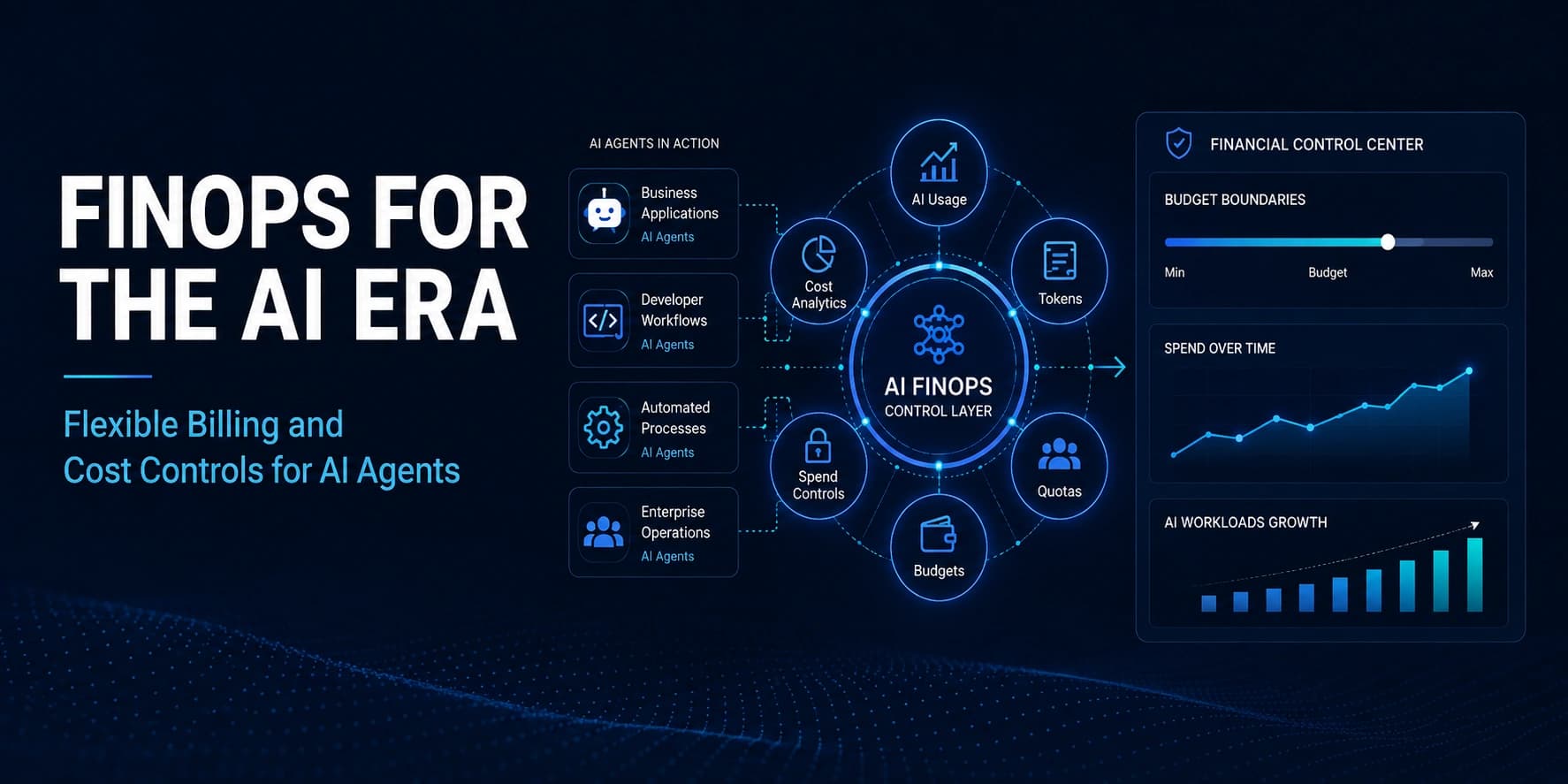
As AI takes on more complex work, organizations face a growing financial challenge alongside the technical one: how to support AI agent workloads while maintaining visibility and control over spending.
Google Cloud is introducing expanded billing flexibility and new cost management tools for agent workloads across Gemini Enterprise and developer tools including Google Antigravity in Gemini Enterprise and Android Studio.
The announcement brings together several approaches to AI cost management, including consumption-based billing, pooled quotas, Flexible Savings Plans, project-level spending controls and centralized billing visibility.
Google Cloud says the goal is to give organizations greater flexibility in how they pay for and manage AI workloads while maintaining financial discipline.
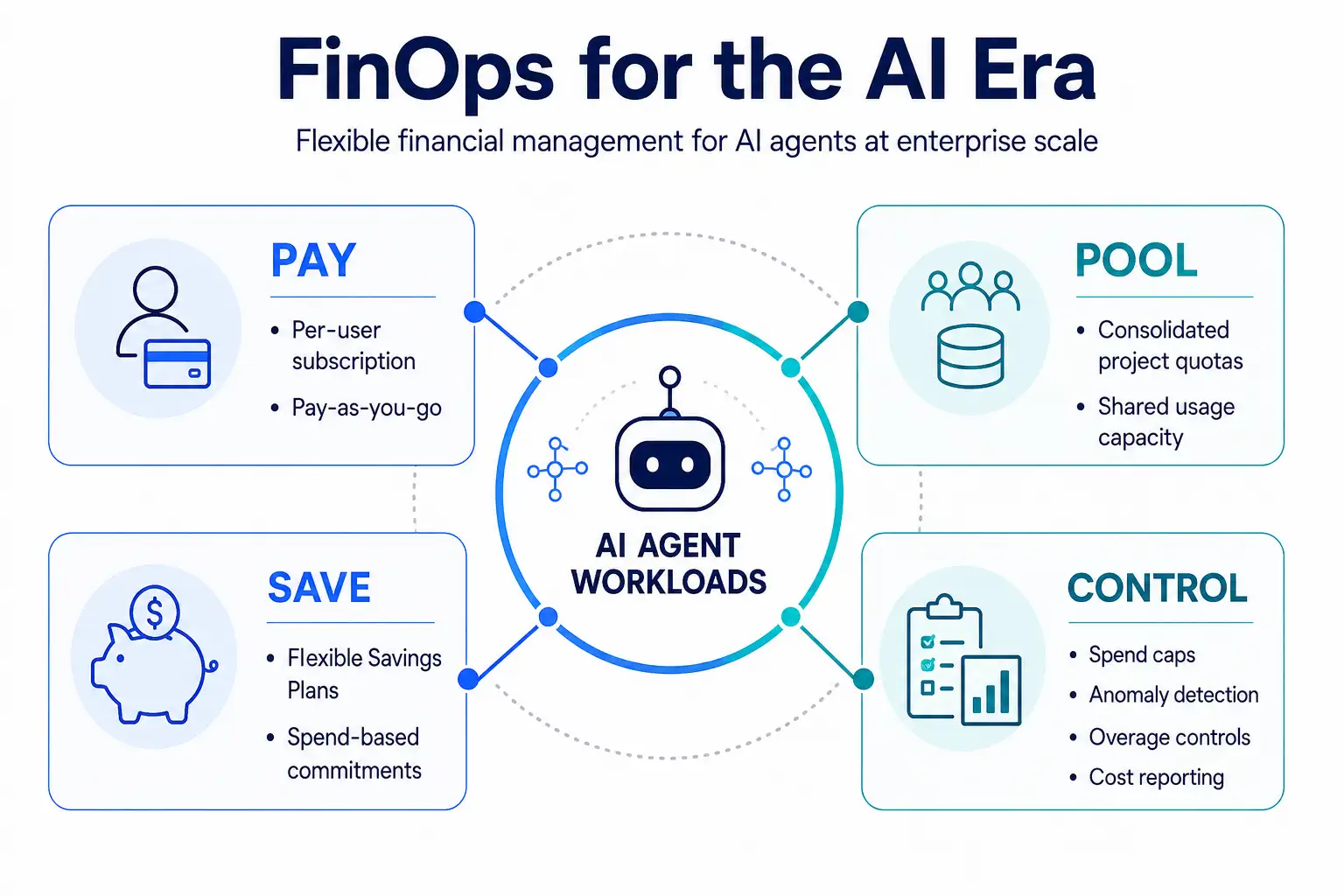
The announcement focuses on four broad areas:
Flexible payment options
Consolidated developer and AI usage
Flexible Savings Plans
Spending controls and cost visibility
These capabilities are intended to address different usage patterns. Business users may rely on AI productivity tools regularly, while technical teams may run agent workloads in bursts.
Flexible Billing Options for Gemini Enterprise
Google Cloud is expanding the ways organizations can pay for Gemini Enterprise workloads.
The existing Gemini Enterprise app per-user subscription remains available alongside a new pay-as-you-go consumption edition.
This gives organizations different approaches depending on how their teams use AI.
Per-user subscription
Under the existing Gemini Enterprise app subscription, organizations pay a fixed monthly fee per user.
The subscription includes daily quota pools that are shared across the entire Google Cloud project.
Google Cloud positions this model as useful for predictable budgeting, particularly for teams with consistent daily productivity requirements.
Pay-as-you-go consumption
Google Cloud is also introducing a pay-as-you-go consumption edition for the Gemini Enterprise app.
According to the announcement, this option has:
No upfront commitment
No base subscription fee
Charges based on compute and token consumption
Standard model API rates
The option is currently available for select customers and rolling out broadly soon.
Rather than paying for a fixed number of seats, organizations using this model pay according to actual consumption.
This gives teams another option when AI demand varies over time.
Consolidated Quotas Bring Developer and AI Usage Together
Google Cloud is also introducing consolidated pooled quotas for Antigravity in Gemini Enterprise.
Under this model, daily usage allowances are pooled at the project level.
Business applications, developer tools and custom agents can draw from the same shared quota.
Google Cloud says pooled quota is always exhausted first. Administrators can also determine whether overages are allowed. When overages are enabled, additional usage is charged at pay-as-you-go rates.
The approach is intended to make better use of available quota by allowing unused daily allowances from one group to support heavier demand from another eligible workload.
This also gives organizations a more centralized way to manage AI usage rather than maintaining separate quota and billing silos.
Deferred Execution Pricing Is Coming for Select Workloads
Google Cloud also describes deferred execution pricing, which is listed as coming soon for select workloads.
Eligible agent workloads can be marked as deferred, allowing the intelligent scheduler in the Gemini Enterprise Agent Platform to run them during off-peak capacity windows.
Google Cloud says this can allow customers to pay up to half the inference cost for work that can wait while bypassing standard quota limits.
The model is designed for workloads where immediate execution is not essential.
Instead of treating every agent task as equally time-sensitive, organizations can identify eligible work that can run later during available capacity windows.
The source describes this capability as coming soon, so it should not be treated as a generally available feature at the time of the announcement.
Additional details were not disclosed in the announcement about broader availability.
Flexible Savings Plans Target Steady or Growing AI Usage
For organizations with steady or increasing AI workloads, Google Cloud is offering Gemini Enterprise Flexible Savings Plans (FSPs).
FSPs use a spend-based commitment model designed to reduce token costs while allowing organizations to establish a monthly spending commitment.
According to Google Cloud:
1-year commitments receive 10% off token costs
3-year commitments receive 20% off token costs
There are no minimum or maximum spend requirements
Organizations can determine a monthly commitment based on their usage
FSP spending can draw against an existing Google Cloud Enterprise Agreement
Google Cloud says Flexible Savings Plans are already available to self-service customers and customers using enterprise agreements.
The model gives organizations another option between completely variable consumption and fixed per-user licensing.
For teams with relatively steady or growing AI usage, a spend-based commitment can provide a more structured approach to planning AI expenditure.
Google Antigravity and Android Studio Usage
Google Cloud is also expanding access to Google Antigravity in Gemini Enterprise.
The company describes Antigravity as an agent-first developer platform that provides agentic coding and agent-building capabilities for technical teams.
Access is included with Gemini Enterprise subscriptions for eligible customers.
Google also says Android developers can use the Google Antigravity quota included in their Gemini Enterprise subscriptions through Android Studio.
To improve the management of agentic coding costs, Google Cloud is pooling developer-tool quota across the Google Cloud project.
This allows teams to use the capacity already included in their subscriptions while providing centralized governance and control.
The announcement says this availability is for select customers and is rolling out broadly soon.
Google Cloud Adds More Spending Controls
Billing flexibility is only one part of the announcement.
Google Cloud is also expanding native cost-management capabilities in the Google Cloud Billing Console.
The company organizes these tools around three goals:
Plan before scaling
Enforce financial boundaries
Understand business value
Together, these capabilities provide organizations with additional ways to estimate, monitor and control AI spending.
1. Plan Before Scaling
Google Cloud says the Google Cloud Pricing Calculator can estimate anticipated Gemini Enterprise costs across:
Per-user licenses
Developer tools
Background agent runtimes
This can help organizations estimate potential costs before expanding AI projects.
The source positions the calculator as a way to support financial planning and business cases before project work begins.
2. Monitor Spending and Enforce Boundaries
Google Cloud is also introducing additional tools to help organizations identify unusual spending and establish financial limits.
These include:
Early anomaly detection
Project-level spend caps
Overage controls
These controls address different aspects of AI spending management.
Early Anomaly Detection Identifies Spending Changes
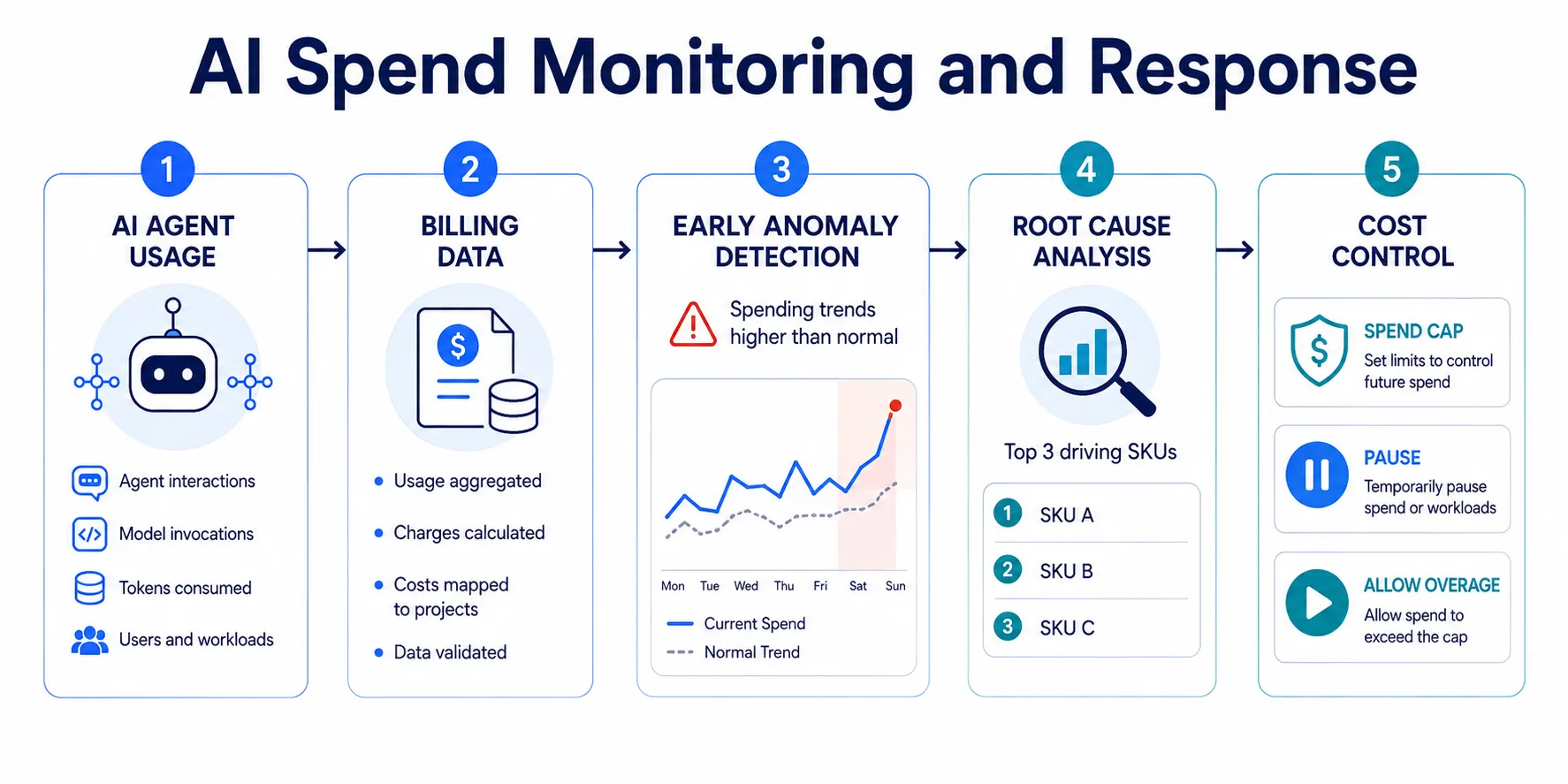
Google Cloud says its billing tools can detect when a project's AI spending trends higher than normal.
When a deviation is detected, the system can provide root cause analysis.
The announcement says the analysis identifies the top three SKUs driving the increase.
This gives teams more information about what is contributing to an unexpected spending change.
Rather than relying only on the final billing statement, administrators can use the information to investigate unusual spending trends earlier.
Project-Level Spend Caps Create Financial Boundaries
Google Cloud is also introducing firm monthly spend limits at the project level.
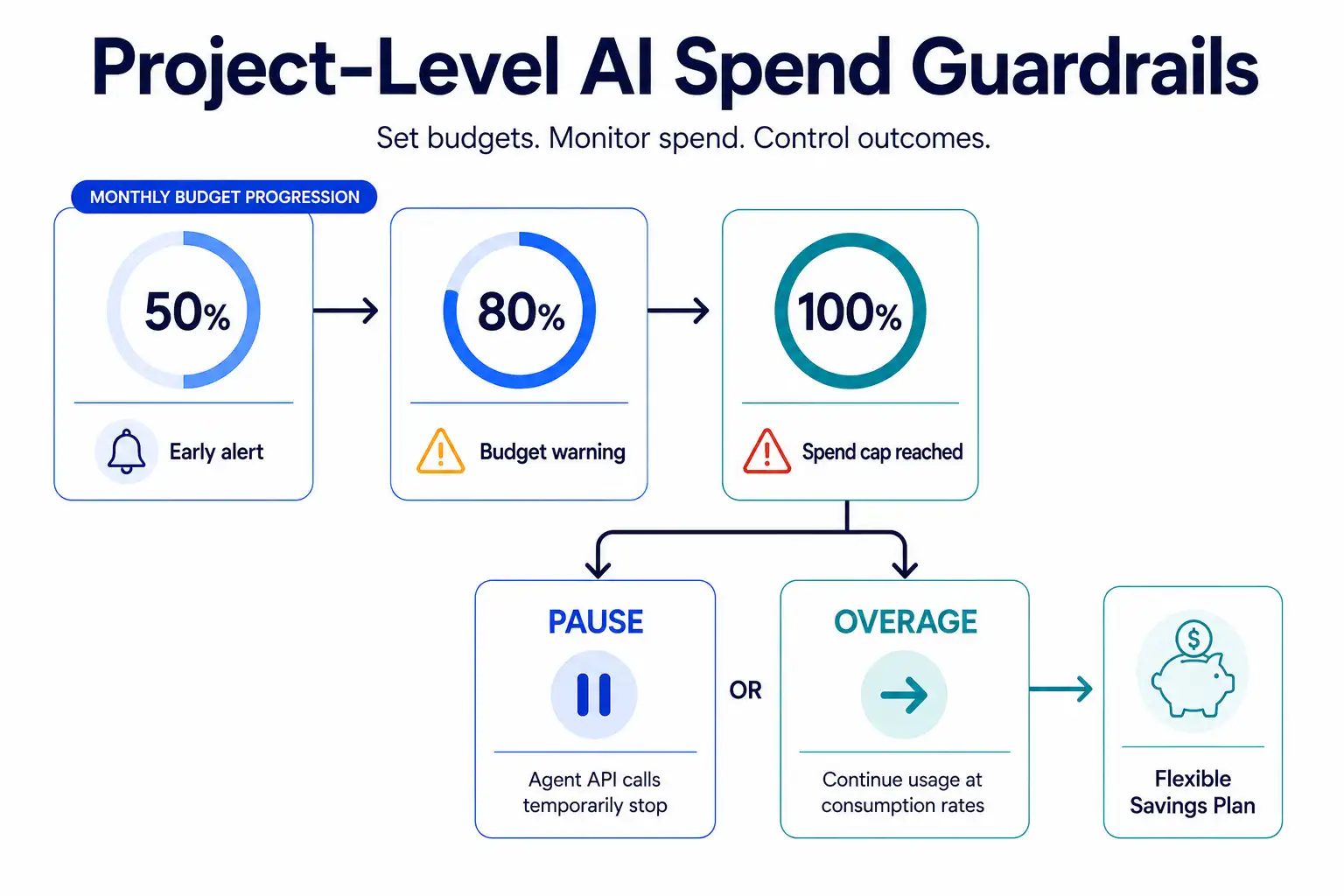
When a project reaches its configured limit, the announcement says the agent's API calls temporarily pause.
The control is designed to protect the project's budget without affecting the rest of the production infrastructure.
Google Cloud also says automated email alerts are provided when spending reaches:
50% of the budget
80% of the budget
100% of the budget
These thresholds provide visibility as spending approaches the configured project limit.
For organizations that require firm financial boundaries, project-level spend caps provide a direct mechanism for limiting AI-related expenditure.
Overage Controls Allow Organizations to Choose Continuity
Reaching a spend cap does not necessarily mean that workloads must remain paused.
Google Cloud says administrators can manually resume work with a single click in the console.
Alternatively, organizations that prioritize continuous operation can enable overages.
When overages are enabled, usage beyond the spend cap transitions to consumption rates.
Google Cloud says this excess usage can draw directly against a Flexible Savings Plan, allowing the applicable discounted unit economics to continue for eligible usage.
This creates two different approaches to managing a project budget:
Strict budget control
The project reaches its limit and agent API calls pause until an administrator resumes them.
Operational continuity
Overages are enabled so eligible workloads can continue at consumption rates.
The appropriate choice depends on an organization's financial and operational requirements.
FinOps Agent Adds Natural-Language Cost Insights
Google Cloud also highlights centralized billing reports combined with the FinOps agent.
The company says these tools can generate natural-language cost insight summaries showing where an organization's budget went.
The goal is to make AI spending easier to understand and communicate to leadership.
This provides another layer of visibility beyond simply establishing spending limits.
However, Google Cloud does not provide specific ROI measurements or customer performance results in this announcement.
Therefore, the capability should be understood as a cost-insight and reporting mechanism rather than evidence of a specific return on investment.
AI Cost Optimization Extends Beyond Token Spending
The announcement places AI FinOps within a broader cost-optimization strategy.
Google Cloud points to several factors that can affect AI economics, including:
Model and token usage
Agent execution
Developer tooling
Compute capacity
Infrastructure utilization
Workload timing
The company also references dynamic capacity management as a way to schedule and reallocate compute resources.
This broader perspective suggests that managing AI costs is not limited to monitoring token consumption.
Infrastructure capacity and workload scheduling can also form part of an organization's cost-management strategy.
This is a broader industry implication of the announcement rather than a claim that every organization will use the same approach.
Managing AI Workload Spikes
Google Cloud also points to its material on Provisioned Throughput when discussing AI usage spikes.
The company says heavy workloads can surge during peak periods without requiring organizations to maintain expensive dedicated infrastructure that may sit idle outside those periods.
Google Cloud says Gemini models can automatically scale on demand without hitting artificial rate limits and can process up to 50 million tokens per minute.
This information appears in the source's broader AI cost-optimization guidance accompanying the announcement.
It is therefore useful context, but it is separate from the newly announced billing controls themselves.
A Layered Approach to AI Cost Management
Taken together, Google's announced capabilities provide several different approaches to managing AI spending.
Predictability
Per-user subscriptions provide a fixed monthly fee per user and shared daily quota pools.
Consumption flexibility
Pay-as-you-go billing allows organizations to pay according to compute and token consumption.
Shared capacity
Consolidated quotas allow eligible workloads to draw from pooled project-level usage allowances.
Savings
Flexible Savings Plans provide discounts tied to longer-term spending commitments.
Workload timing
Deferred execution is designed to move eligible workloads into off-peak capacity windows.
Financial protection
Project-level spend caps and anomaly detection provide mechanisms for monitoring and controlling unexpected spending.
Operational continuity
Overage controls provide an option to continue workloads after reaching a configured spend limit.
These mechanisms are not interchangeable. Organizations can determine which models and controls align with their particular workload patterns and financial requirements.
What Google's Announcement Means for Enterprise AI FinOps
Google Cloud's announcement highlights a broader industry shift toward treating AI cost management as part of the technology operating model.
As AI agents become part of business and development workflows, organizations need visibility into the resources those workloads consume.
For finance teams, the new controls provide additional mechanisms for budgeting and monitoring.
For engineering teams, consumption-based options and pooled quotas provide more flexibility around usage.
For platform teams, centralized project-level controls can provide a way to manage AI spending across different workloads.
For business leaders, centralized billing reports and natural-language cost insights can make AI expenditure easier to communicate.
These are potential implications of the announcement, not guarantees about how organizations will use the capabilities.
AI FinOps Becomes Part of the Deployment Conversation
AI workloads can involve multiple layers of spending, including subscriptions, tokens, compute, developer tools and agent execution.
That makes financial management increasingly connected to technical decisions.
Google Cloud's approach brings billing models, quotas, savings plans, spending limits, anomaly detection and cost reporting into a broader framework for managing AI expenditure.
The underlying objective is straightforward: allow organizations to expand AI usage while maintaining visibility and control over associated costs.
The effectiveness of these controls will depend on how organizations configure them and how they incorporate them into their existing financial and operational processes.
What Google Cloud Announced at a Glance
Area | What Google Cloud Announced |
|---|---|
Gemini Enterprise subscription | Fixed monthly per-user subscription with shared daily quota pools |
Pay-as-you-go | Consumption-based Gemini Enterprise app option with no base subscription fee |
Pooled quotas | Project-wide shared daily usage allowances for eligible workloads |
Deferred execution | Coming soon for select workloads |
Deferred pricing | Up to half the inference cost for eligible deferred workloads |
Flexible Savings Plans | 10% savings for 1-year commitments |
Flexible Savings Plans | 20% savings for 3-year commitments |
FSP requirements | No minimum or maximum spend requirements |
Enterprise Agreement | FSP spending can draw against an existing Google Cloud EA |
Spend caps | Firm monthly project-level limits |
Budget alerts | Alerts at 50%, 80% and 100% of the configured budget |
Anomaly detection | Identifies unusual AI spending and provides root cause analysis |
Spending analysis | Identifies the top three SKUs driving a spending increase |
Overage controls | Option to continue usage beyond a spend cap at consumption rates |
FinOps visibility | Centralized billing reports and FinOps agent |
Peak usage context | Google Cloud says Gemini models can process up to 50 million tokens per minute |
Conclusion
Google Cloud's latest FinOps announcement focuses on a growing challenge for organizations adopting AI agents: how to increase AI usage while maintaining control over spending.
The company is addressing this through a combination of billing options, pooled quotas, Flexible Savings Plans, deferred execution pricing and project-level financial controls.
Organizations can choose between predictable per-user subscriptions and consumption-based billing. Teams with steady or growing usage can use Flexible Savings Plans, while pooled quotas provide a shared approach to eligible AI usage across projects.
Google Cloud is also adding financial guardrails through anomaly detection, project-level spend caps and overage controls. Centralized billing reports and the FinOps agent provide another layer of visibility into where AI budgets are being used.
The announcement also connects AI cost management with workload scheduling and infrastructure utilization. Deferred execution, dynamic capacity management and usage-scaling considerations show that AI economics can involve more than token consumption alone.
For enterprises, the broader takeaway is that AI FinOps is becoming increasingly connected to how AI workloads are deployed, governed and operated.
Google Cloud's newly announced controls provide a range of options, but organizations will still need to determine which combination fits their workloads, budgets and operational requirements.
Source: Google Cloud Blog
About the Author