
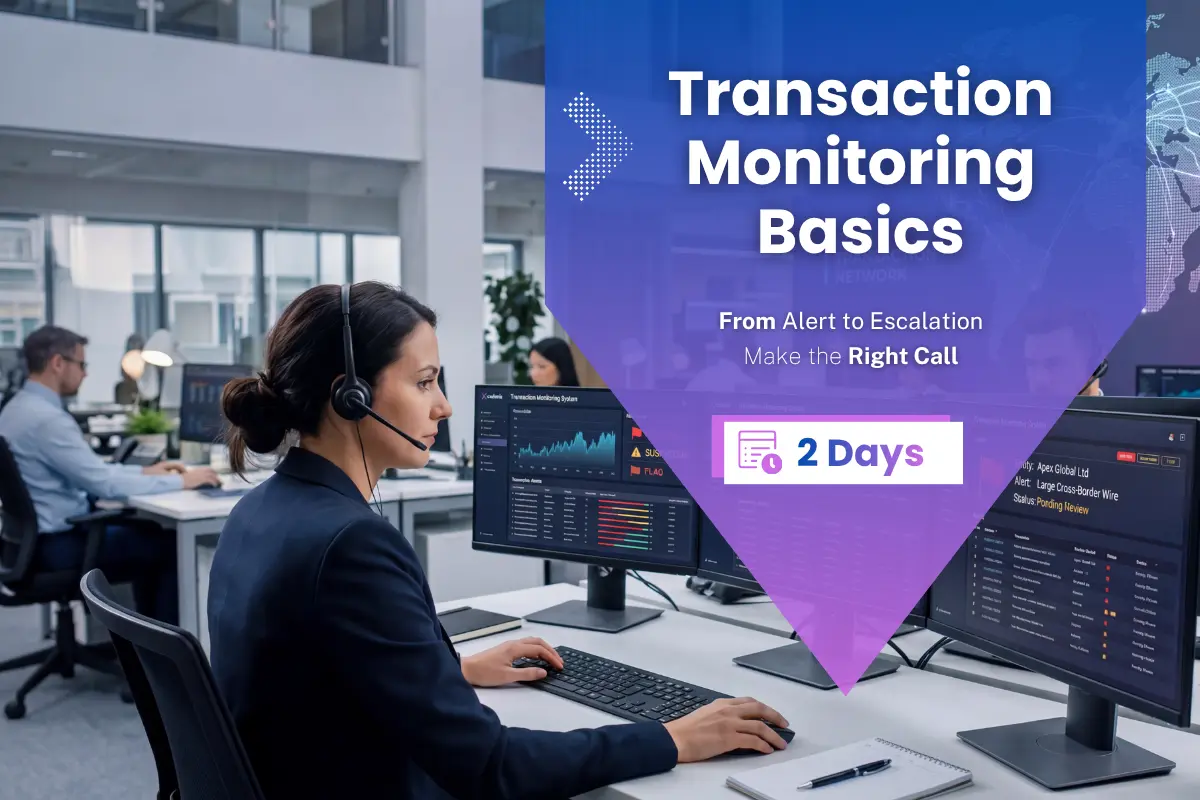
Course Overview
Transaction monitoring plays a critical role in identifying potential financial crime and ensuring organisations meet Anti-Money Laundering (AML) obligations. This course introduces the fundamentals of transaction monitoring, helping learners understand how financial institutions use automated systems, detection rules, and analyst reviews to identify suspicious activity.
Participants explore how alerts are generated, why false positives occur, and how monitoring teams assess transactions against customer profiles and risk indicators. Through mentor-led learning and practical scenarios, learners practise identifying unusual patterns and reviewing alerts within a structured compliance workflow.
The programme also examines escalation procedures, documentation standards, and collaboration between monitoring analysts, investigation teams, and compliance officers. By the end of the training, learners will understand how to interpret alerts effectively and contribute to stronger financial crime detection processes.
Hands-On Learning
Alert review exercises, rule interpretation practice, and realistic monitoring scenarios.
Mentor-Led Sessions
Mentor-led walkthroughs of monitoring workflows using practical scenarios and real investigation examples.
Career-Ready Skills
Transaction monitoring analysis, alert investigation, and compliance escalation awareness.
Learning Outcomes
Analyse transaction monitoring alerts effectively.
Evaluate suspicious transaction patterns.
Implement structured alert investigation approaches.
Communicate escalation decisions clearly.
Design simple monitoring rule awareness.
Evaluate false positive reduction strategies.
Prerequisites
Basic understanding of financial services or compliance.
Interest in AML or financial crime detection.
Ability to review transaction data and reports.
Detailed Syllabus
Step-by-step learning journey from basics to professional practice
Topics Covered
- Introduction to AML monitoring systems
- Programme objectives and terminology
- Overview of financial crime detection processes
Skills You'll Gain
Master these in-demand skills through hands-on practice
Career Progression
A clear view of the roles this programme supports, what typically comes next, and where learners progress over time
Ways to Learn
Choose the learning format that works best for you and your team
Live Online
Instructor-Led Training
Join live instructor-led sessions from anywhere. Interactive, engaging, and flexible.
- Live instructor interaction (real-time)
- Trainer-led walkthroughs and real examples
- Guided resources and session notes provided
- Structured Q&A and practical discussion
Price per person
Group enrolments and early planning options available.
All prices are exclusive of VAT where applicable. Group enrolments and custom packages available on request.
Prefer a Faster, Personalised Route into IT?
Not everyone learns best in a group. If you want focused guidance, faster clarity, and confidence you can use on the job, our 1-to-1 Fast-Track Training gives you private, mentor-led support tailored to your experience and goals.
"Many learners choose 1-to-1 when they want understanding, not memorisation."
Exam & Certification Information
Everything you need to know about the certification exams
Important Information
You will receive an Xcademia certificate of completion based on participation and successful completion of labs and scenario simulations.
Credential
Certificate of Completion
On successful completion of Transaction Monitoring Basics, learners receive an Xcademia Certificate of Completion. This standalone certificate is issued directly by Xcademia and is aligned with globally recognised frameworks and best practices.
Frequently Asked Questions
Everything you need to know about this course
It is the process of reviewing customer transactions to detect unusual patterns that may indicate financial crime.
Ready to Start Your Learning Journey?
Take the next step in your professional development