
Perplexity Uses GPT-6 Astra to Test, Modify and Monitor Software
Perplexity says GPT-6 Astra is helping its teams write communications, modify real-world software systems, build automated tests and monitor production software with less frequent human checking.
Xcademia Team
Xcademia Research Team
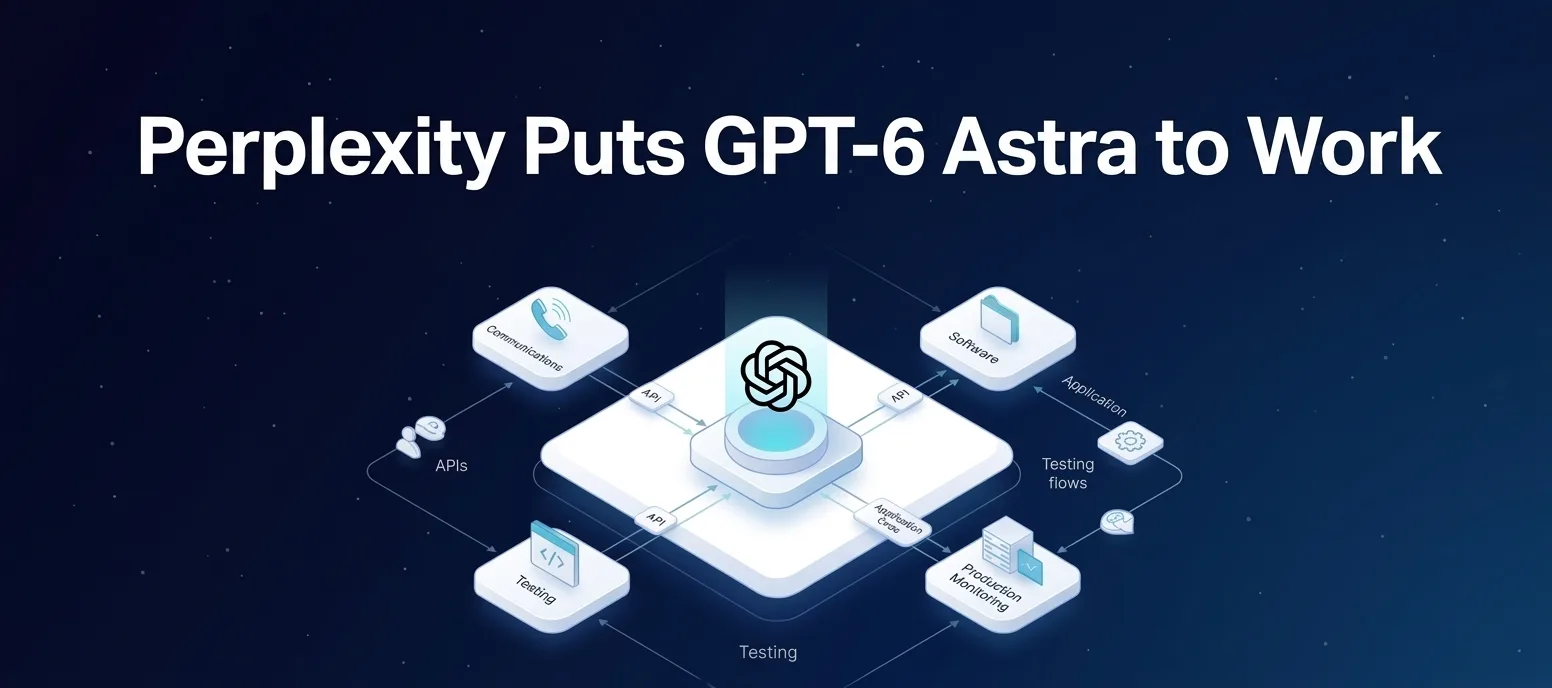
Perplexity is using OpenAI's GPT-6 Astra for tasks that extend beyond generating text or answering questions. According to OpenAI, the AI-powered answer engine is using the model to write communications, make changes to software systems, test applications and monitor production software.
The development is notable because Perplexity says it is comfortable giving the model responsibility across complete software workflows rather than limiting it to isolated coding tasks.
Johnny Ho, Cofounder and Chief Strategy Officer at Perplexity, said the company's experience with the model has allowed it to use GPT-6 Astra in areas where previous model generations were not considered capable enough.
"We can have the model craft communications, edit real-world systems, and monitor our production software in a way that previous generations were not able to."
OpenAI presents Perplexity's experience as an example of how increasingly capable AI models can be integrated into real operational systems.
Better Coding Also Improves Search Workflows
Perplexity's core focus is search and accuracy. The company processes large volumes of information to provide answers to users, making its ability to search, process and summarize information central to its product.
Ho says improvements in the model's coding ability have a direct impact on Perplexity's search engine.
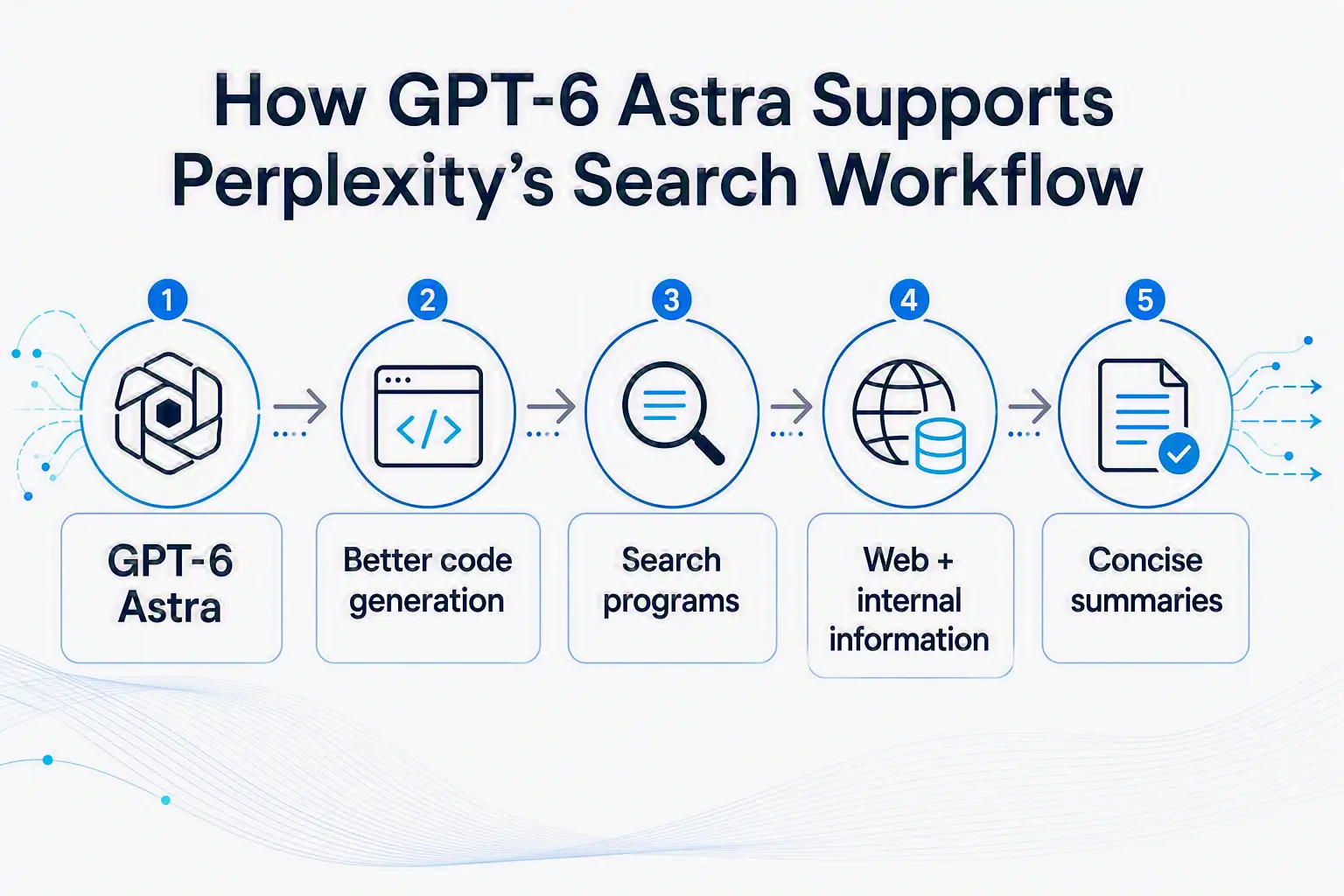
As models become better at writing code, Perplexity can use them to create better programs for searching both the web and internal information. Those programs can then summarize information concisely.
This creates a connection between AI coding capabilities and the underlying search experience.
Rather than treating coding as a separate productivity task, Perplexity sees improvements in code generation as a way to improve parts of its search infrastructure.
GPT-6 Astra Is Being Used for Real-World Systems
The more significant application described by OpenAI involves taking AI capabilities from informational tasks into real software environments.
Perplexity says GPT-6 Astra can be used to edit real-world systems and monitor production software.
This is different from asking an AI model to produce a code snippet in isolation. The model is being used as part of workflows connected to applications and operational software.
Ho says this is one of the areas where Perplexity has seen a meaningful difference from previous generations.
The company also says it can trust the model with full end-to-end systems while checking on its work less frequently than it did with earlier models.
That does not mean the model operates without oversight. Rather, Perplexity's description indicates that the company believes GPT-6 Astra can handle broader workflows with less frequent intervention.
Testing Code With AI-Generated Simulations
One of the specific use cases highlighted by Perplexity is software testing.
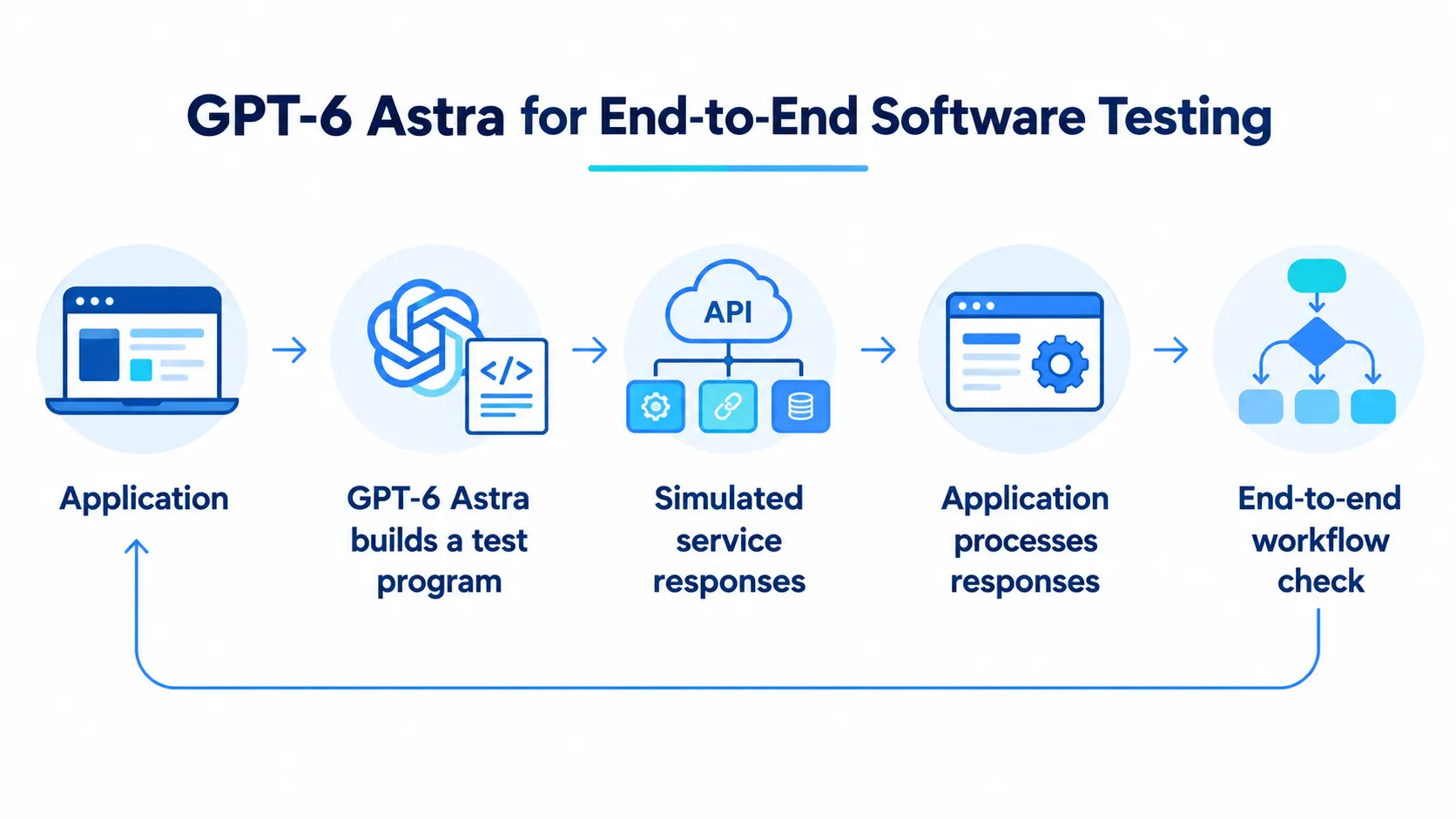
According to Ho, manually testing code can be difficult when teams have limited time. Instead, he can ask GPT-6 Astra to build a small testing program around an application.
The model can generate realistic responses that simulate what another service might return.
For example, an application could depend on responses from a language model API or another connector. GPT-6 Astra can create simulated responses from those services and use them to test how the application behaves.
This allows the testing process to examine the workflow from beginning to end.
Simulating External Services
The testing approach described by Perplexity relies on GPT-6 Astra standing in for external services during testing.
An application may normally receive a response from another service. Instead of relying entirely on that service during a test, the model can generate realistic responses that represent what the application might encounter.
The application can then be evaluated based on how it handles those responses.
This gives Perplexity a way to test workflows that involve multiple components rather than examining only individual pieces of code.
The source does not provide specific information about how this testing architecture is implemented internally.
Less Frequent Checking
Another important point in Perplexity's account is the frequency of human oversight.
Ho says the company can trust GPT-6 Astra with full end-to-end systems and check in on it less frequently than with previous generations of models.
This is presented as an operational difference between GPT-6 Astra and earlier models.
The source does not provide a specific measurement for how often Perplexity checks the model's work, nor does it quantify the reduction in human oversight.
Additional details were not disclosed in the announcement.
What Perplexity's Use of GPT-6 Astra Shows
The Perplexity example points to a broader shift in how companies are evaluating advanced AI models.
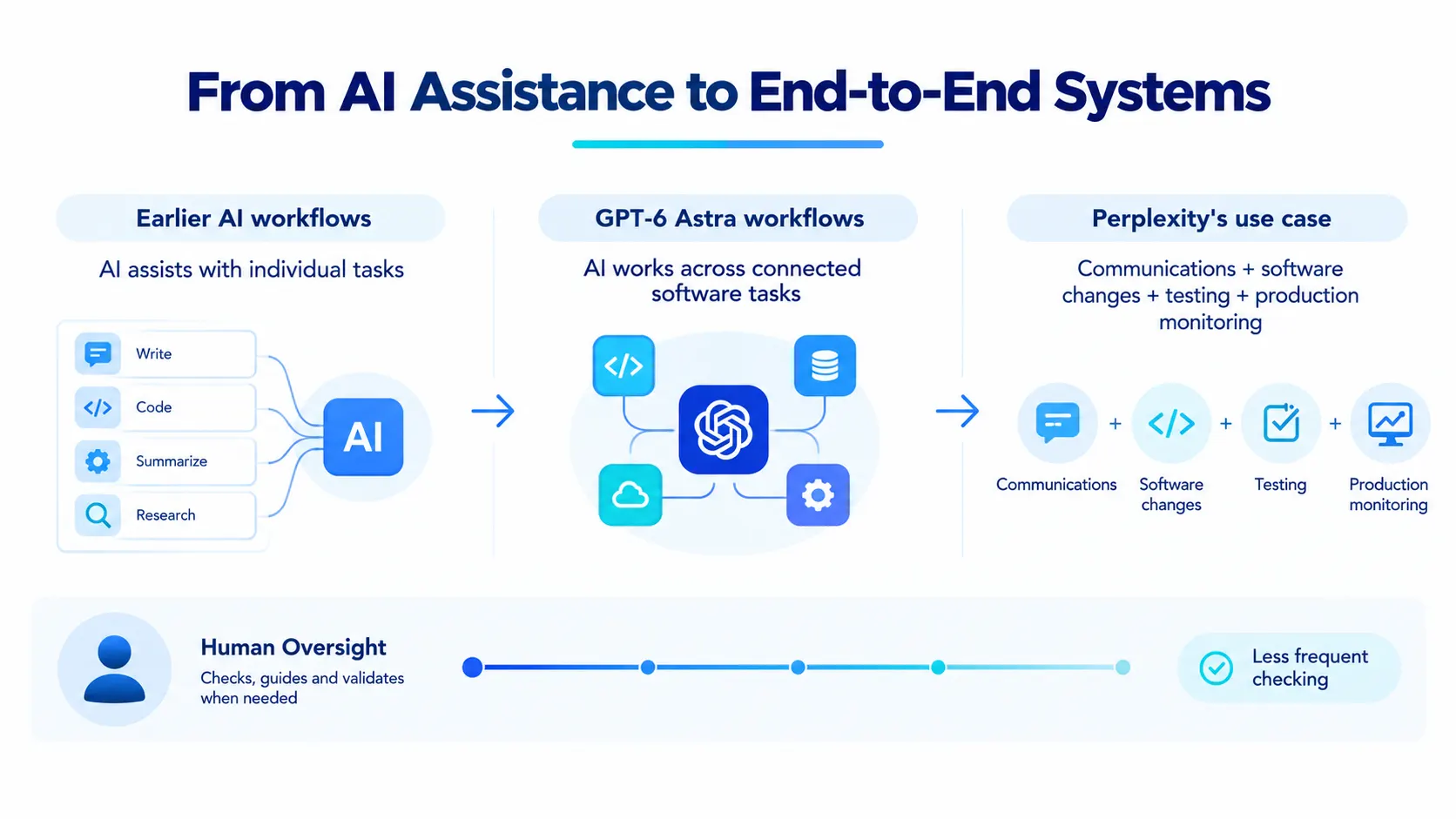
Earlier AI coding workflows often focused on producing or modifying individual pieces of code. The use case described by Perplexity is broader: the model can participate in connected workflows involving applications, simulated services, testing and production software.
The announcement highlights a broader industry shift toward evaluating AI systems based not only on how well they generate content, but also on how reliably they can work across complete software processes.
For enterprises, this could mean that the value of advanced AI models increasingly depends on their ability to interact with existing applications and workflows rather than simply producing outputs inside a chat interface.
However, Perplexity's example is a company-reported use case. The source does not provide independent testing or comparative benchmarks demonstrating GPT-6 Astra's performance against earlier models.
Why End-to-End Testing Matters
Testing software across an entire workflow can expose problems that may not appear when individual components are tested separately.
An application might correctly process one expected response but behave differently when another service returns an unexpected or unusual response.
The approach described by Perplexity allows GPT-6 Astra to help create simulated responses and examine the resulting application behavior.
This can make testing part of the development workflow rather than something performed only after the application has been built.
The source does not disclose the full testing methodology, coverage or results.
The company did not provide specific information about this area.
Perplexity's Broader AI Workflow
The OpenAI case study describes several different applications for GPT-6 Astra within Perplexity:
Writing communications
Editing real-world software systems
Monitoring production software
Building testing programs
Generating realistic responses from simulated services
Testing application workflows from end to end
Together, these examples show how Perplexity is applying the model across both development and operational tasks.
The key distinction is that the model is not being described solely as a coding assistant. It is being integrated into workflows that connect software development, testing and production operations.
The Shift From Code Generation to System-Level AI
The Perplexity example reflects a broader change in enterprise AI adoption.
As AI models become more capable at programming, companies can potentially use them across larger portions of the software lifecycle. Code generation becomes one component of a wider workflow involving testing, integration and operational monitoring.
That raises a different set of questions from traditional AI-assisted coding.
The important issue is no longer only whether a model can write functional code. It is also whether the model can work reliably when that code interacts with other systems and real-world software processes.
Perplexity's comments suggest that this is where the company sees GPT-6 Astra making a difference.
At the same time, the available announcement provides only Perplexity's account of its experience. It does not establish a general performance benchmark for GPT-6 Astra across other organizations or applications.
Final Takeaway
Perplexity's use of GPT-6 Astra illustrates how advanced AI models are moving beyond isolated coding assistance into broader software workflows.
For the company, the model is being used across communications, software changes, testing and production monitoring. Its testing workflow also demonstrates how AI can help simulate external services and evaluate applications from end to end.
The larger significance is the changing role of AI inside software development. Instead of simply generating code, increasingly capable models are being positioned as tools that can participate across connected stages of building and operating software.
How far that approach can scale across different production environments remains an open question. The OpenAI announcement provides a detailed example from Perplexity, but does not provide broader independent validation.
Source: OpenAI
About the Author