
NVIDIA Highlights Egypt and Africa’s Shift Toward Production-Scale AI
NVIDIA says Egypt and other African markets are moving from AI experimentation toward production, supported by new AI factories, local computing infrastructure, developers and startups.
Xcademia Team
Xcademia Research Team
NVIDIA Highlights a Growing AI Ecosystem in Egypt
Africa's artificial intelligence ecosystem is entering a new phase, with infrastructure, developers and startups increasingly focused on moving AI applications from experimentation into production.
That is the central theme of a new announcement from NVIDIA, which highlighted Egypt's expanding AI ecosystem and the wider growth of AI infrastructure across the continent.
The announcement, published on September 21, 2026, described activity involving AI startups, developers, researchers, enterprises and investors in Egypt. It also pointed to new AI factories and computing infrastructure being developed in South Africa, Morocco, Nigeria and other African markets.
The development is significant because access to computing infrastructure has been one of the constraints for organizations looking to train and deploy AI systems locally.
Egypt's AI Ecosystem Moves Toward Production
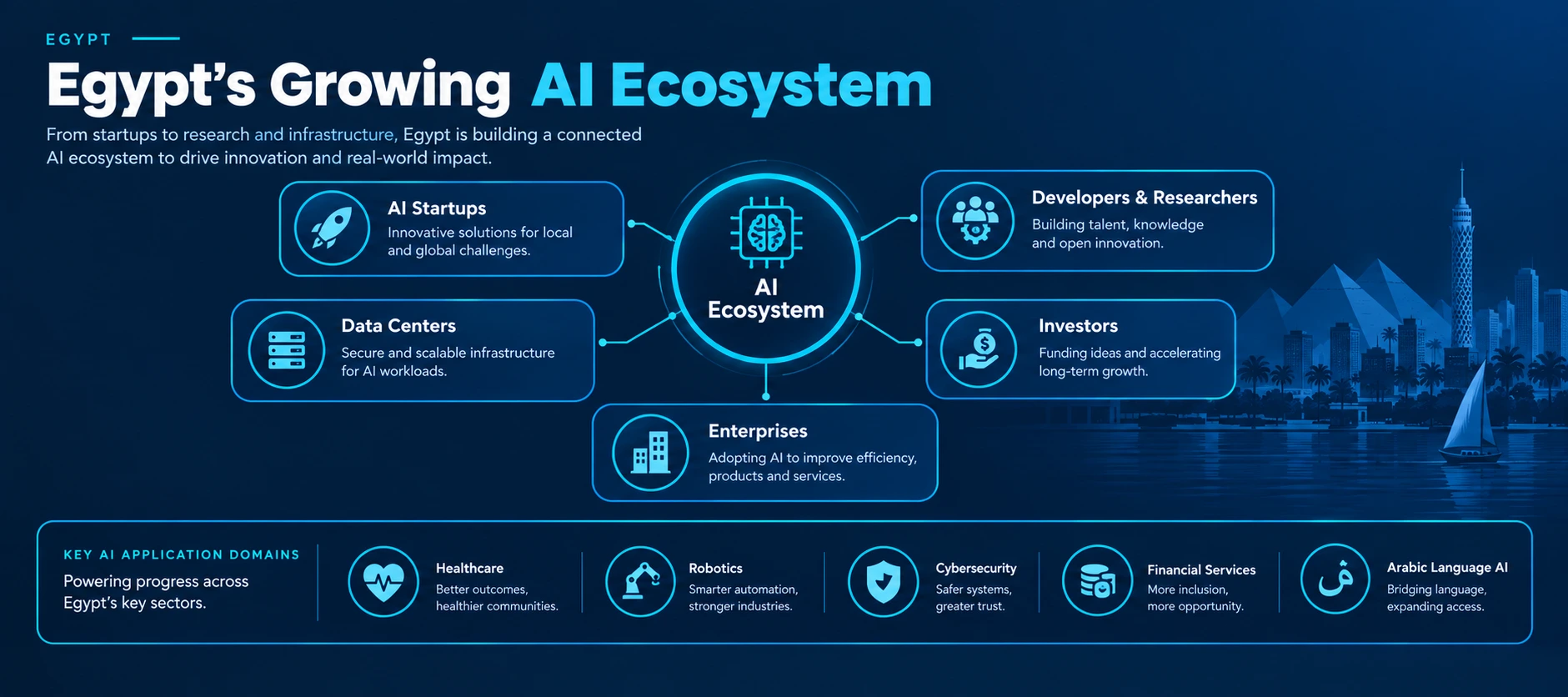
NVIDIA highlighted an event at the Grand Egyptian Museum that brought together companies and organizations involved in Egypt's AI ecosystem.
The event included NVIDIA executives and representatives from startups working across areas including smart spaces, healthcare, cybersecurity and robotics.
The company also highlighted growth in participation in its NVIDIA Deep Learning Institute in Egypt. According to NVIDIA, the learner base grew more than tenfold in a single year.
Infrastructure investment is also becoming part of the country's AI development story.
In June, Egypt's National Telecommunications Regulatory Authority licensed Hassan Allam Data Centers to build and operate data centers in the country. NVIDIA said Hassan Allam Utilities and investment firm A15 subsequently agreed to develop a new data center, with an estimated investment of $400 million.
These developments show that the ecosystem is not limited to software development. It also involves data centers, accelerated computing, investment networks, education and startup support.
Egyptian Startups Building AI Applications
NVIDIA also highlighted several Egyptian companies participating in its Inception startup program.
The companies cover a broad range of applications:
Aidera is developing an enterprise intelligence system connecting data, systems and workflows.
Intella is developing Arabic speech intelligence for sectors including financial services and telecommunications.
Marses Robotics is working on autonomous robotics and industrial automation.
Proteinea combines AI protein design with laboratory experiments.
Stakpak is developing an open-source autonomous developer-operations AI agent.
Paymob and Thndr are using technology and AI in financial services.
The range of applications is notable because it demonstrates that AI development in the region extends across multiple industries rather than being concentrated in a single use case.
NVIDIA also said its VC Alliance expanded in Egypt through the participation of A15 and M Empire, connecting local investors with the company's wider startup ecosystem.
AI Infrastructure Expands Across Africa
Egypt is only one part of the broader infrastructure development described by NVIDIA.
The company said Africa has roughly 18% of the world's population but less than 1% of global data-center capacity. As a result, African developers have historically depended heavily on cloud computing infrastructure located outside the continent for large-scale AI training.
NVIDIA said this situation is changing, with four AI factories announced or brought online across Africa within a year and another 656 megawatts of capacity in the pipeline.
The company describes these AI factories as infrastructure that can give developers, enterprises and researchers access to accelerated computing closer to where their data is generated.
This could reduce the need for some AI workloads to rely exclusively on infrastructure located outside the continent.
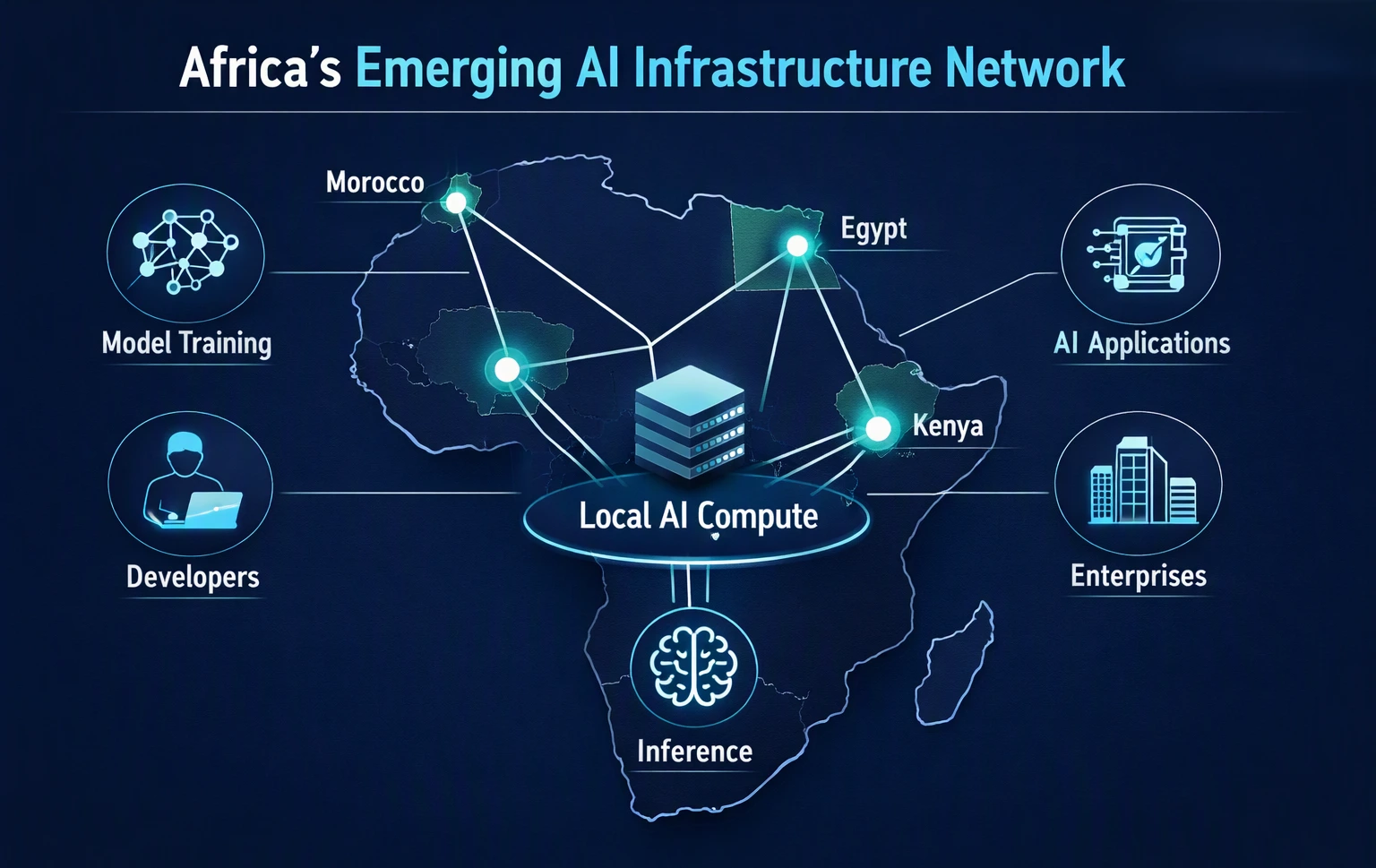
South Africa, Egypt, Kenya, Nigeria and Morocco
NVIDIA highlighted several infrastructure initiatives.
Cassava Technologies, described by NVIDIA as Africa's first NVIDIA Cloud Partner, is expanding access to accelerated computing through its AI factory in South Africa and planned deployments across Egypt, Kenya, Nigeria and Morocco.
The company said the broader investment could reach $720 million.
In Egypt, Cassava Technologies and Vodafone Egypt announced an AI factory initiative designed to provide businesses and government organizations with locally hosted AI infrastructure through GPU-as-a-service.
According to NVIDIA, the initiative is intended to support AI application development and deployment while keeping data in-country.
Another development involves South African AI neocloud provider Stratos Lab.
NVIDIA said Stratos Lab is partnering with ECOBLOX and Digital Parks Africa to launch an AI cloud powered by more than 50 NVIDIA HGX B300 systems. NVIDIA stated that the deployment provides more than 7 exaflops of performance.
The infrastructure is intended to provide local access to GPU computing for workloads including model training, inference and agentic AI.
Morocco is also part of the infrastructure expansion.
At GITEX Africa in Marrakech in April, Nexus Core Systems announced a collaboration with Morocco's Ministry of Digital Transition, its Ministry of Investment and AMDIE to build the Nexus AI factory outside Casablanca.
NVIDIA reported an initial investment of $1.2 billion and planned capacity of 500 megawatts, alongside NVIDIA Blackwell accelerated computing and renewable power from TAQA Morocco.
Developer Training Is Growing Alongside Infrastructure
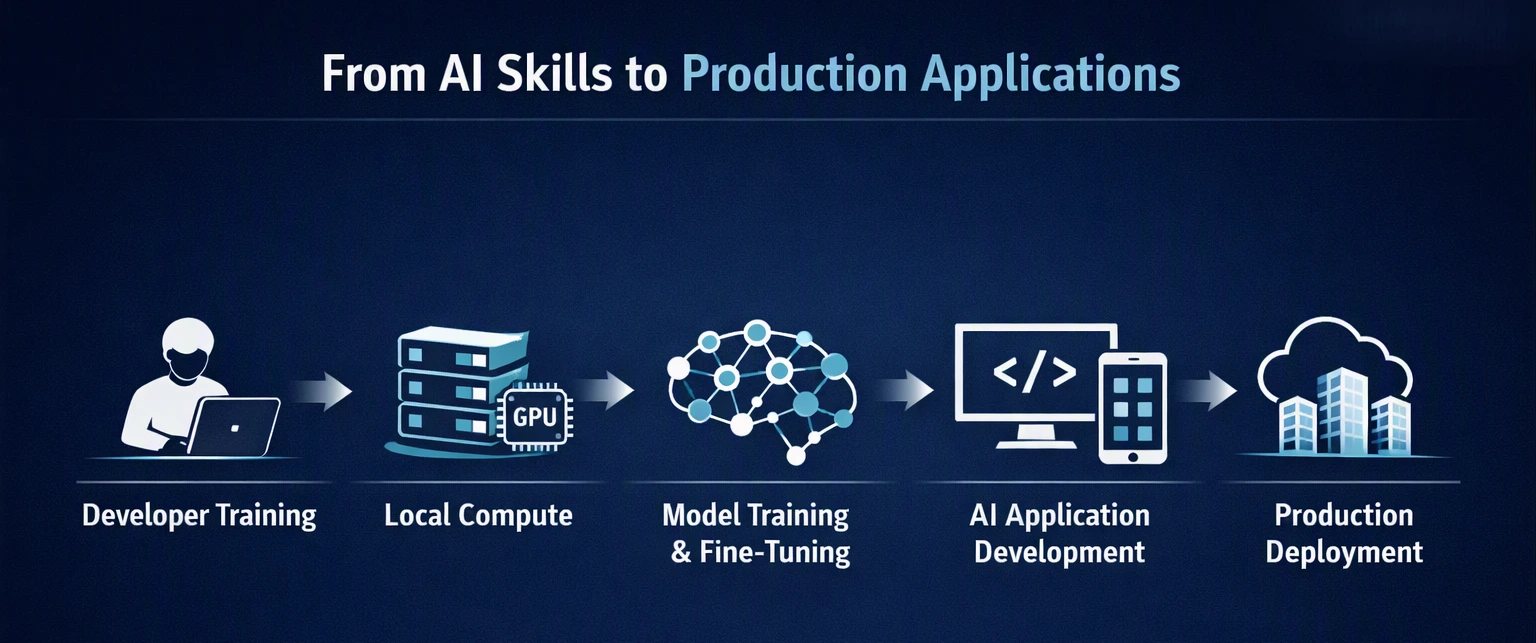
Building infrastructure alone does not create an AI ecosystem. Developers and organizations also need people capable of using that infrastructure.
NVIDIA said that in 2024 it set a goal of training 100,000 developers across Africa through its Deep Learning Institute within three years.
According to the company, more than 85,000 developers have been trained so far, making Africa one of NVIDIA's fastest-growing developer regions.
NVIDIA also said Nigeria has become the institute's second-largest market globally.
The combination of infrastructure and developer education is important.
Local computing capacity can provide access to AI resources, while trained developers can turn that capacity into applications and services. The announcement suggests that both sides of this equation are developing at the same time.
From Startups to Global AI Companies
NVIDIA pointed to InstaDeep as an example of an African AI company that grew from an early-stage startup into a larger technology business.
InstaDeep joined NVIDIA Inception in 2017 as a small team in Tunis and used its first NVIDIA DGX system.
NVIDIA said the company later developed applications involving drug discovery, protein design and logistics optimization before being acquired by BioNTech for approximately $680 million.
The announcement also highlighted Lelapa AI, a language-model company working on African language technologies.
According to NVIDIA, Lelapa AI developed InkubaLM and the Vulavula speech service for South African languages including isiZulu and Sesotho.
This area is particularly relevant because NVIDIA notes that Africa accounts for roughly one-third of the world's languages, while many African languages remain poorly represented in frontier AI models.
Developing language technologies locally could therefore contribute to better AI applications for regional users, although the announcement does not provide a measurement of the broader impact of these projects.
AI Infrastructure Demand Could Continue Growing
The announcement also points to the scale of infrastructure required as AI adoption expands.
NVIDIA cited McKinsey estimates that African data-center demand currently stands at approximately 0.4 gigawatts.
McKinsey estimates that demand could reach between 1.5 and 2.2 gigawatts by 2030, requiring between $10 billion and $20 billion in construction investment.
These figures are estimates, not confirmed future deployments.
They illustrate the potential infrastructure gap between current data-center capacity and the computing resources that may be required if AI adoption continues to expand.
For AI developers, the availability of local infrastructure can affect where workloads are processed and how organizations approach data, connectivity and computing requirements.
For governments and infrastructure providers, the growth of AI workloads also creates requirements beyond GPUs, including data-center construction, power availability and supporting infrastructure.
What This Means for Africa's AI Market
The NVIDIA announcement highlights a broader industry shift toward building AI infrastructure closer to the developers, enterprises and data that use it.
For African organizations, more local computing options could create additional opportunities to develop and deploy AI applications within regional markets.
For startups, the combination of developer programs, investor networks and access to accelerated computing may provide more infrastructure options as their applications grow.
For enterprises, locally hosted AI infrastructure could become relevant for workloads where data location, latency or access to computing resources are important considerations.
However, infrastructure alone does not guarantee successful AI adoption. The availability of skilled developers, reliable power, investment, suitable data and practical business applications will continue to influence how quickly organizations can move from experimentation to production.
This is an analysis based on the developments described in NVIDIA's announcement. Specific outcomes for individual companies or markets were not disclosed.
Egypt Is Part of a Wider African AI Buildout
NVIDIA's announcement presents Egypt as part of a wider movement across Africa rather than as an isolated AI market.
New infrastructure initiatives are being announced alongside developer training, startup programs, investment networks and locally developed AI applications.
South Africa, Morocco, Egypt, Nigeria and Kenya are among the markets referenced in NVIDIA's infrastructure expansion plans, while companies across the continent are developing applications in areas ranging from language technology and financial services to robotics, healthcare and enterprise software.
The broader development reflects a shift from discussing Africa primarily in terms of AI's future potential toward focusing on the infrastructure and organizations already building AI systems.
Whether this momentum translates into sustained production-scale adoption will depend on how infrastructure investment, developer skills, local data and commercial demand develop together.
For now, NVIDIA's latest announcement provides a snapshot of an African AI ecosystem increasingly focused on the practical requirements of building and deploying AI at scale.
Source: NVIDIA Blog
About the Author