
Meta Introduces Muse, a Personal AI Agent Designed to Do More Than Answer Questions
Meta has introduced Muse, a personal AI agent designed to take action across everyday apps, manage tasks, pursue long-term goals, and operate through a dedicated secure virtual machine.
Xcademia Team
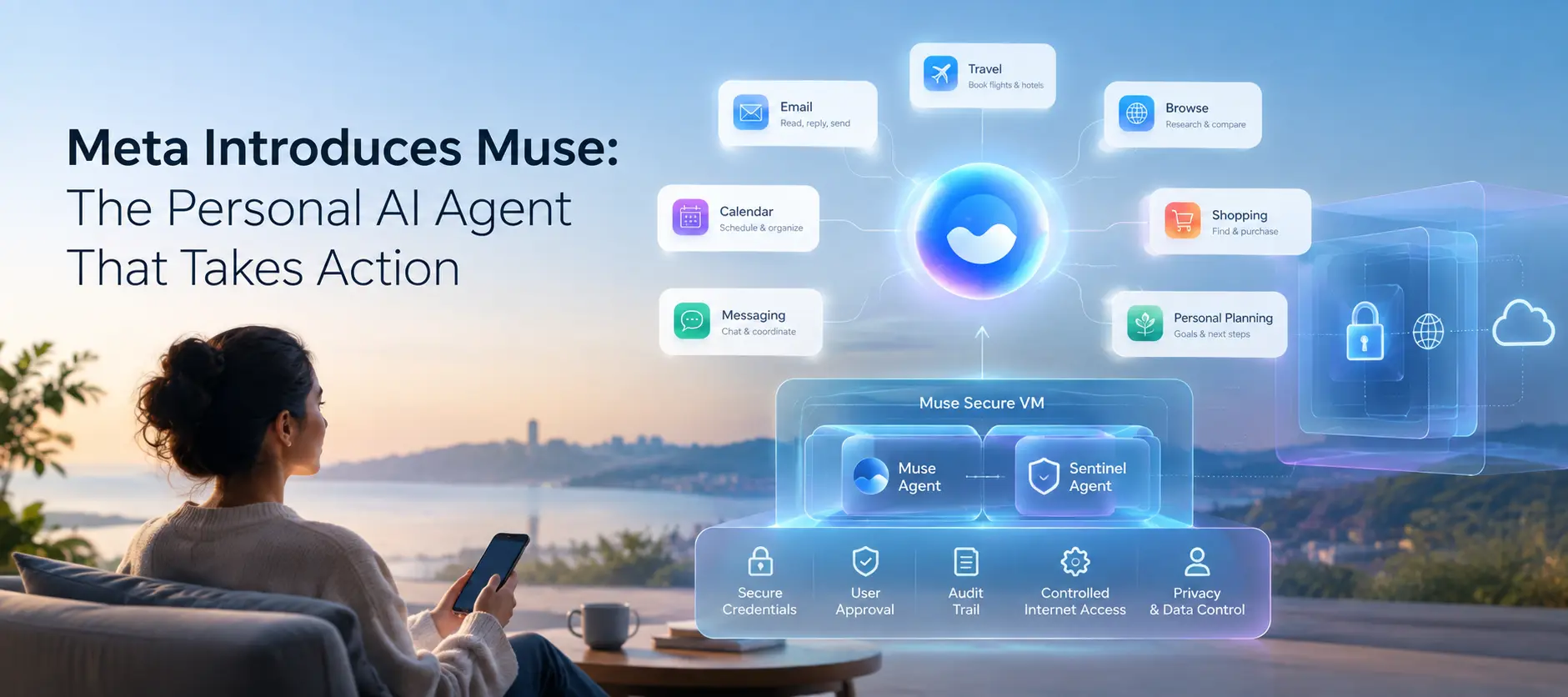
Meta Introduces Muse, a Personal AI Agent Designed to Take Action
Meta is moving its AI strategy beyond question-and-answer assistants with the introduction of Muse, a personal AI agent designed to perform tasks, help users pursue goals, and proactively suggest actions.
Announced on September 8, 2026, Muse is designed to work more like a digital assistant that can take action on a person's behalf rather than simply generating responses. Meta says the system can handle everyday tasks such as sending emails and booking travel, while also helping users turn broader goals into personalized plans.
The announcement positions Muse around three major ideas: action, personalization, and security.
Rather than requiring users to learn specialized agent interfaces, Meta says Muse is designed around familiar messaging interactions. Users can communicate with it through the Muse app or directly through WhatsApp.
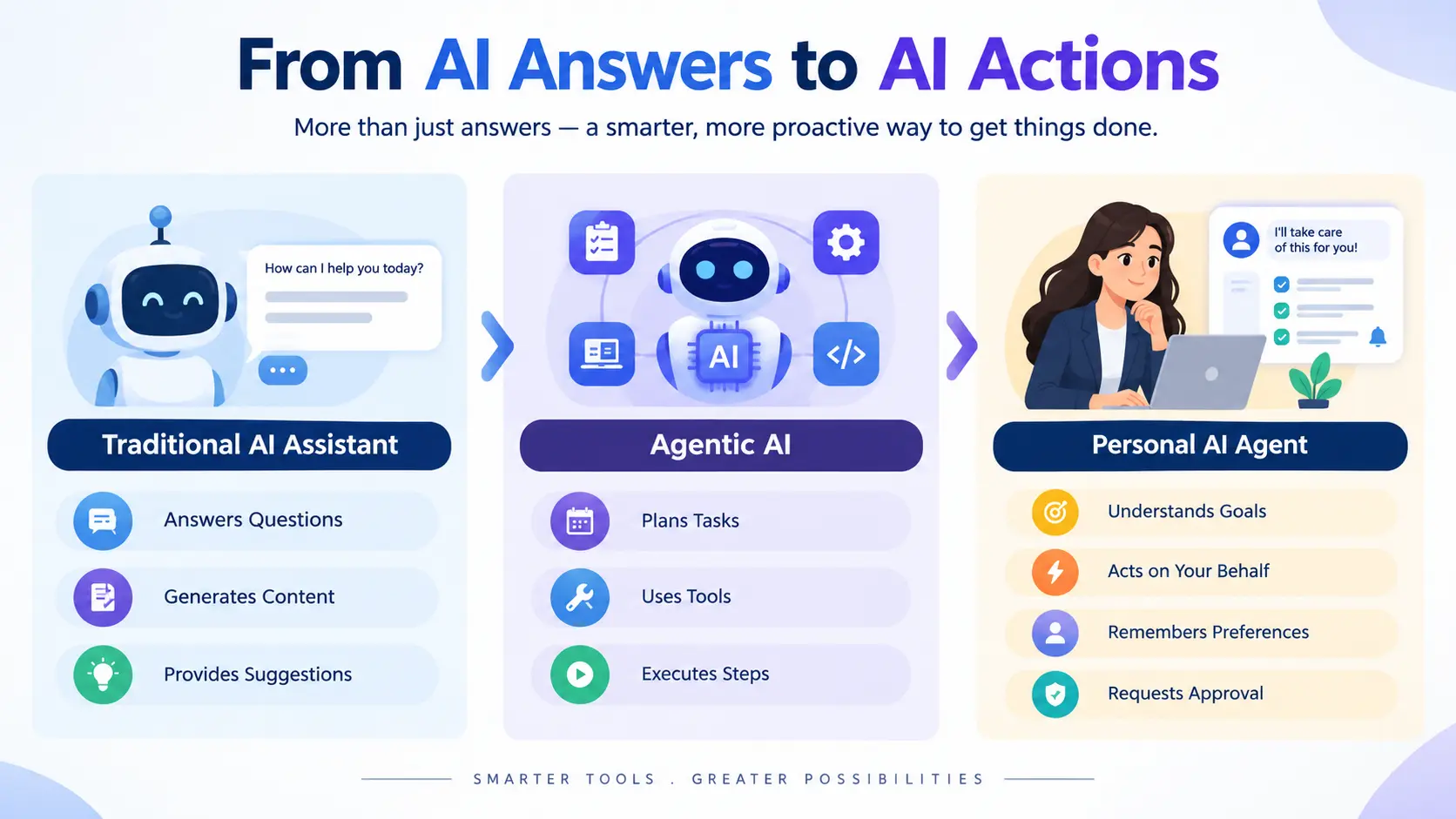
From AI Answers to AI Actions
Traditional generative AI tools generally respond to a prompt with information, text, code, or other generated content.
Muse is designed to take the next step.
A user can tell Muse what needs to be accomplished, and the agent can work through the task. Meta says Muse can open a browser, complete forms, and negotiate on a person's behalf.
For longer-running tasks, Muse can continue working after a user closes the application. It can return when something changes or when human approval is required.
For example, Meta describes scenarios involving selling a car, lowering a bill, or adjusting a training plan as circumstances change.
This reflects a broader shift in AI development from content generation toward task execution. Instead of asking an AI system for instructions and completing the work manually, users can increasingly delegate defined activities to an agent.
Muse Spark Powers the Agent
Behind Muse is Muse Spark, which Meta describes as its most capable model to date and says was built for real-world agentic work.
The distinction is important because an agent needs to do more than generate a response.
It must interpret a goal, determine the required steps, interact with external interfaces, maintain context, and know when a user needs to make a decision.
Meta's announcement describes Muse as capable of developing a personalized plan around a user's goal and then advancing the work independently.
The system is therefore presented as an AI layer that sits between a person's intent and the digital services they use.
A Dedicated Computer for an AI Agent
One of the most notable aspects of Muse is the infrastructure Meta says it built specifically for the agent.
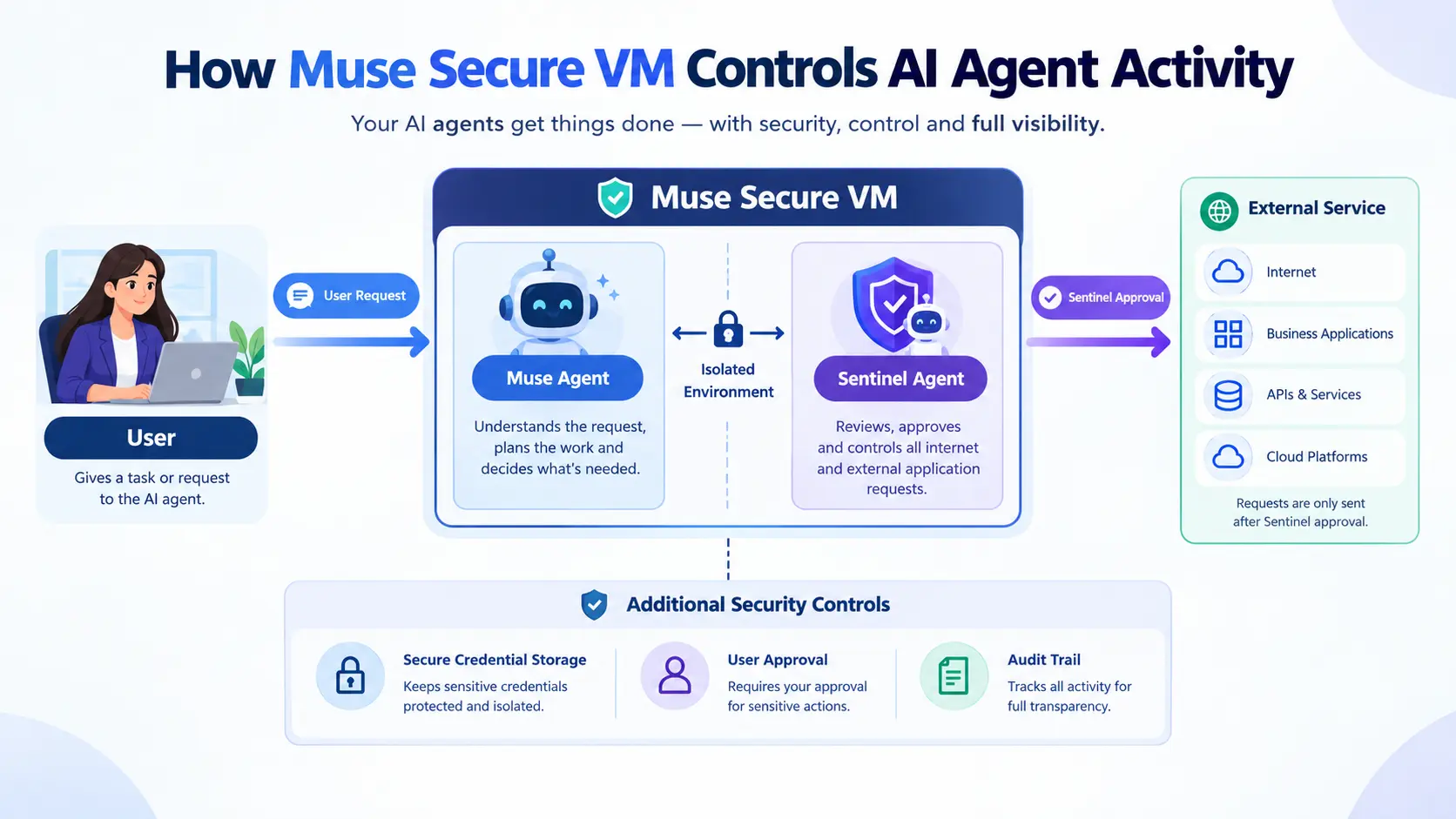
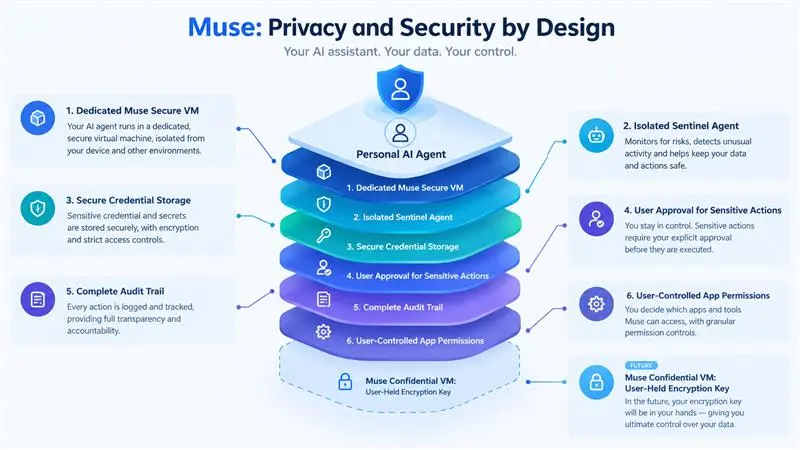
Muse runs on Muse Secure VM, a dedicated virtual machine designed to contain the agent along with a person's data.
Meta says the virtual machine includes its own browser and is isolated so another person's agent cannot reach it. Connected service data and credentials are also stored within this environment.
This architecture addresses a fundamental challenge with personal AI agents.
An agent that can browse the internet, access applications, send communications, or make purchases potentially has much greater access to a user's digital life than a conventional chatbot.
That makes the environment in which the agent operates an important part of the product design.
Sentinel Adds an Additional Control Layer
Meta says Muse Secure VM also includes a separate Sentinel agent.
Sentinel operates separately from Muse at the system level and controls whether Muse can reach the internet.
According to Meta, actions from Muse cannot reach the internet unless Sentinel approves them. When necessary, Sentinel can also request permission from the user.
The architecture can be viewed as a layered control model:
User Request → Muse → Sentinel → Internet or External Service
The goal is to separate the AI agent performing a task from the mechanism that determines whether external access should be permitted.
Credentials Are Designed to Stay Hidden From Muse
Access to accounts is another important consideration for personal agents.
Meta says Muse does not have visibility into users' passwords or payment methods.
Credentials shared with Muse are placed into secure storage, allowing the agent to use them without seeing the underlying credentials. Meta also says this applies to passwords that users enter into the browser themselves.
This is a significant design distinction for an agent that can interact with websites.
Instead of giving the AI direct access to sensitive credential information, the architecture is designed to separate using a credential from seeing the credential.
Meta's announcement does not provide additional technical details about the implementation beyond the described secure storage approach.
Users Remain in Control
Meta also emphasizes user control throughout the Muse experience.
Users can decide which applications Muse connects to and determine the level of access granted.
For email, for example, Meta says users can choose whether Muse can only read messages or whether it can also send messages on their behalf.
Users can change permissions or disconnect services whenever they want.
Muse also asks for confirmation before sensitive actions, including sending an email or making a purchase.
The agent provides an audit trail showing what it has done and what it plans to do, giving users visibility into its activity.
This creates a model where autonomy is combined with human approval at specific points rather than giving the agent unrestricted authority.
Muse Brings AI Into Payments
Muse is also designed to handle transactions.
Meta says users can check out through Link, the payment service built by Stripe. Meta describes Muse as the first AI agent covered by Link's purchase protections.
Link's agent wallet can generate a one-time-use card, which is designed to keep a user's actual card details hidden when making purchases online.
Meta says Shop Pay is coming as another payment option, while 1Password support is also planned so Muse can use existing user logins.
Additional details were not disclosed in the announcement about the timing or broader scope of these upcoming integrations.
Memory Makes Muse More Proactive
Another defining feature of Muse is its ability to remember information that matters to the user.
Meta says the agent can use details previously mentioned in conversations to make suggestions and take actions later.
The company gives an example involving an Instagram recipe reel. Muse could turn the saved recipe into a grocery list, suggest a dinner-party menu, and remember guests' dietary restrictions before invitations are sent.
This moves personalization beyond simply remembering the current conversation.
The underlying idea is that an agent becomes more useful when it can retain relevant context about a person's preferences, plans, and goals.
At the same time, Meta says users can tell Muse to forget specific things it has learned.
Privacy Is Built Into the Architecture
Meta describes privacy as a core part of Muse's design.
The company says Muse conversations and data stored in the user's virtual machine are not shared with Meta's advertising systems.
Users can also opt out of having their interactions used to train Meta's AI models.
The company is also planning another security layer called Muse Confidential VM.
Meta says that later this year, the entire virtual machine, including user data and conversations, will be encrypted with a key held only by the user. Under the announced design, even Meta would not be able to access that encrypted information.
Additional details were not disclosed in the announcement about the broader technical implementation or availability of Confidential VM.
Muse's Initial Availability
Meta says Muse is rolling out in the United States on iOS, Android, and muse.ai.
The company also says Muse is coming soon to AI glasses.
Meta says the service will be free for most everyday needs, with subscription plans available for users who want to do more.
The announcement does not provide additional information about availability in other countries.
What Muse Represents for Personal AI
Muse represents a move toward AI systems that are designed not only to communicate but also to operate.
The distinction is important.
A conventional assistant waits for a question. An agent can potentially take a goal, break it into tasks, interact with software, monitor progress, and return to the user when intervention is required.
Meta is attempting to make that model accessible through familiar messaging interfaces while building a dedicated computing environment around the agent.
The security architecture is equally important because greater autonomy introduces greater responsibility around permissions, credentials, payments, and data.
For enterprises and consumers, this could mean that the next stage of AI adoption will increasingly involve delegating digital work rather than simply generating digital content.
The announcement highlights a broader industry shift toward AI systems that can combine reasoning, memory, tool use, and controlled execution.
Meta's Muse is an early example of that direction, with the company placing particular emphasis on making the agent personal, proactive, and controlled by the user.
Conclusion
Meta's introduction of Muse signals another step in the evolution of consumer AI.
The company is building the product around a simple premise: users should be able to describe what they want accomplished and allow an AI agent to handle more of the work.
Muse combines agentic capabilities with a dedicated virtual machine, isolated internet controls, secure credential handling, user approvals, permission controls, memory, and an audit trail.
Its rollout will provide a practical test of how comfortable people are with delegating real digital tasks to an AI system.
Meta says Muse is only a first step toward its broader vision of personal AI and personal superintelligence.
Source: Meta Newsroom
About the Author