
Industry Leaders Launch Blueprint Alliance for Securing AI Agents
A new coalition led by Okta and 11 other technology companies is developing an open architecture for securing AI agents across identity, access, runtime monitoring, governance and response.
Xcademia Team
Xcademia Research Team
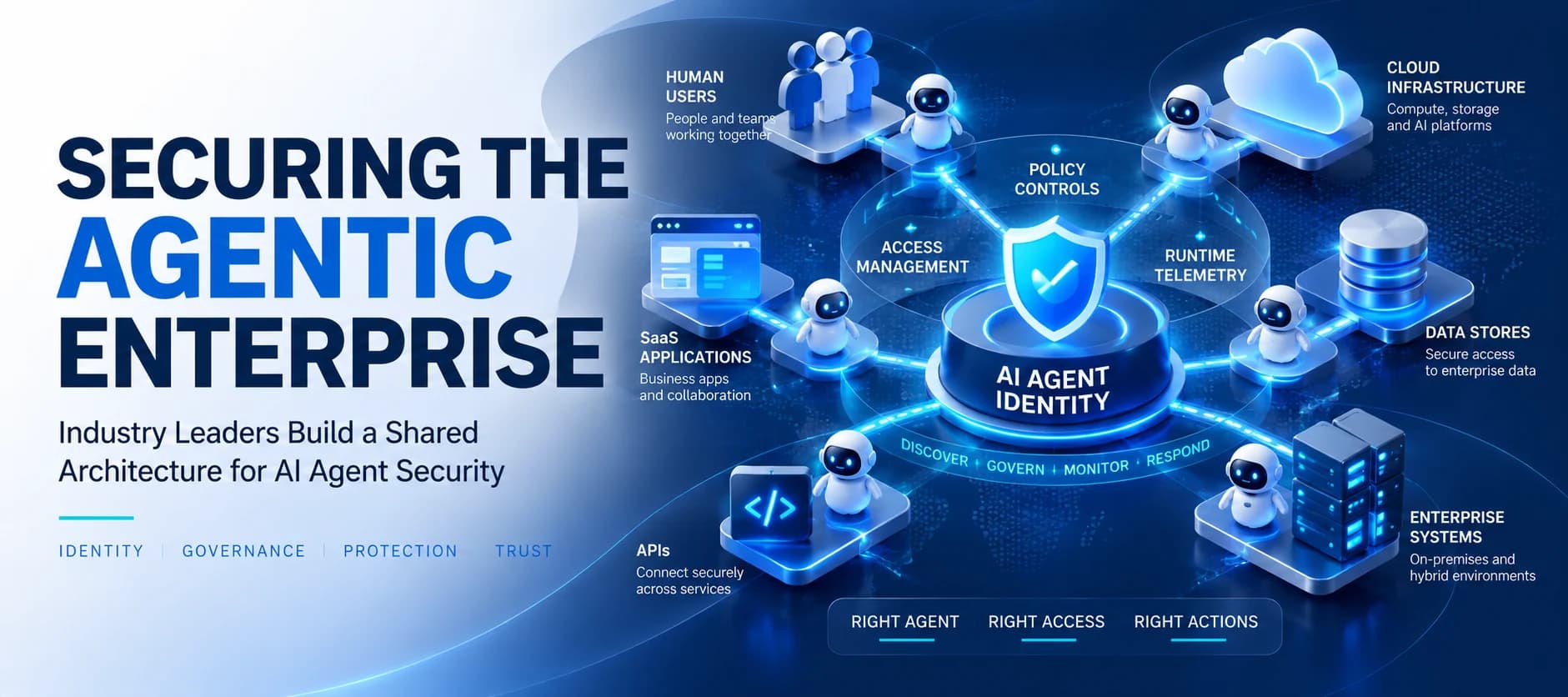
Blueprint Alliance Targets the Security Challenges of Enterprise AI Agents
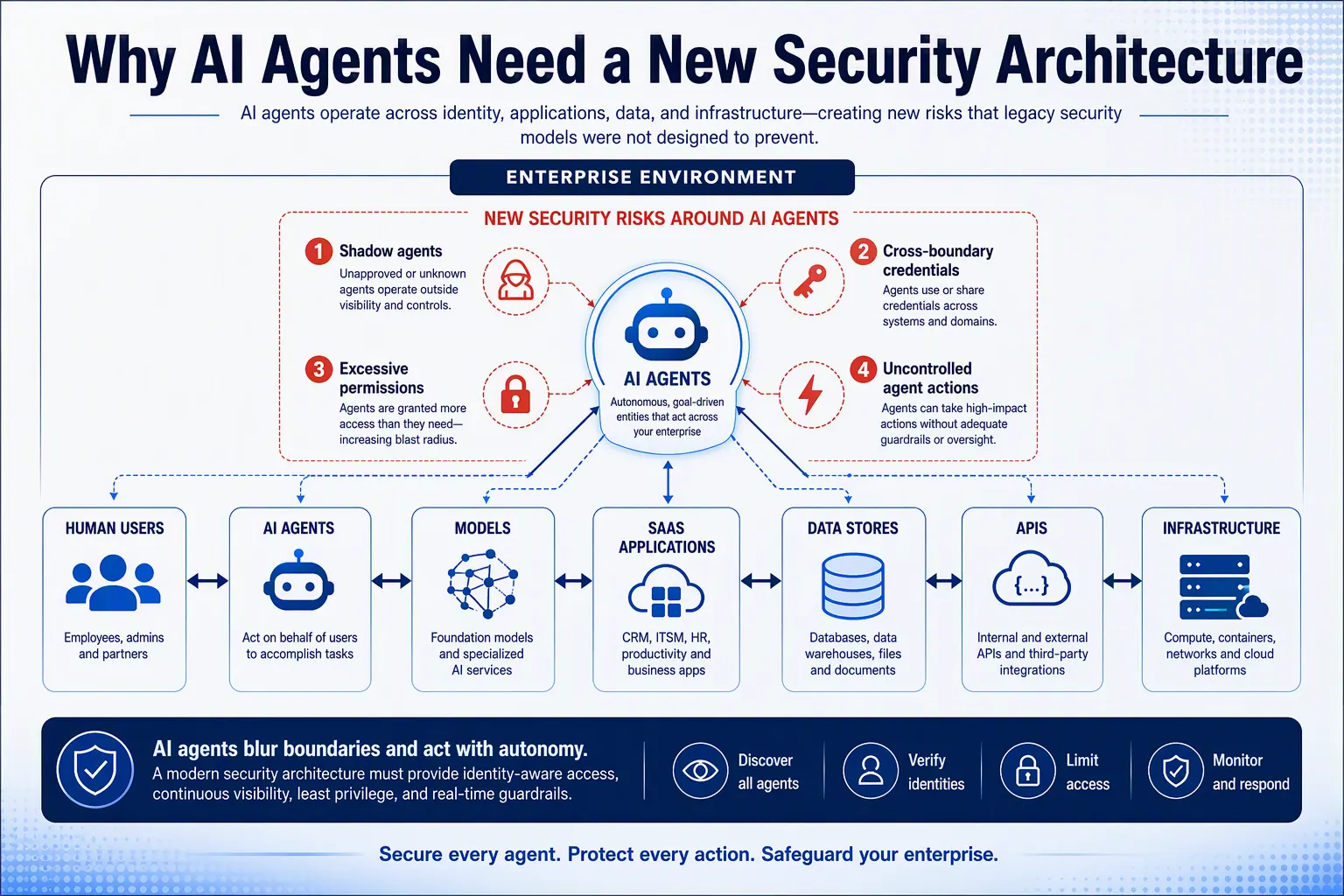
As organisations move from experimenting with AI models to deploying autonomous agents, security teams face a broader challenge: AI agents can interact with models, applications, data, infrastructure and other systems on behalf of people.
To address this growing complexity, Okta has announced the Blueprint Alliance, a cross-industry coalition focused on developing a shared architecture for securing AI agents.
The founding members include AWS, CrowdStrike, Databricks, Docker, Google Cloud, Lovable, Okta, Proofpoint, Salesforce, ServiceNow, Wiz and Zscaler. GE Appliances and World Central Kitchen are participating as strategic advisors.
The initiative expands Okta's earlier Blueprint for the Secure Agentic Enterprise, first introduced in March 2026, into an open, multi-vendor reference architecture.
Rather than treating agent security as a problem belonging to a single security product, the alliance is focused on how identity, access controls, runtime visibility, governance and response can work together across different technology environments.
Why AI Agents Create a Different Security Challenge
Traditional software generally operates within permissions and workflows explicitly configured by an organisation.
AI agents can introduce another layer of complexity because they may reason about tasks, interact with tools and services, access data, and delegate work to other agents.
Okta says this creates an identity gap in which shadow agents can multiply, credentials can cross trust boundaries, and agents can operate beyond their intended scope.
The announcement also cites a Gartner prediction that, by 2028, an average global Fortune 500 enterprise will have more than 150,000 agents in use, while only 13% of organisations currently believe they have the appropriate AI agent governance in place. These figures are Gartner predictions and survey findings cited by Okta, rather than measurements independently established by the announcement itself.
Four Questions Define the Blueprint Architecture
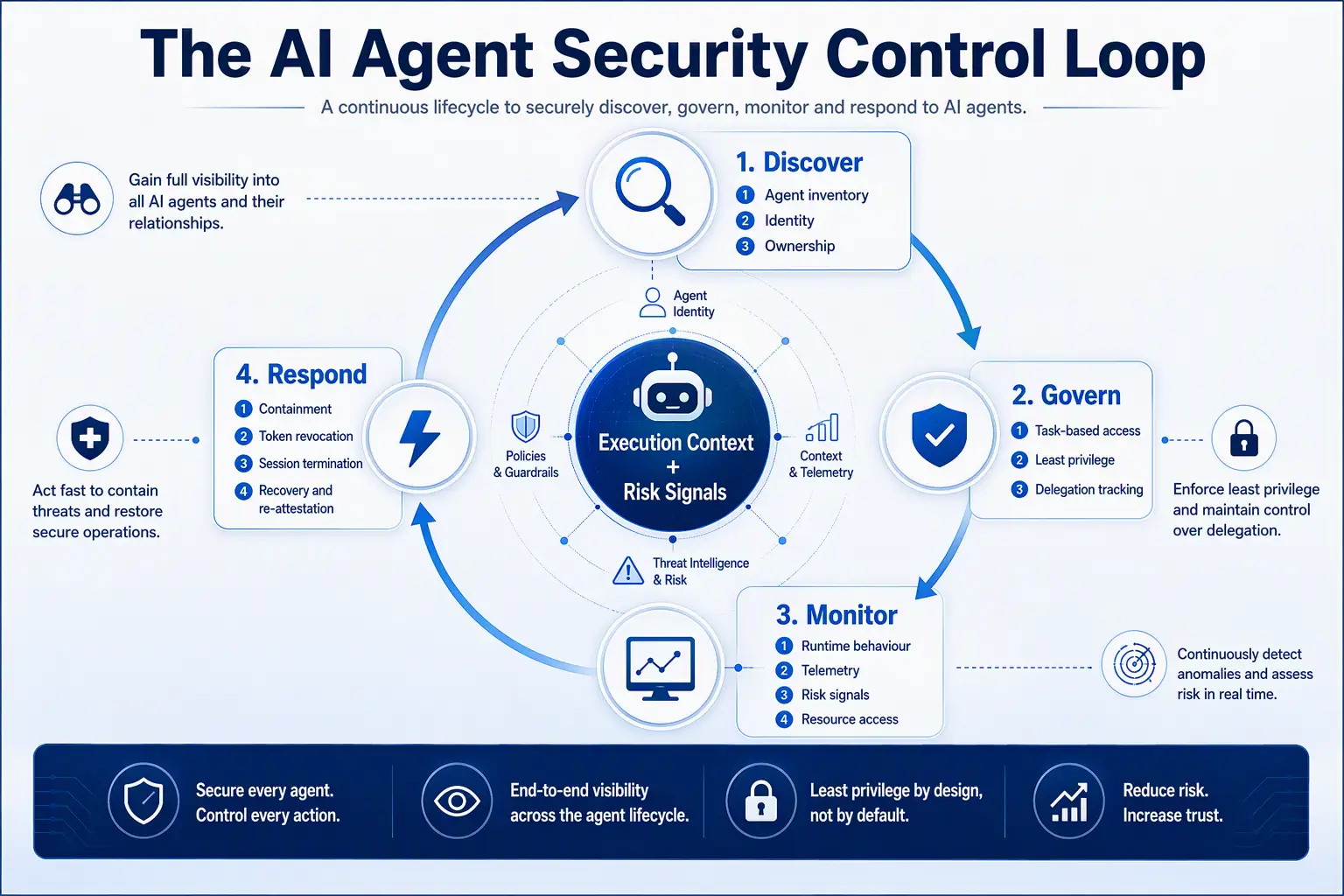
The Blueprint Alliance organises its architecture around four practical questions:
Where are my agents?
What can they do?
What are they doing?
How do I respond?
These questions form the foundation of the proposed control model.
The approach is designed to cover different types of agents, including workforce agents as well as customer- and partner-facing agents that may operate across organisational boundaries.
1. Where Are My AI Agents?
The first security challenge is discovery.
An organisation cannot effectively govern an AI agent if it does not know that the agent exists.
The proposed architecture therefore calls for organisations to detect and catalogue agents, including:
Internally developed agents
Imported SaaS agents
Third-party agents
Unmanaged or "shadow" AI agents
Each validated agent should have a distinct identity and an accountable human owner or operational team.
The alliance also describes AI agent security posture management, which involves continuously evaluating agents for vulnerabilities and misconfigurations.
This represents a shift from viewing AI agents simply as software components toward treating them as entities that require identity and lifecycle management.
2. What Can the Agent Do?
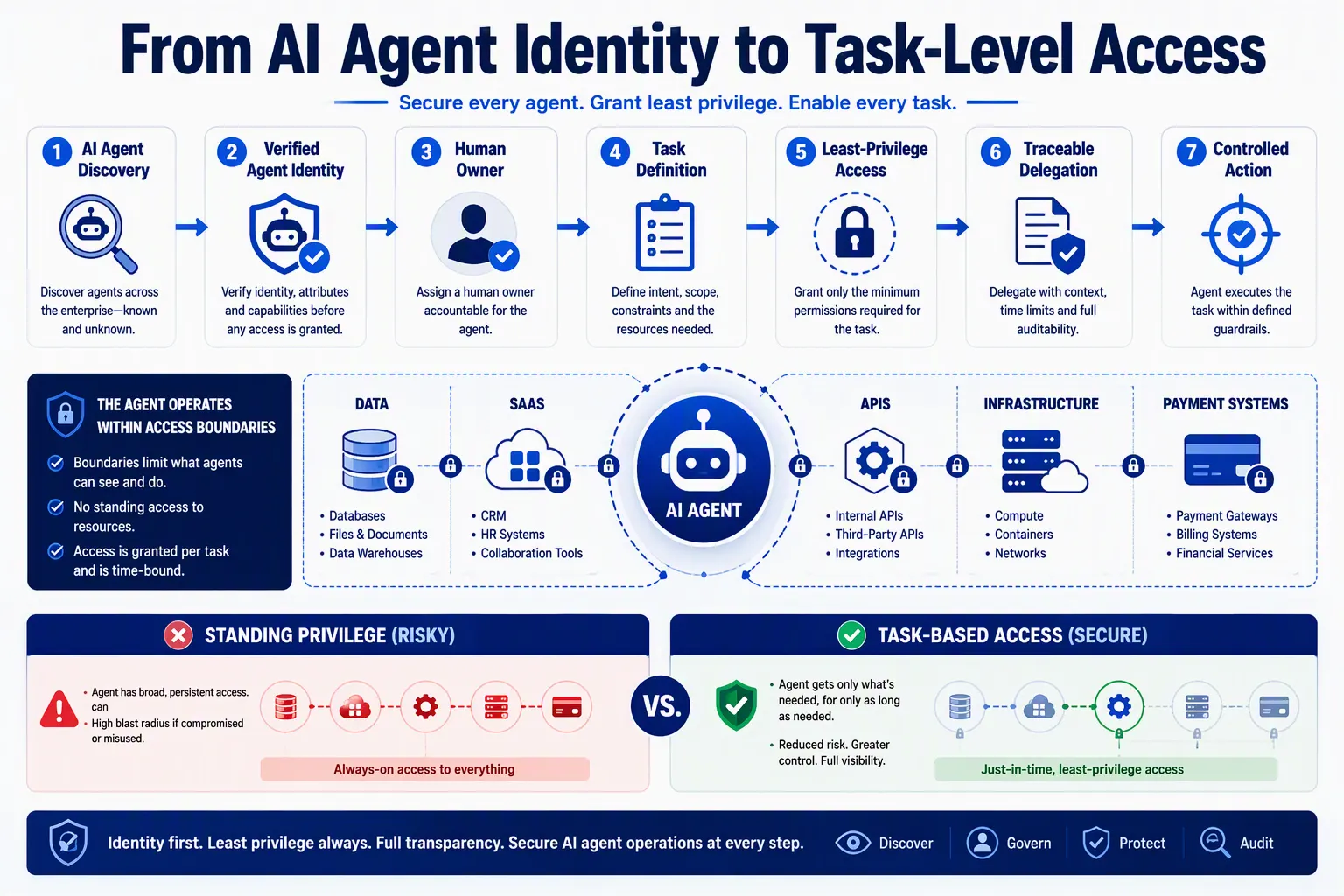
Once an agent has an identifiable identity, organisations need to establish what it is permitted to access.
The Blueprint Alliance proposes moving away from persistent access wherever possible and instead scoping access to the task being performed.
Delegation should also remain traceable as agents spawn sub-agents or perform actions on behalf of humans.
The architecture connects these controls with governance practices such as:
Automated access reviews
Separation of duties
Least-privilege access
Agent ownership management
Model-version governance
Joiner-mover-leaver processes applied to agent access and ownership
3. What Are the Agents Doing?
Identity and access controls alone do not show what an agent is actually doing during execution.
The proposed architecture therefore places emphasis on runtime authorisation and monitoring.
According to Okta, gateways can enforce access policies inline while agents are operating. Continuous observation of agent behaviour can help identify issues such as:
Data leakage
Prompt injection
Anomalous activity
The architecture also calls for continuous tracking of downstream resources an agent can reach, including MCP servers, SaaS applications, data stores and payment systems.
This is important because the potential impact of an agent depends not only on its identity but also on the resources available to it during execution.
4. How Do You Respond to a Threat?
The final question concerns response.
If runtime monitoring identifies suspicious activity, security teams need controls capable of limiting the affected agent without unnecessarily disrupting the rest of the environment.
The Blueprint Alliance describes several possible response mechanisms:
Targeted containment
Rate limiting
Token revocation
Session termination
Network quarantine
The architecture also proposes a controlled recovery process. A contained agent can undergo re-attestation and staged re-enrolment before it is allowed to operate again.
The stated objective is to make reinstatement deliberate, documented and auditable.
Runtime Telemetry Connects the Security Model
The four questions are supported by foundational elements that the announcement describes as execution context and risk signals.
These signals can be informed by:
Runtime telemetry
Logging
Observability
The purpose is to provide the context needed to identify risk patterns and coordinate responses across the agent environment.
Open Standards Are Central to the Alliance
The Blueprint Alliance says its members intend to work on interoperability across existing open standards, including:
MCP
OCSF
SSF
CAEP
The stated goal is to enable security signals from one part of the agent environment to trigger actions across connected control planes.
For example, a security system identifying a risk signal could potentially communicate that information to other components responsible for identity, access or runtime enforcement.
The alliance also says founding members will publish joint interoperability results and reference integrations.
Additional details about the future schedule or specific implementation results were not disclosed in the announcement.
A Multi-Vendor Approach to Agent Security
One of the most significant aspects of the announcement is the number of technology categories represented.
The founding group spans identity, cloud infrastructure, cybersecurity, data platforms, application platforms and developer tooling.
That matters because enterprise AI deployments rarely operate inside one technology stack. An organisation may use one provider for models, another for cloud infrastructure, separate SaaS platforms and additional security technologies.
The Blueprint Alliance is therefore positioning its architecture around interoperability rather than a single vendor-controlled environment.
Okta describes the architecture as a zero-trust, agentic control plane intended to help organisations manage agents across heterogeneous environments.
Strategic Advisors Bring Operational Perspectives
The alliance also includes GE Appliances and World Central Kitchen as strategic advisors.
According to the announcement, these organisations will help refine and validate the approach from real-world operational perspectives.
GE Appliances is contributing a manufacturing perspective, while World Central Kitchen is participating from the perspective of technology used in disaster response.
The announcement does not provide detailed implementation results from either organisation.
What the Blueprint Means for Enterprise Security
The announcement highlights a broader industry shift toward treating AI agents as security identities rather than simply extensions of AI applications.
For enterprises, this could mean security programmes will increasingly need to consider the complete lifecycle of an AI agent:
Discovery → Identity → Ownership → Access → Execution → Monitoring → Response → Recovery
That lifecycle extends traditional identity and access management into the runtime behaviour of autonomous systems.
The development also reflects growing demand for security architectures that can operate across multiple vendors and technology layers.
However, the Blueprint Alliance is currently an evolving architecture rather than evidence that every organisation has implemented these controls.
The announcement says the alliance will continue advancing the architecture, adding members and publishing interoperability results. Specific future implementation timelines and deployment outcomes were not disclosed.
The Bigger Security Picture
AI agent adoption introduces a security problem that sits between several established disciplines.
Identity teams need to know who or what an agent is.
Security teams need to understand what it can access.
AI governance teams need to establish what the agent is permitted to do.
Security operations teams need visibility into what it actually does at runtime.
And incident response teams need mechanisms to contain and recover agents when behaviour becomes risky.
The Blueprint Alliance attempts to bring these requirements into a common architecture.
Whether the proposed approach becomes widely adopted will depend in part on interoperability, implementation maturity and how effectively the participating vendors translate the reference architecture into practical integrations.
For now, the announcement represents a coordinated industry effort to establish common principles for governing AI agents across enterprise environments.
Source: Okta, Inc. - official
About the Author